
Solutions proven in your industry.
Industries we work for
Choose your industry
Challenges in glass production
Fragility and risk of damage
- large, heavy sheets that can break every time they are handled
- the need for a precise, repeatable grip whatever the format
- high losses when a finished product is damaged
Demanding quality requirements
- dirt and fingerprints that affect painting or tempering quality
- zero tolerance for scratches and surface defects
- tools (suction cups, grippers) that must be precisely matched to the process
Pressure on output, staffing and safety
- shift work that needs many operators for repetitive tasks
- growing expectations for production speed without more errors
- physical strain and risk of injury when moving heavy glass sheets by hand
See the ROBCO solutions that address them.
What can we automate in glass processing?
- 01Storage
- 02Unloading and loading
- 03Cutting
- 04Grinding
- 05Washing
- 06Painting
- 07Tempering
- 08Laminating
- 09Packing
- 10Palletising
- 11Internal transport
Which process puts the most strain on your team and budget? Start automating with ROBCO right there.
Let's talkExample projects
Challenges in flour milling
Manual workload and staff availability
- carrying and palletising sacks and packs of flour by hand
- growing difficulty staffing shifts for heavy physical work
- risk of injury when moving sacks and packs by hand
Pressure on output and continuous production
- seasonal peaks (harvest time) with no way to add staff quickly
- the mill needs to run continuously, without downtime caused by human factors
- every stoppage is costly in a continuous process
Safety and compliance
- risks related to flour dust (explosion hazard zones, ATEX)
- strict hygiene requirements (HACCP)
- the need for full batch traceability
See the ROBCO solutions that address them.
What can we automate in your mill?
- 01Grain intake
- 02Storage
- 03Cleaning and conditioning
- 04Milling
- 05Flour packing
- 06Palletising
- 07Wrapping and labelling
- 08Internal transport
- 09Loading and dispatch
Which process puts the most strain on your team and budget? Start automating with ROBCO right there.
Let's talkBenefits of robotic palletising of bulk products
No more heavy lifting or injury risk for operators
Lower operating costs
Stable, precise pallet building despite changing sack shapes
Less human contact with (hazardous) bulk material
Steady, predictable output 24/7, whatever the shift
Fewer damaged pallets and product losses in warehouse transport
Example projects
Challenges of manual palletising of bulk products
Manual workload and staff availability
- difficulty staffing shifts and risk of injury when moving sacks and packs by hand
Changing package shape
- sacks of bulk material change shape and height every time they are placed – hard to stack consistently by hand
Dust and contact with the material
- flour, fertilisers and chemicals expose operators to dust and irritants
Low, unstable output
- the pace depends on the shift and the team’s condition, so it is hard to keep line throughput steady
Unstable and damaged pallets
- uneven stacking of sacks makes pallets lean and causes damaged packaging and product losses in transport
See the ROBCO solutions that address them.
Benefits of robotic palletising of bulk products
No more heavy lifting or injury risk for operators
Lower operating costs
Stable, precise pallet building despite changing sack shapes
Less human contact with (hazardous) bulk material
Steady, predictable output 24/7, whatever the shift
Fewer damaged pallets and product losses in warehouse transport
Example projects
Challenges in warehouse operations
Manual workload and staff availability
- transport, picking and handling of goods that require many operators
- growing difficulty staffing shifts in the warehouse
- risk of injury when moving pallets and heavy loads by hand
Pressure on throughput and lead times
- a growing number of orders and shorter delivery windows
- seasonal peaks with no way to add staff quickly
- the need to run continuously, without downtime caused by human factors
Accuracy and process control
- risk of errors in picking and identifying goods
- the need for precise, repeatable positioning of loads in different formats
- full traceability of material flow in the warehouse
See the ROBCO solutions that address them.
What can we automate in your warehouse?
- 01Unloading and goods-in
- 02Storage
- 03Picking
- 04Packing
- 05Palletising
- 06Internal transport
- 07Loading and dispatch
- 08Stocktaking
Which process puts the most strain on your team and budget? Start automating with ROBCO right there.
Let's talkBenefits of automating your warehouse
Making the most of warehouse space
automated high-bay storage can hold up to around 4 times more goods per m² than a manual setup
Lower operating costs
the cost of handling growing volumes no longer rises in step with headcount – fewer errors, lower staff turnover and a more predictable budget
Faster order picking
up to 4–5 times faster fulfilment by bringing goods from the rack straight to the worker (tote-to-person)
Faster order sorting
up to 3 times higher operational efficiency than a manual system
Safer, more comfortable work
staff work at stations instead of walking long picking routes
Consistent output and control over stock
stable processes and full traceability of stock locations reduce the risk of errors
Example projects
 1 / 8
Automation
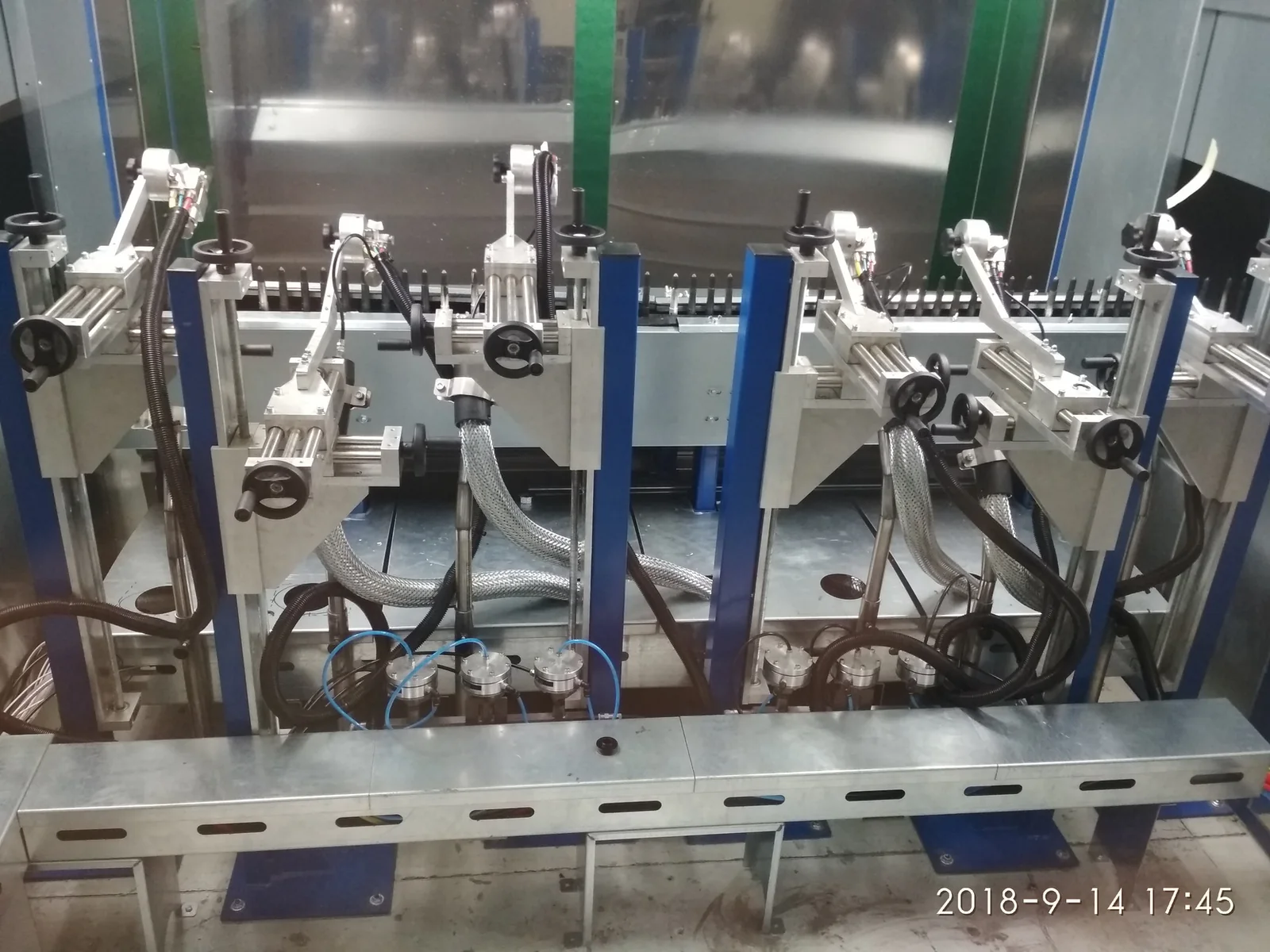
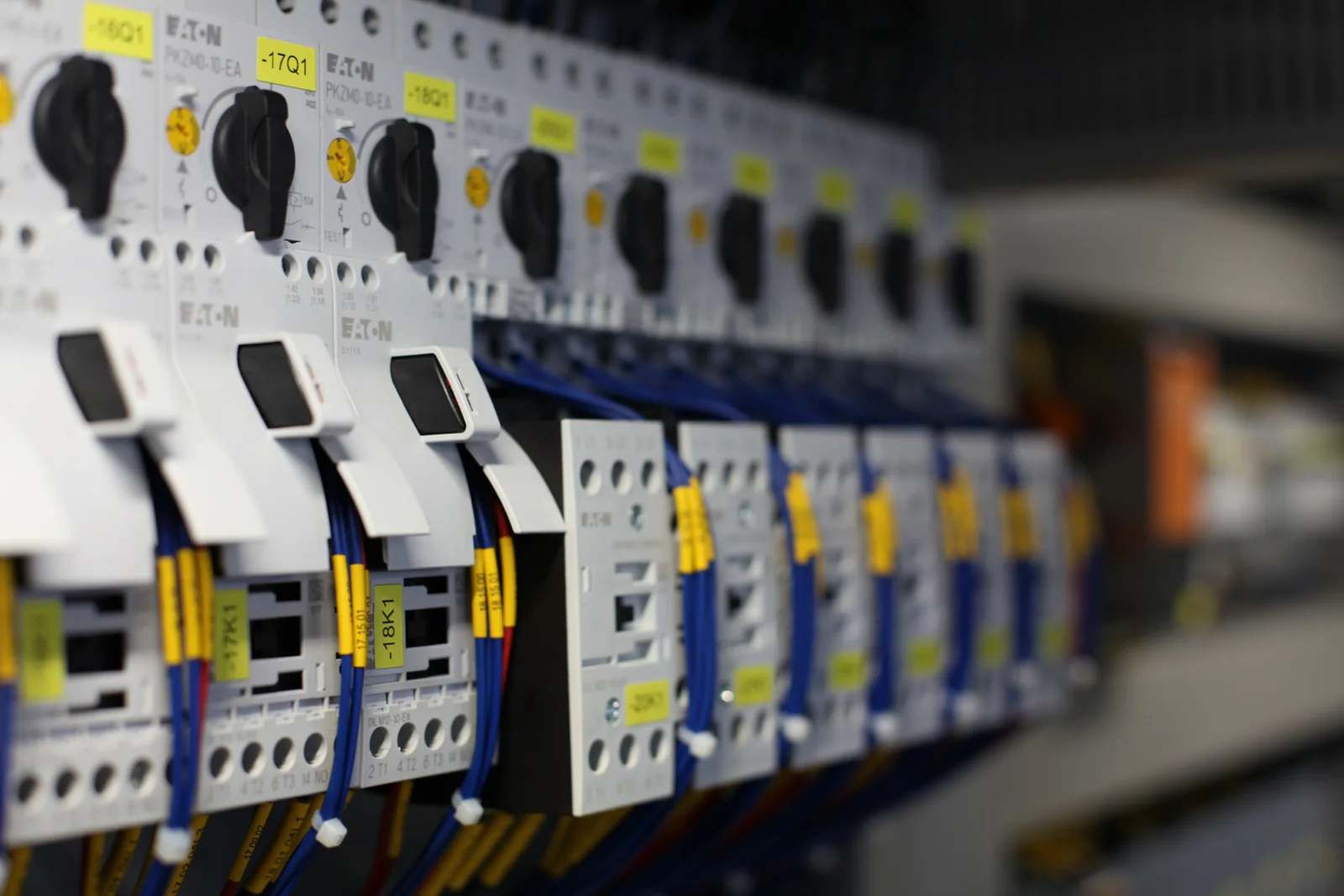
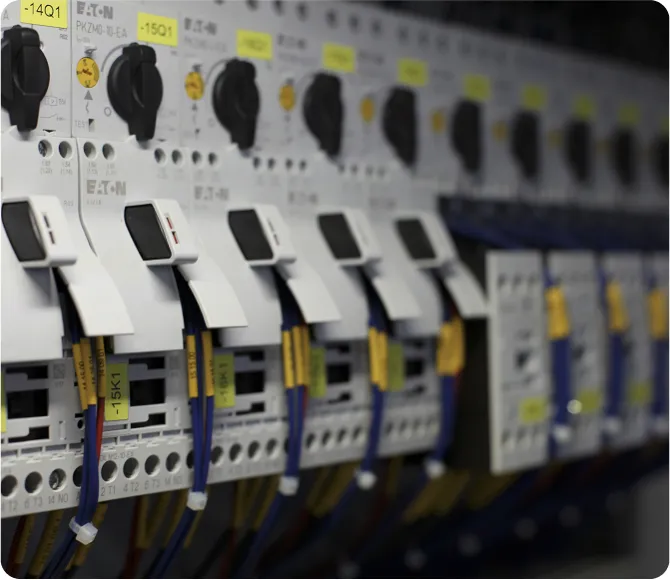
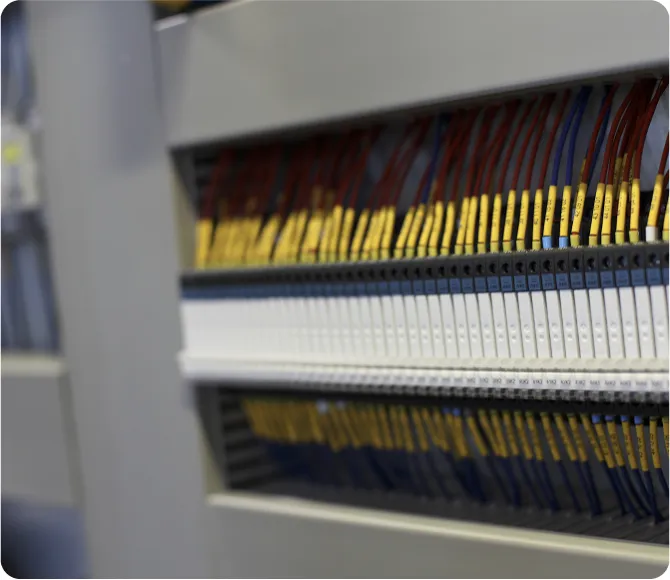
Paint shop automation
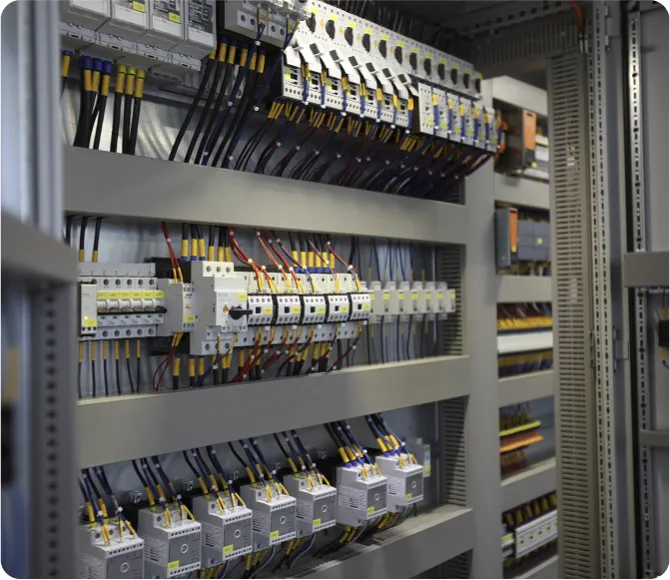
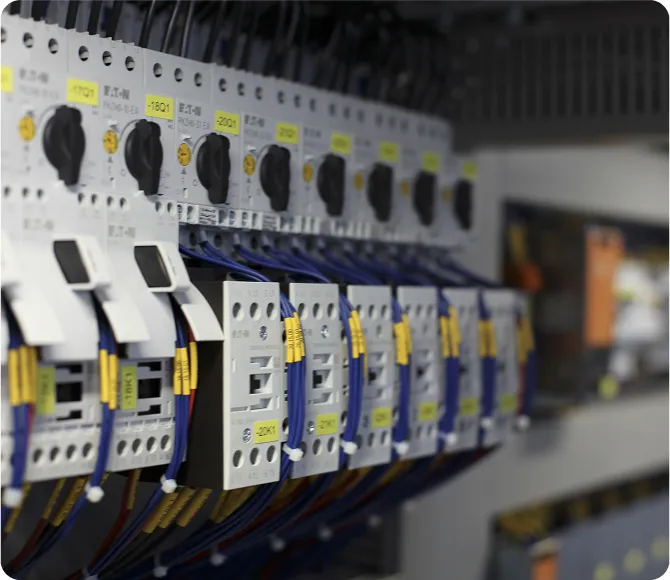
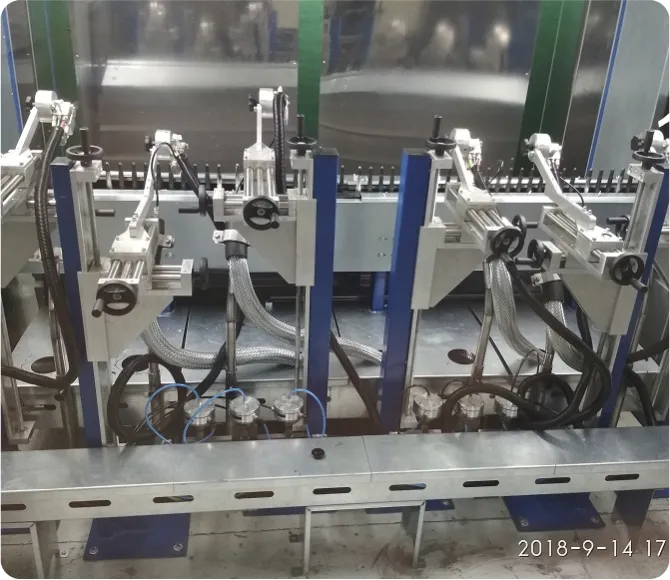
We delivered the full scope of design, installation and commissioning for an automated plastics painting line with two drying booths and a dedicated IR drying booth – from concept and installation through to production start-up.
Features:
- control design in line with the client's standards and guidelines,
- design and prefabrication of the control & instrumentation panel,
- supply and installation of control panels, cabling, sensors, actuators and measuring instruments,
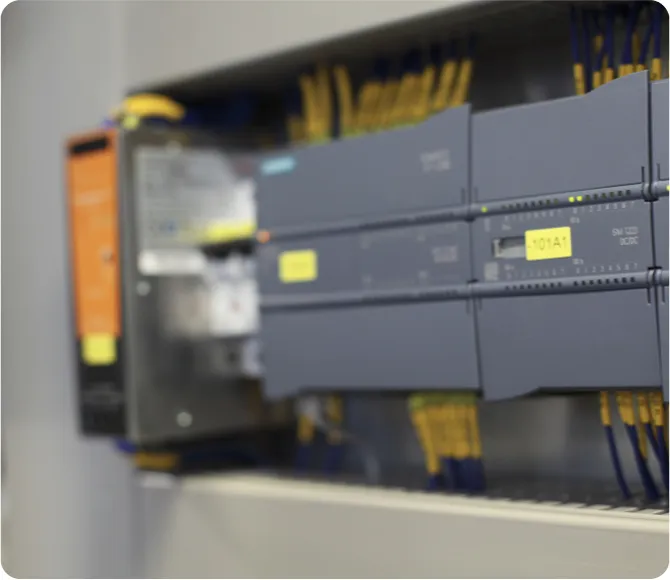
- PLC and HMI software,
- process control tuning,
- testing, training and line commissioning.
Plastics
 1 / 6
Robotics – Handling
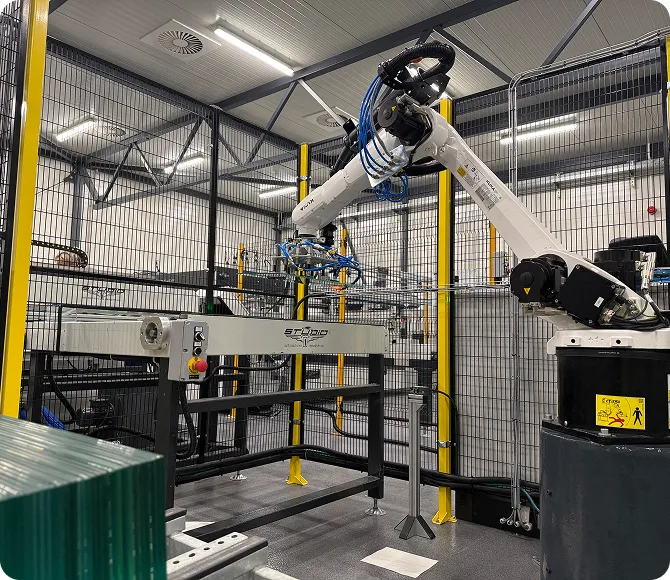
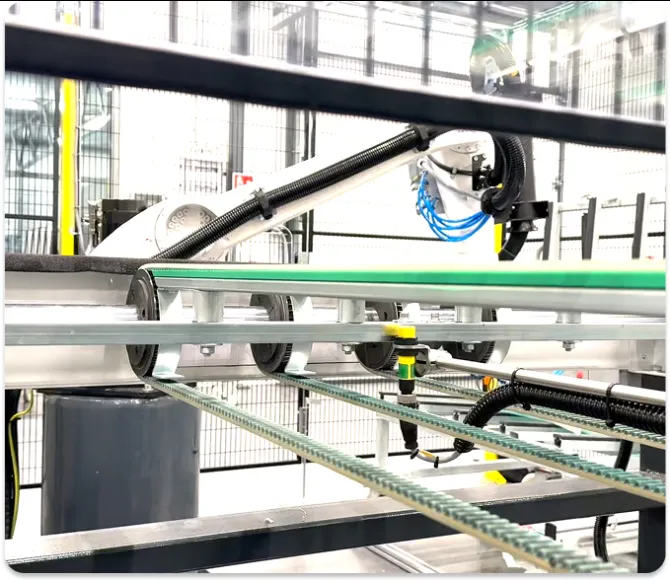
Loading glass into a paint shop
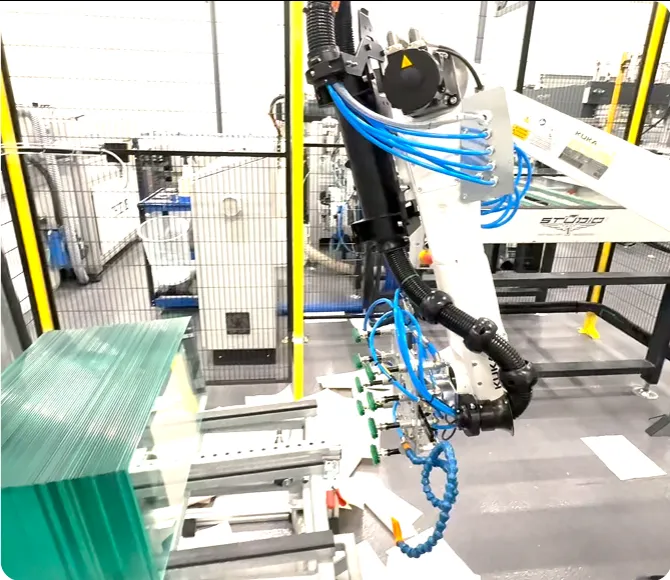
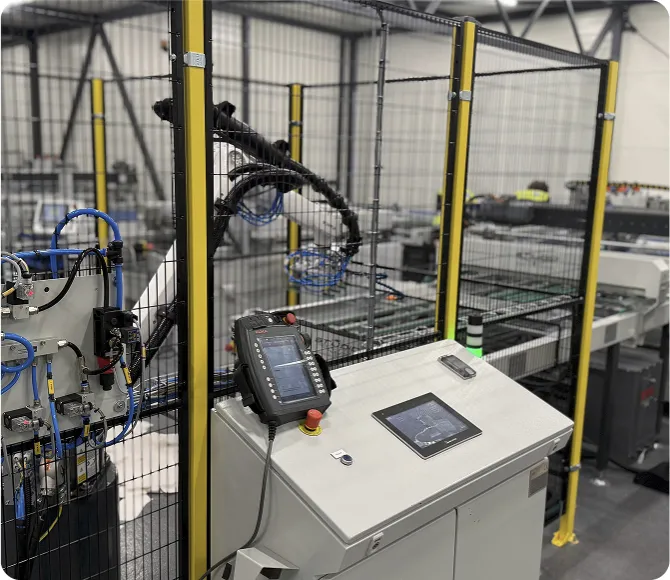
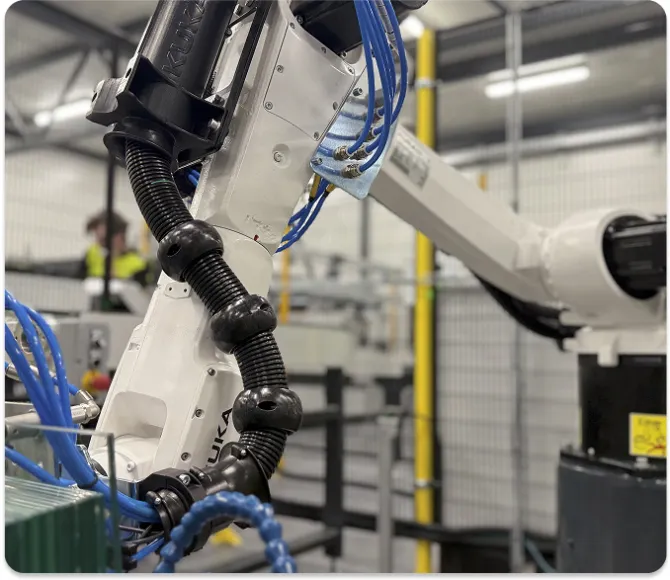
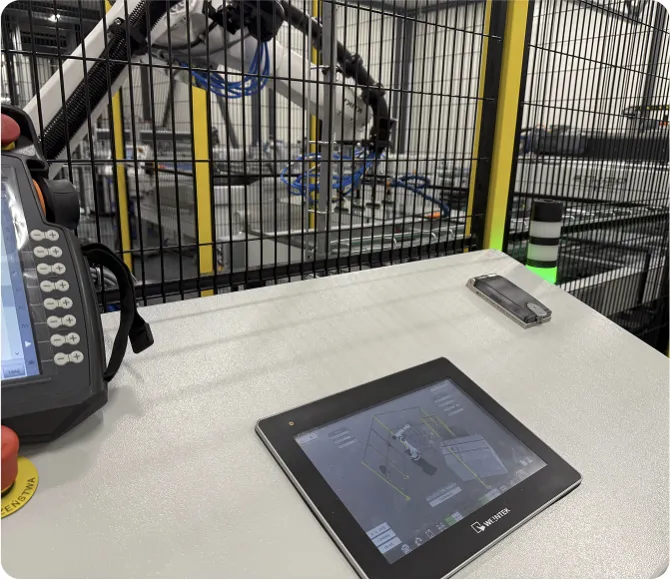
We delivered a multi-discipline project (control & instrumentation and mechanical) for an automated glass paint shop: risk assessment, prefabrication of the control panel with operator desk, supply and integration of a 6-axis robot with gripper, robotic trolley unloading, and a safety system (guarding and interlocks).
The robot unloads glass sheets from transport trolleys and feeds them onto the painting line. The key element of the station is a set of specially selected suction cups that pick up the glass without leaving dirt or marks on the surface before painting. The system positions sheets consistently whatever their size and runs continuously, with no downtime caused by human factors.
Features:
- handles glass from 300 × 40 × 4 mm to 1000 × 600 × 8 mm,
- maximum sheet weight: 10 kg,
- system for separating wet blanks,
- gripper adjusts automatically to the glass size,
- 4 independent pneumatic sections,
- suction cups that leave no marks on the glass.
Glass industry
Robotics – Handling
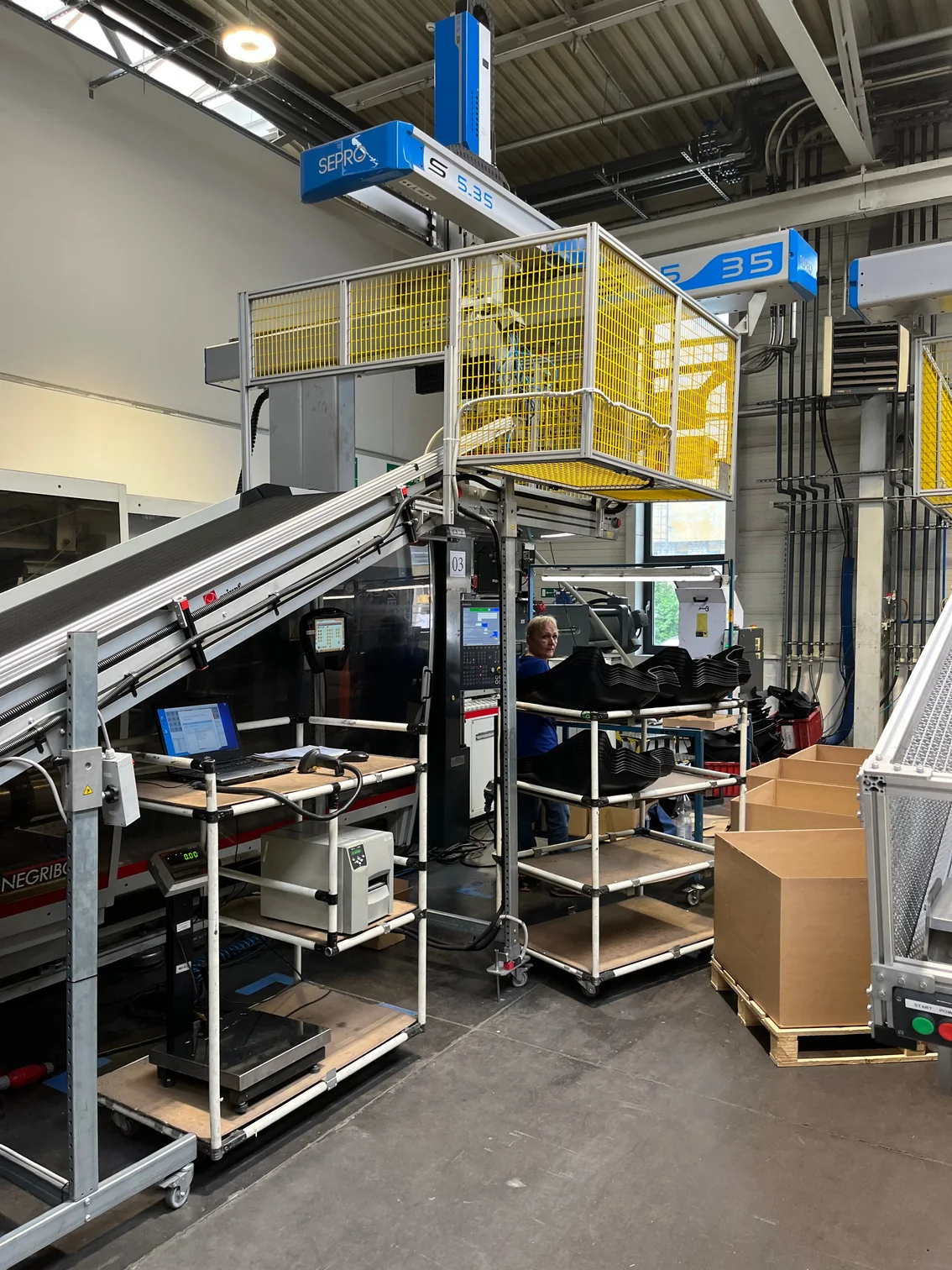
Injection moulding machine robotics
We designed and built a robotic cell that removes rubber car mats from an injection moulding machine. Our solution increased production efficiency and improved the quality of the removed parts.
Automotive
 1 / 3
Automation
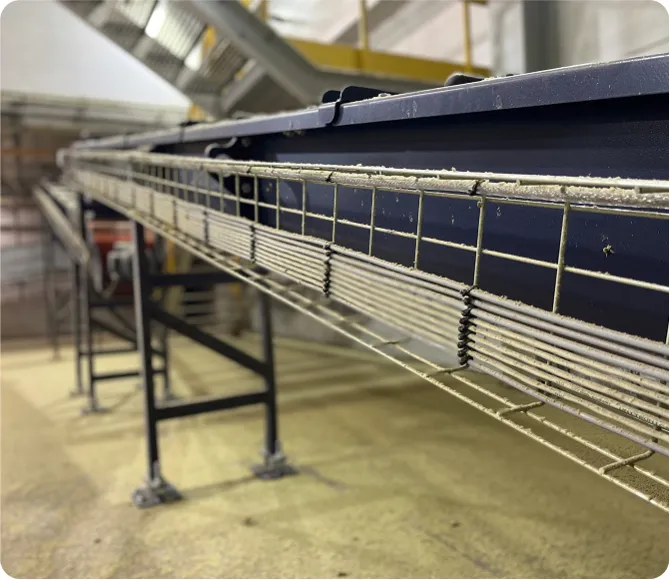
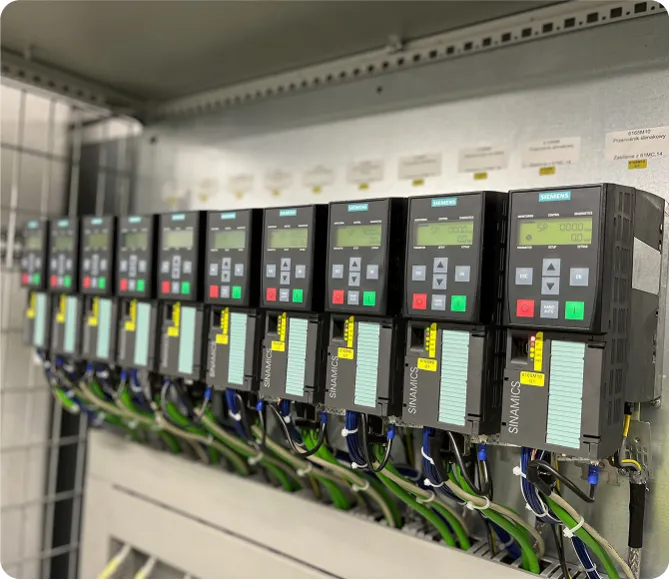
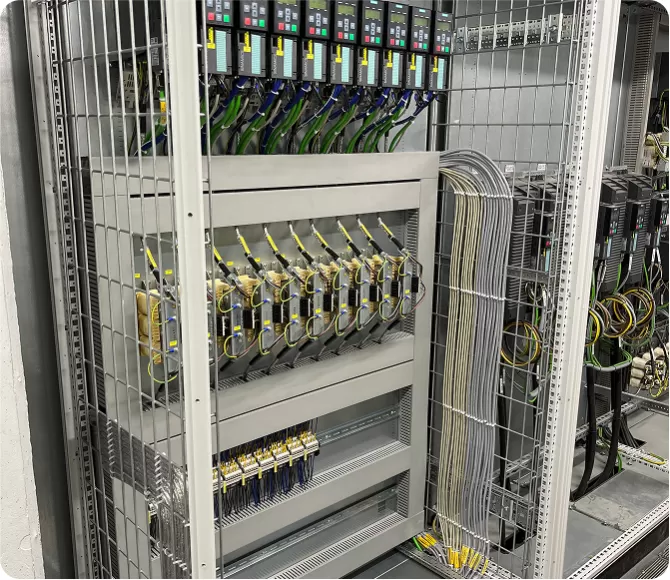
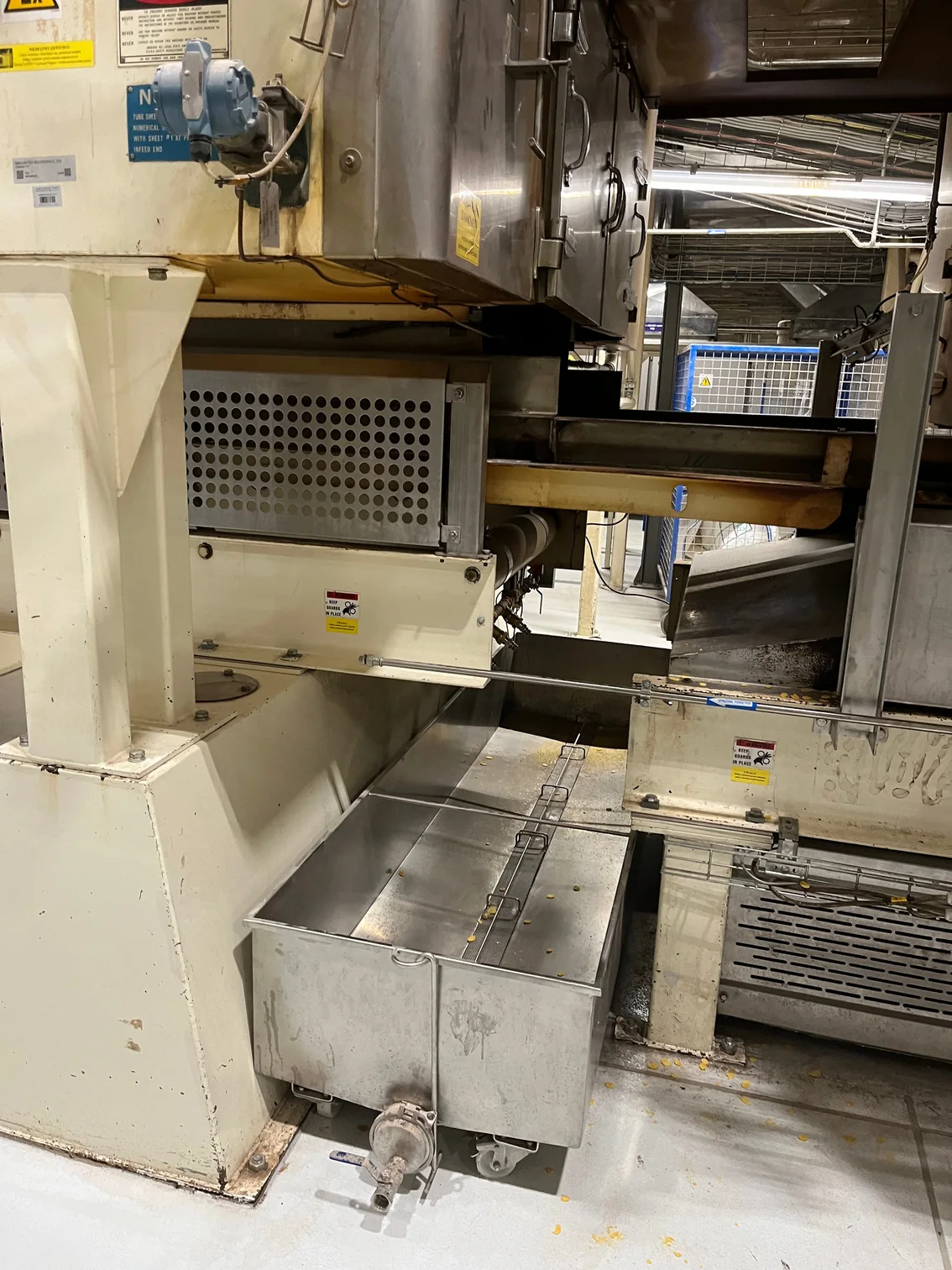
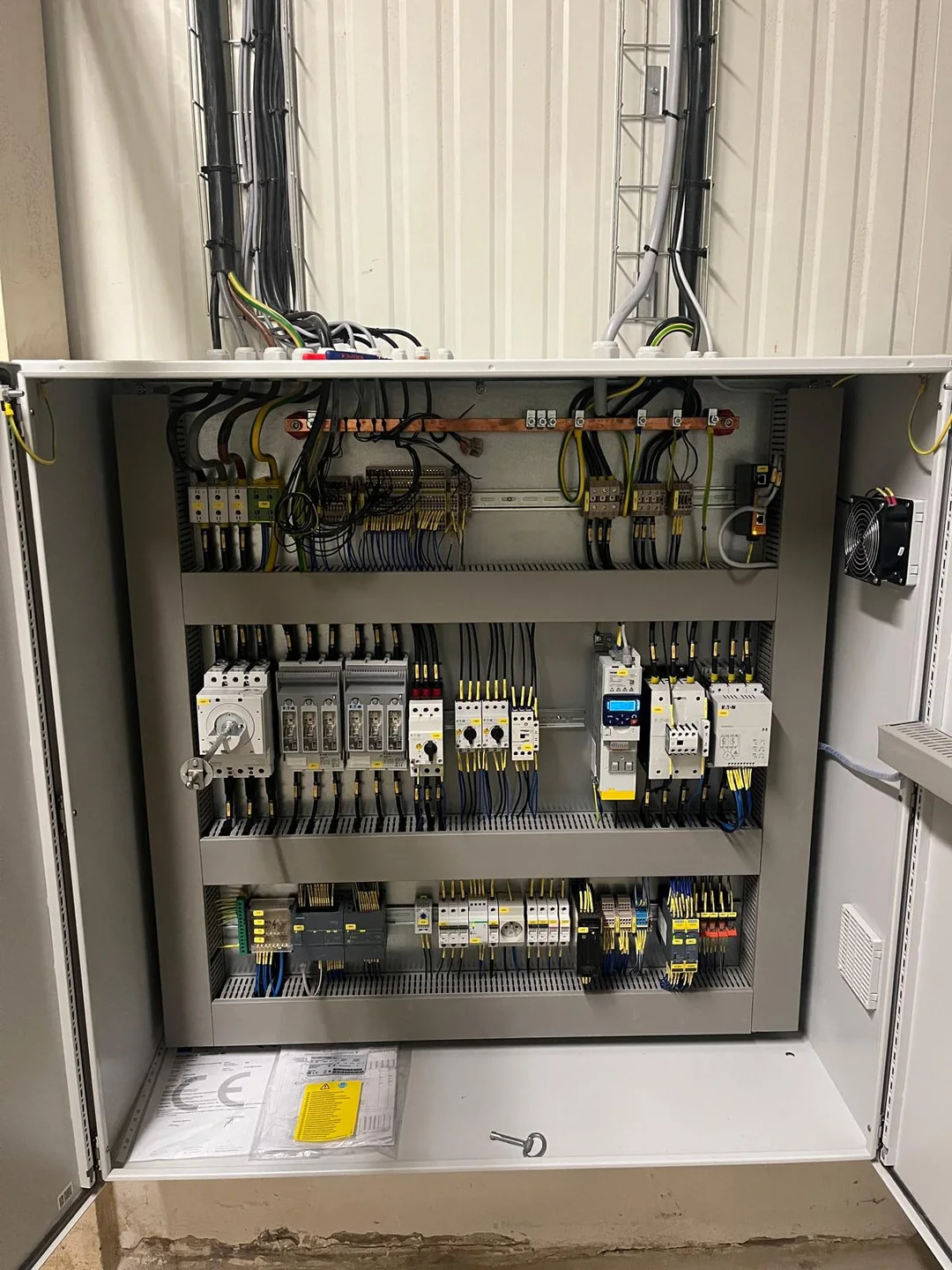
Automation of a raw material conveying line
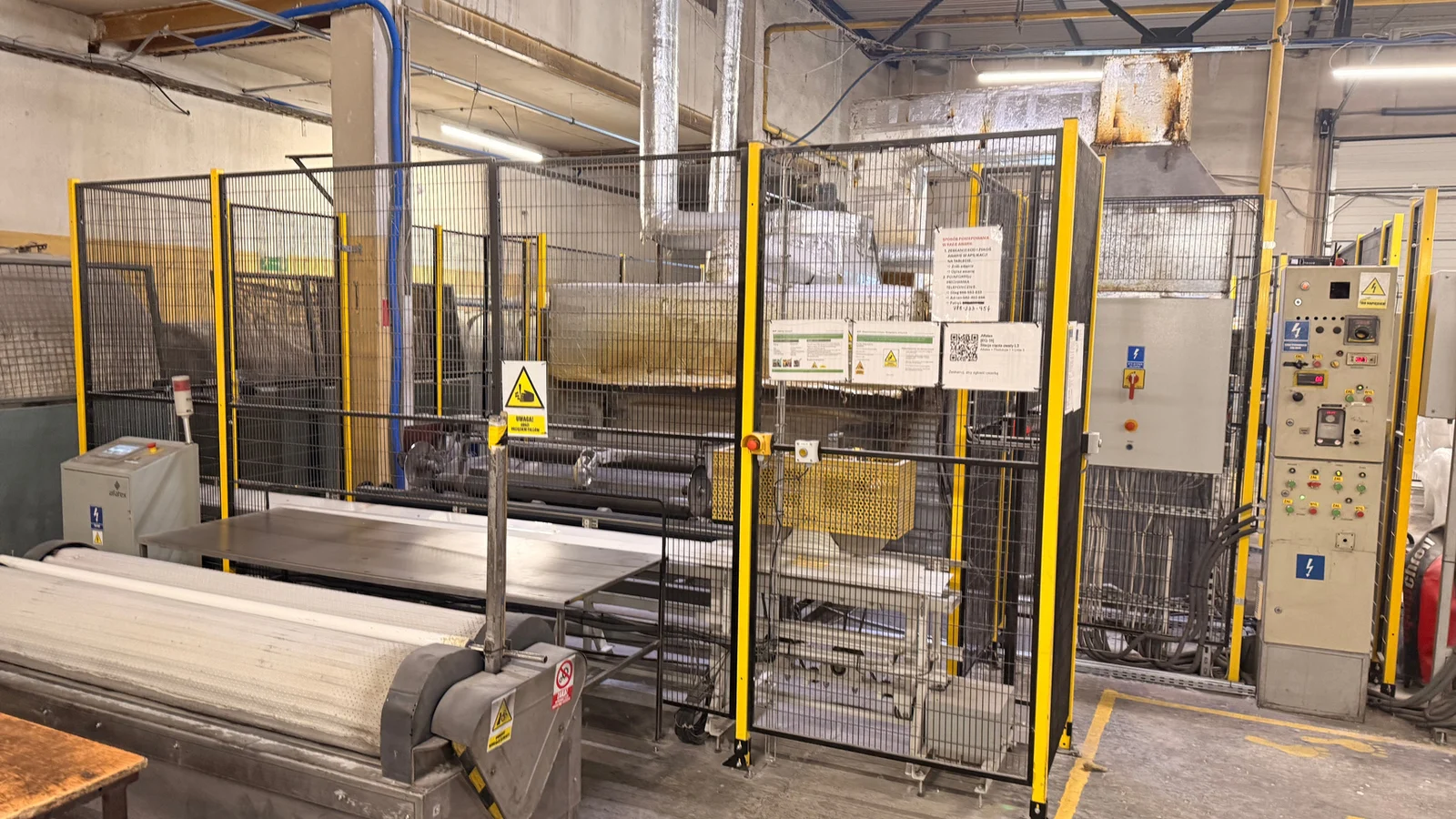
We prepared the control & instrumentation design documentation for a raw material conveying system, then prefabricated its control and power panels using G120 series drives. We tied the new system into the existing mineral wool production line, integrating it with the customer's infrastructure.
Insulation materials
 1 / 2
Automation
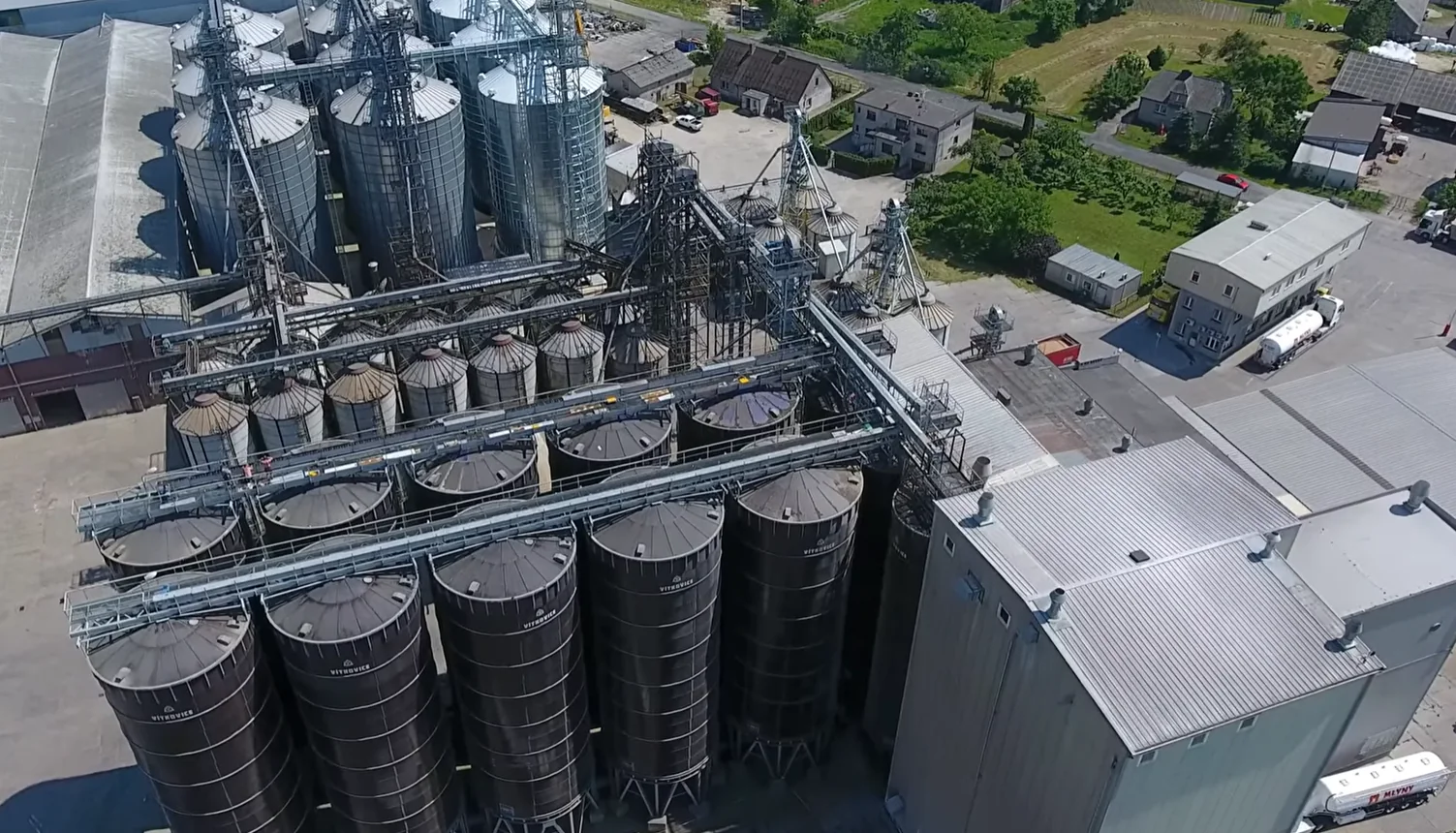
Flour conveying line control
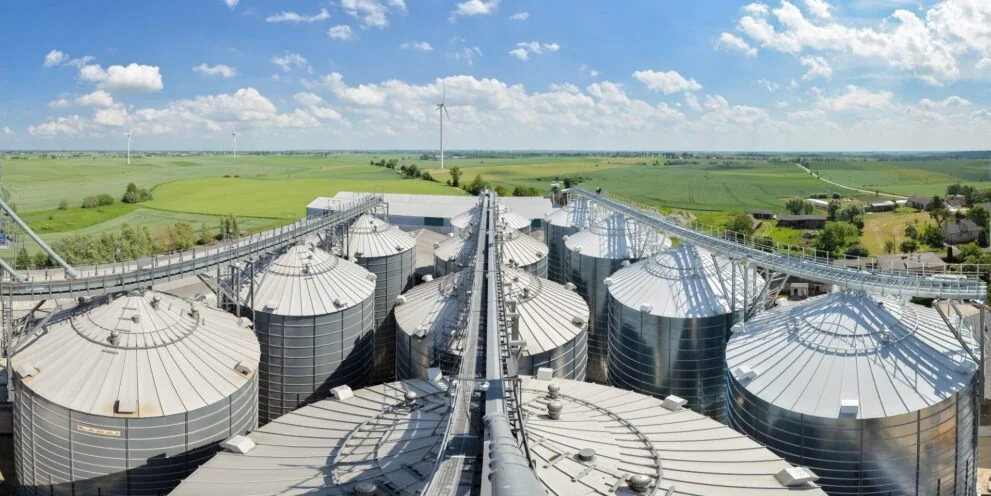
We designed and integrated the control system for a new line conveying flour from the mill to the silo – controlling all the equipment on the line and commissioning the new installation.
Features:
- control design tailored to the client's needs,
- control of blowers, slide gates and flaps,
- continuous pressure monitoring for smooth, reliable conveying.
Milling
 1 / 2
Automation
Palletising data logging with RFID reading
We extended the palletising control system with data archiving and data exchange with the host system. The weight and number of each shrink pack are assigned to a specific pallet, improving quality control and batch traceability.
Features:
- data exchange with an external controller,
- automatic data backups,
- RFID tag reading.
Milling
 1 / 2
Automation
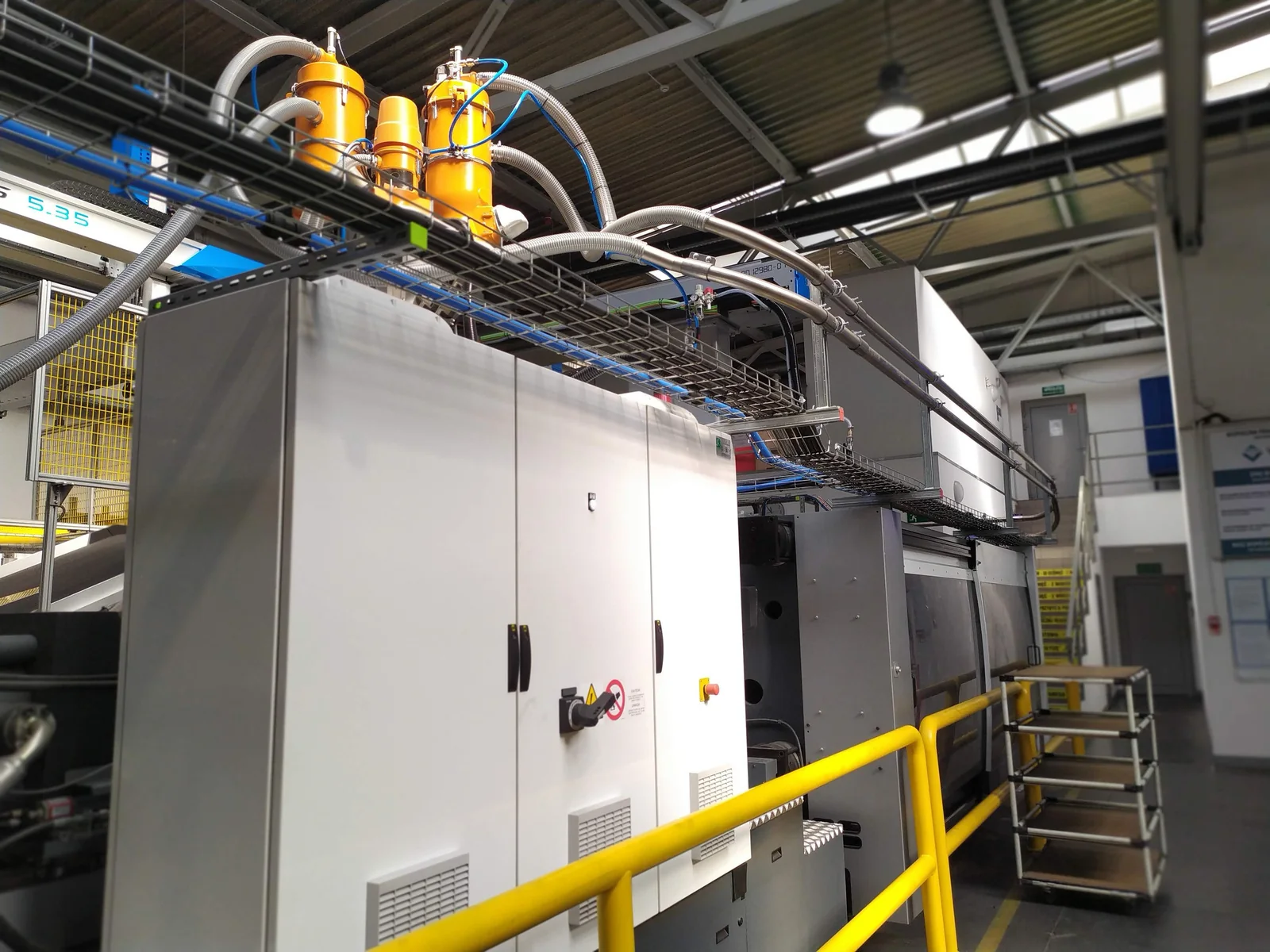
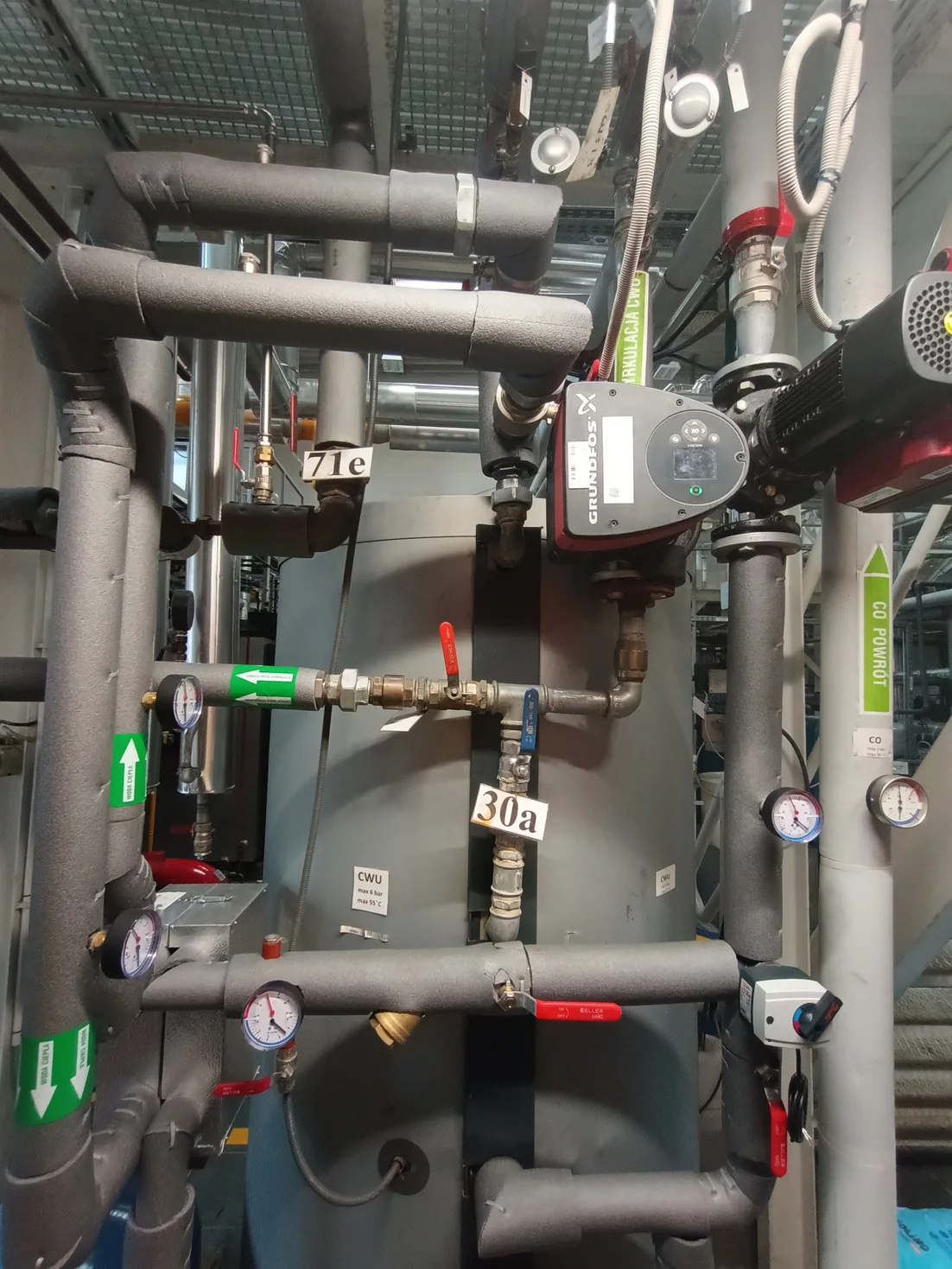
Process line upgrades in the plastics industry
We deliver the full scope of design, installation and commissioning for automated process lines in the plastics industry: site installations, process control and retrofitting lines with the components they need.
Features:
- design of electrical switchboards, control cabinets and plant infrastructure,
- design of mechanical and process components,
- process control,
- safety systems,
- integration of monitoring and measurement systems.
Plastics – various clients
 1 / 2
Automation
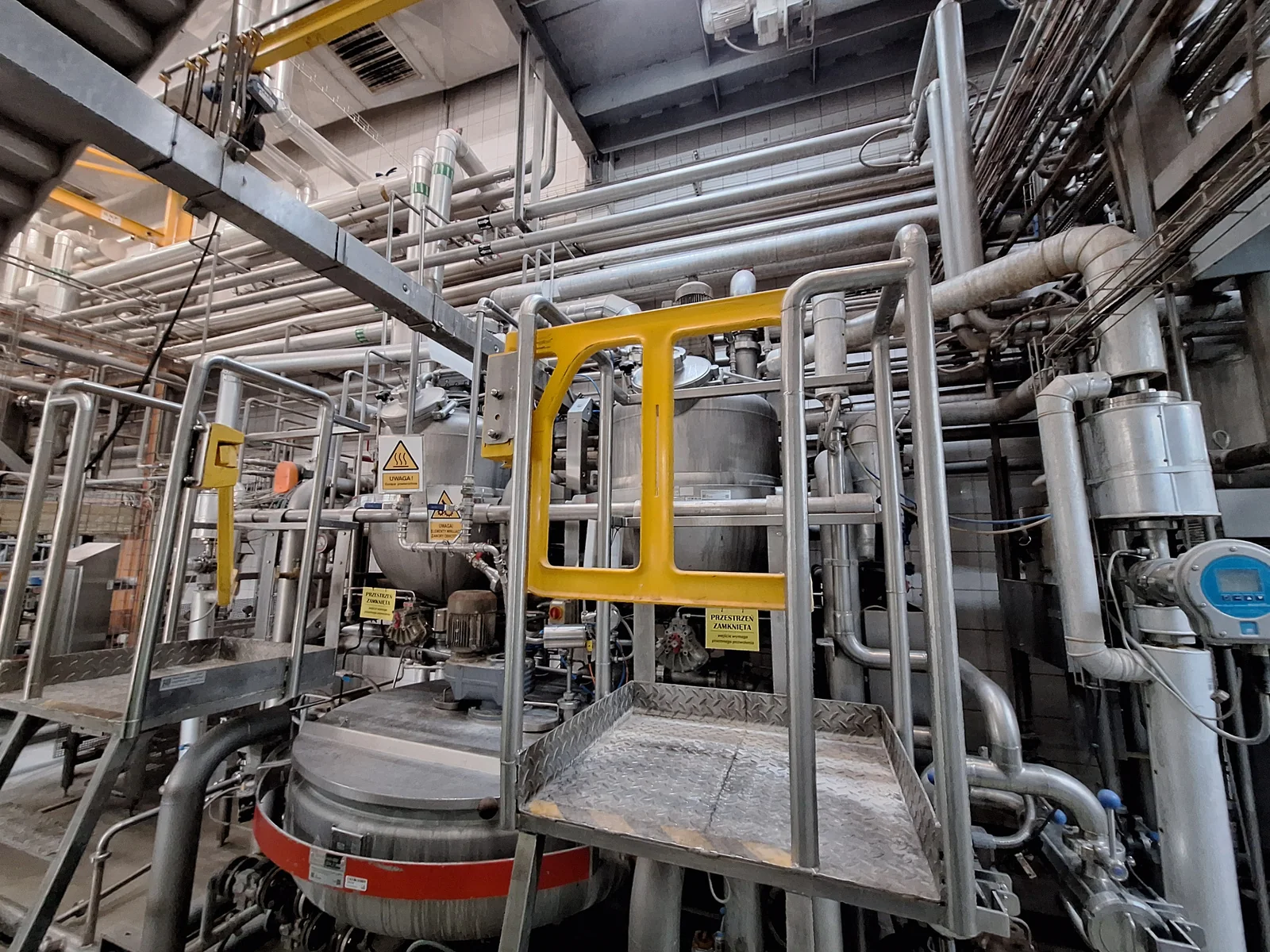
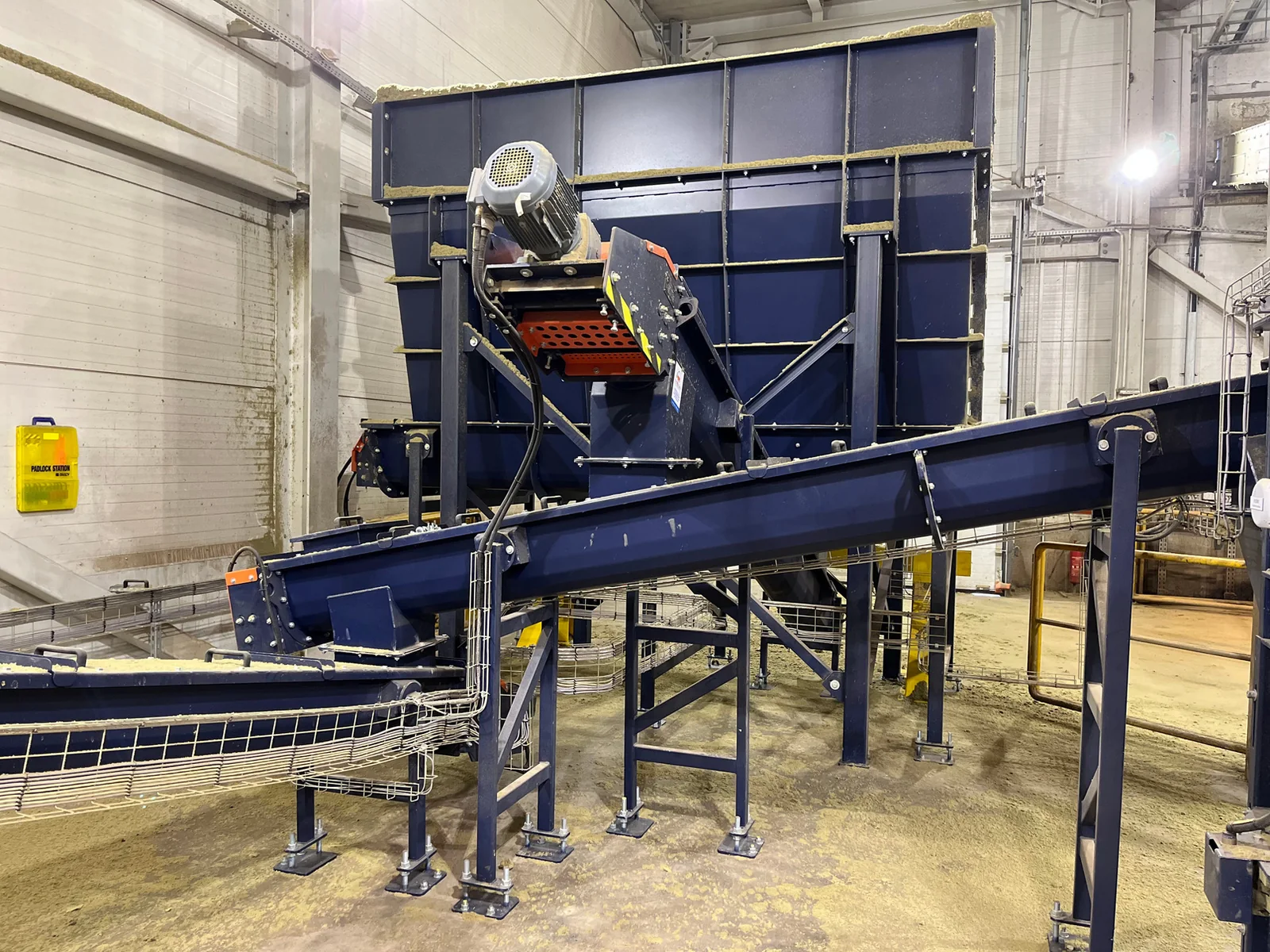
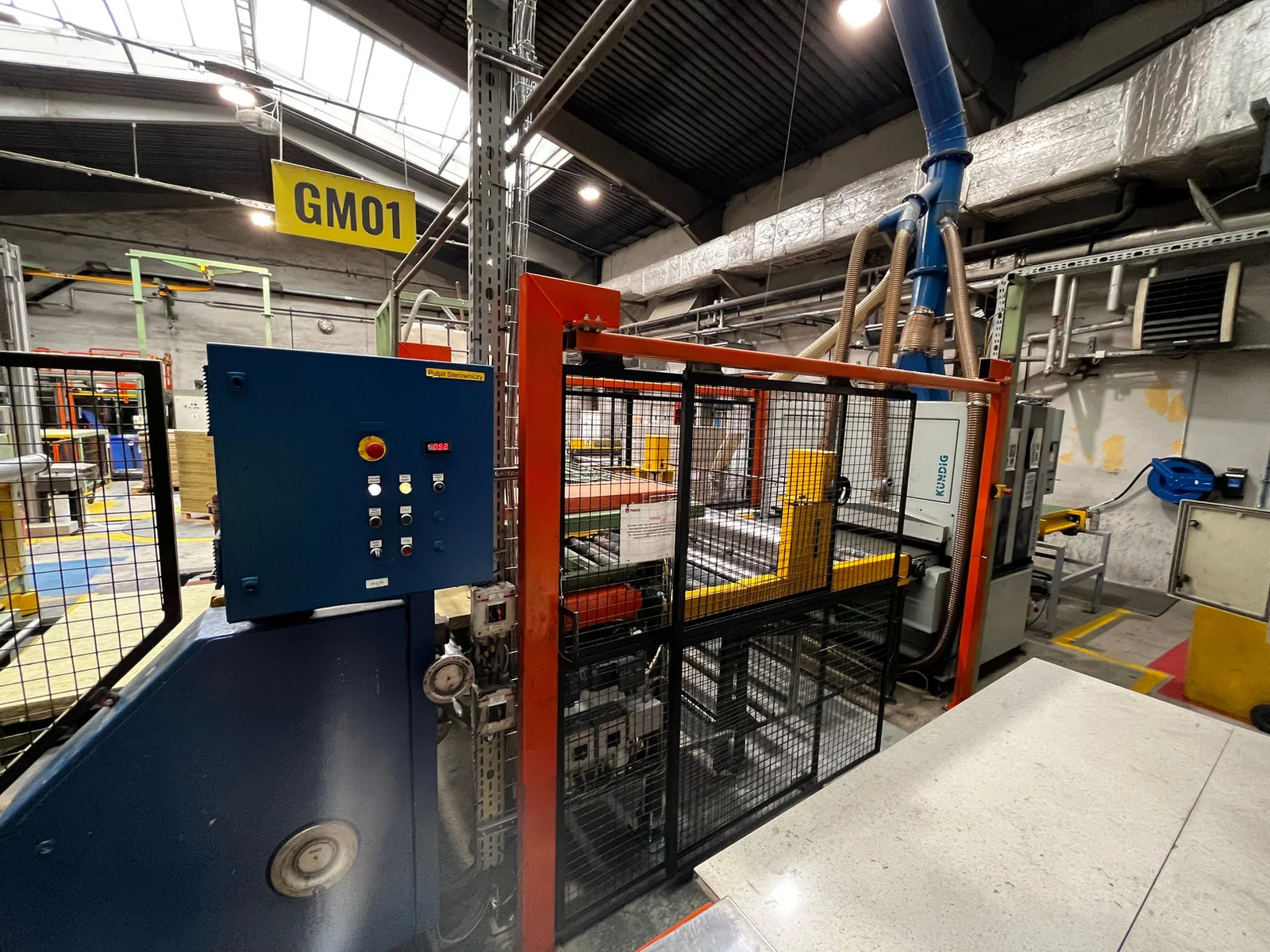
Process line upgrades in the food industry
We deliver the full scope of design, installation and commissioning for automated process lines in the food industry, including power, control and safety installations.
Features:
- control design in line with the client's standards and guidelines,
- design and prefabrication of the control & instrumentation panel,
- process control,
- control of fans, blowers, valves and other process equipment,
- PID controllers.
Food – various clients
 1 / 2
Automation
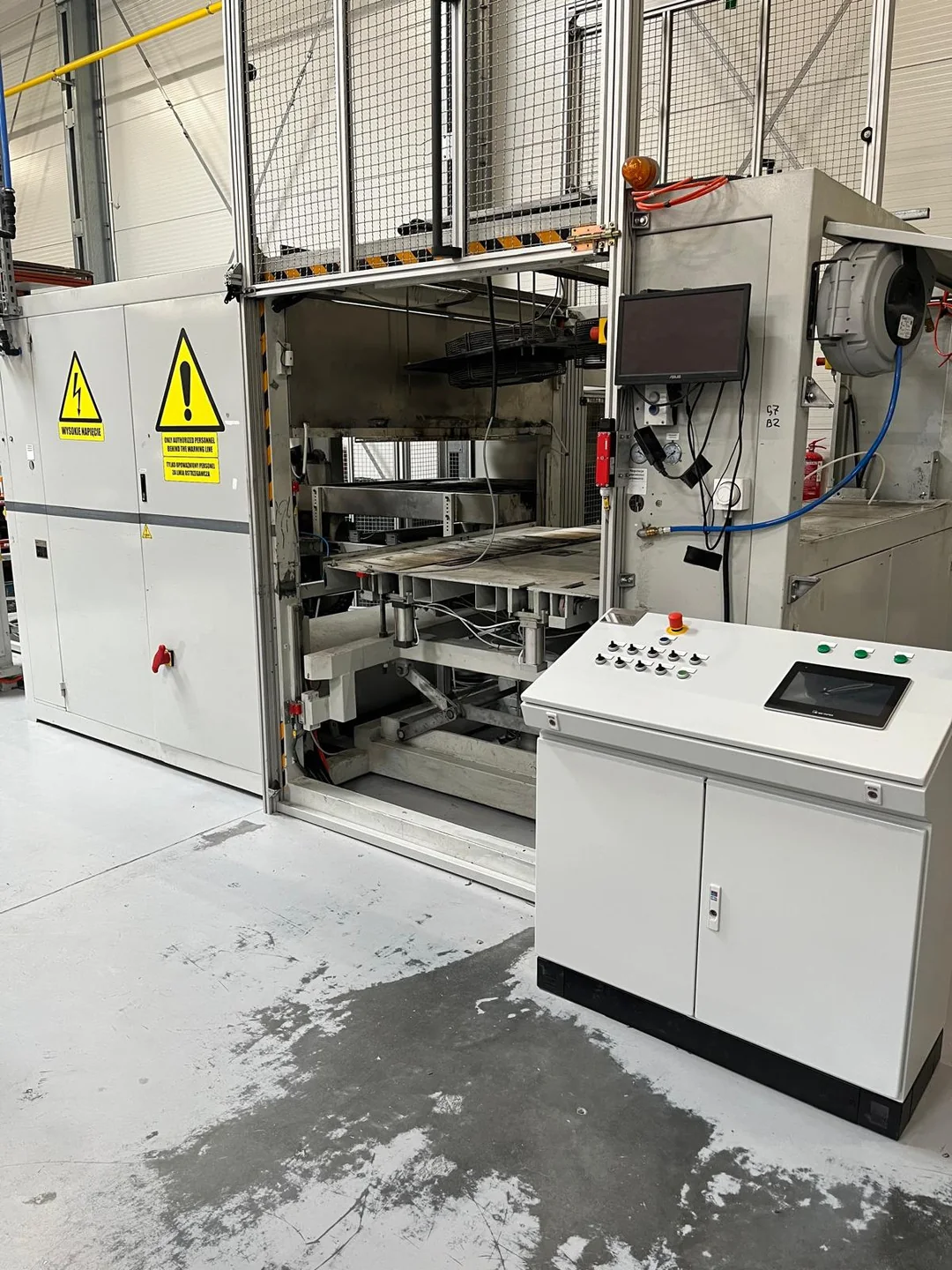
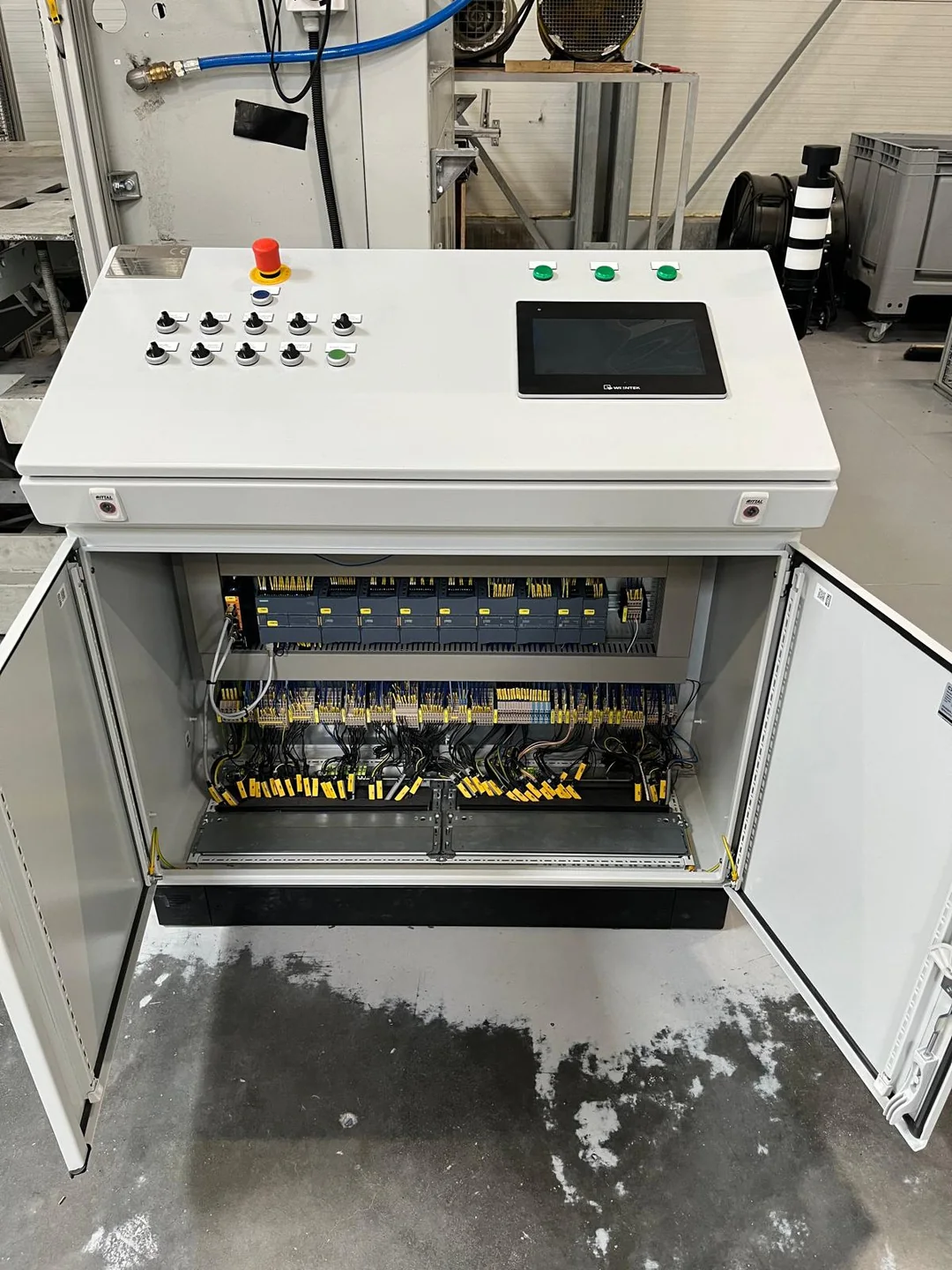
New control system for 7 production lines
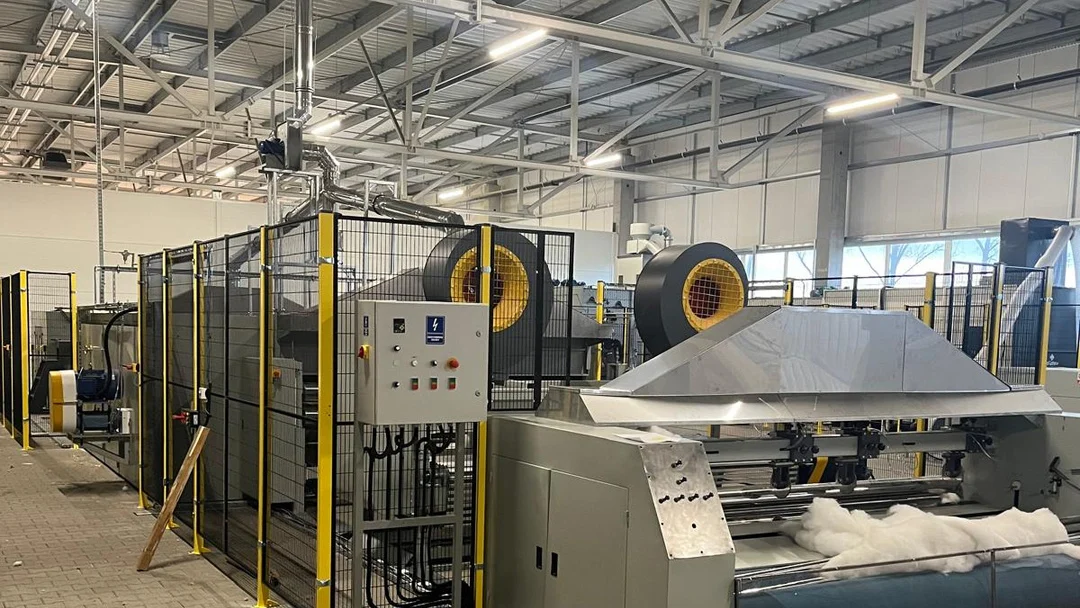
We replaced the control systems of 7 production lines at a single plant. The new system, designed to the client's guidelines, handles safety functions, drives, process control and temperature control. We supplied complete design documentation for the installation.
Features:
- distributed control system with local sensor islands,
- on-site cable routes,
- supply and installation of control panels, local control cabinets and maintenance isolators,
- upgrade of existing switchboard sections to supply the new cabinets,
- electrical testing of the new installation,
- fire-rated cable penetrations through fire compartment walls.
Insulation materials
 1 / 2
Automation
Thermoforming machine upgrade
We upgraded the control system of the customer's machine, adding measurement of rubber temperature and stretch. We brought the machine into line with European standards by adding safety guards and a master safety controller.
Features:
- our own control system for a repeatable, reliable process,
- dedicated safety controller,
- full risk assessment of the machine,
- custom safety guards tailored to the machine.
Plastics
Robotics – Handling
Glass grinding machine tending
We built a robotic cell serving two grinding machines, integrating robots (6-axis and SCARA) with the existing machines. We prefabricated the control panel with operator desk, designed and built a belt conveyor, and installed the safety system (safety controller, Troax guarding). We carried out testing and on-the-job operator training, started up production and provided on-site support.
The robots unload glass sheets from transport trolleys and transfer them precisely between grinding stations, replacing work previously done by hand on three shifts. The process is repeatable regardless of the shift or the team’s pace.
Features:
- handles glass from 125 × 35 × 4 mm to 800 × 100 × 4 mm,
- maximum sheet weight: 6 kg,
- automatic control of the grinding machines,
- two types of edge grinding.
Glass industry
 1 / 3
Robotics – Process applications
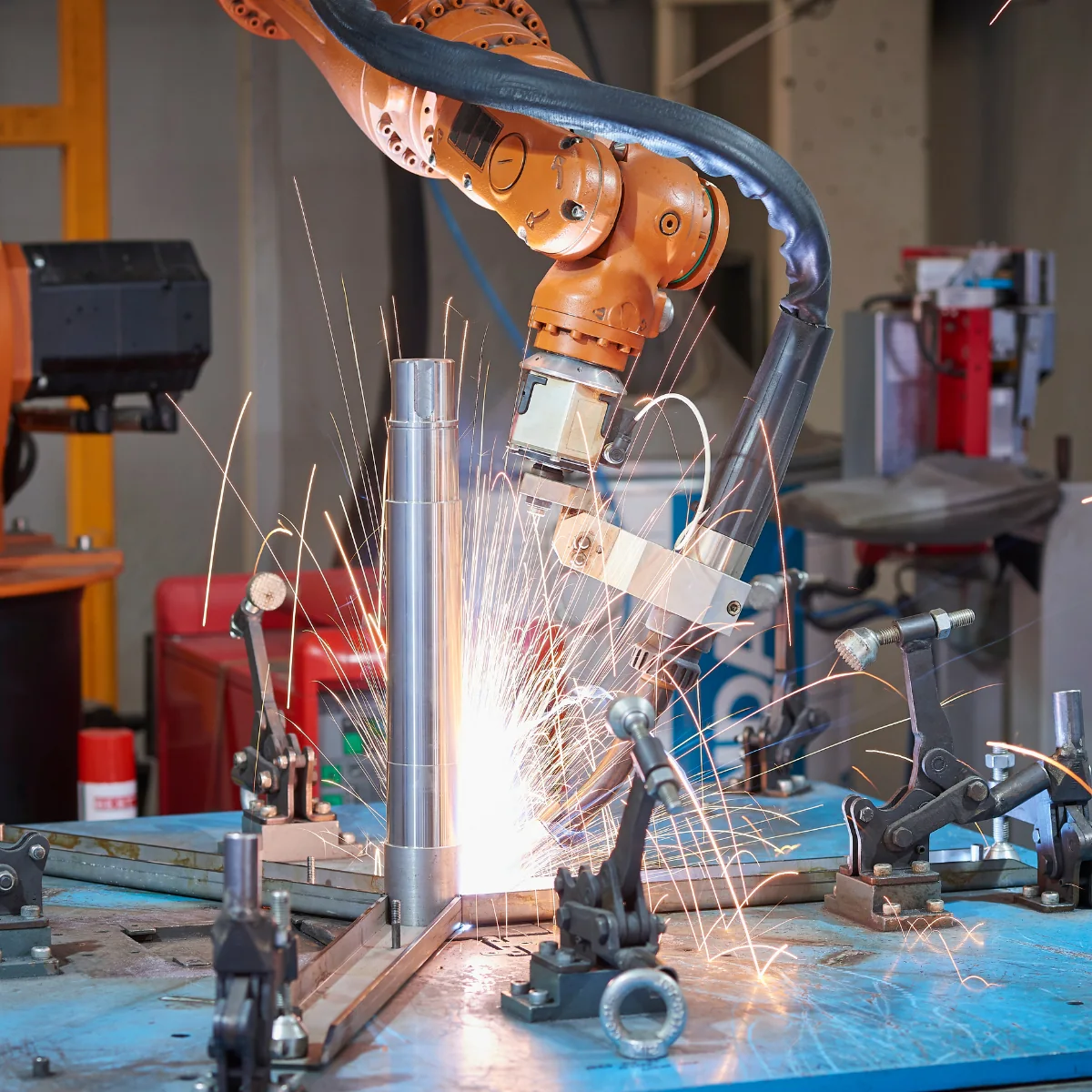
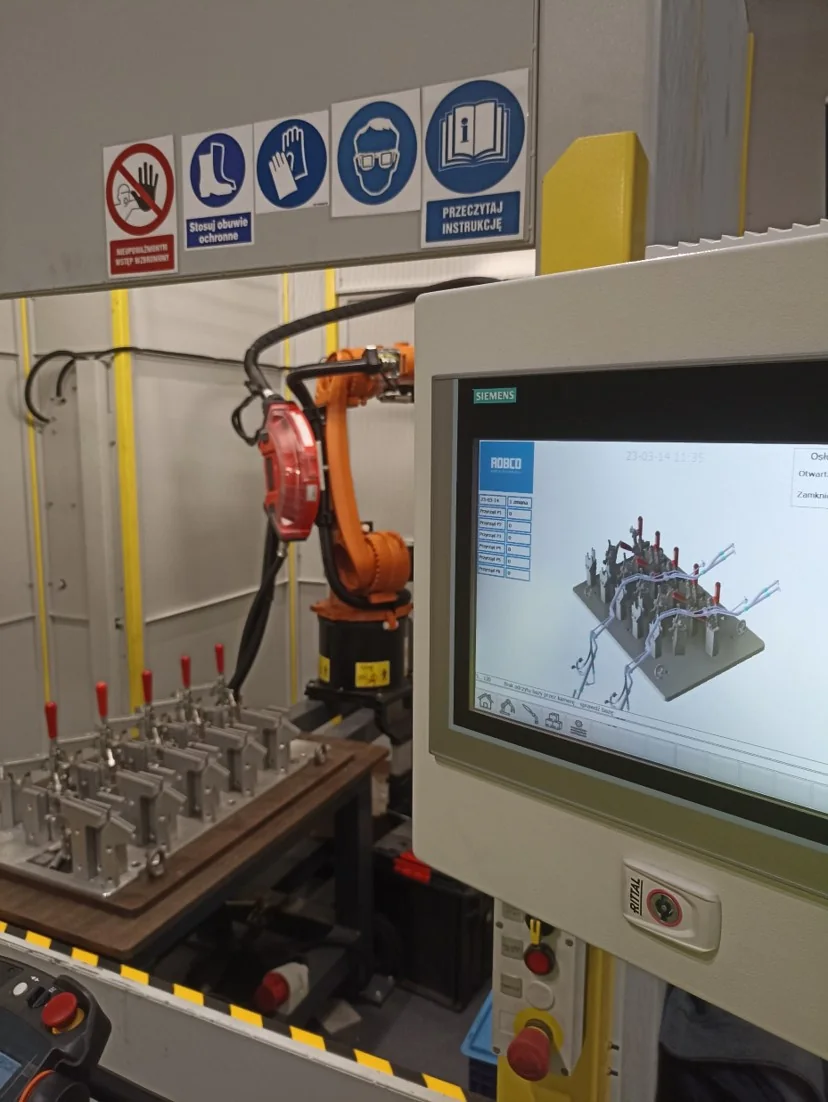
Welding cell upgrade
We upgraded a cell welding automotive components: we replaced the robot with a KUKA model, configured its parameters and equipped it with a Fronius welding system. We built a new supervisory system with an HMI panel from which the operator selects the material to be welded. We developed the welding programs, configured the vision system, and carried out testing, training and commissioning.
Features:
- welding fixtures tailored to the product,
- integration with the Fronius welder,
- control and program selection from the HMI panel.
Automotive
 1 / 3
Robotics – Process applications
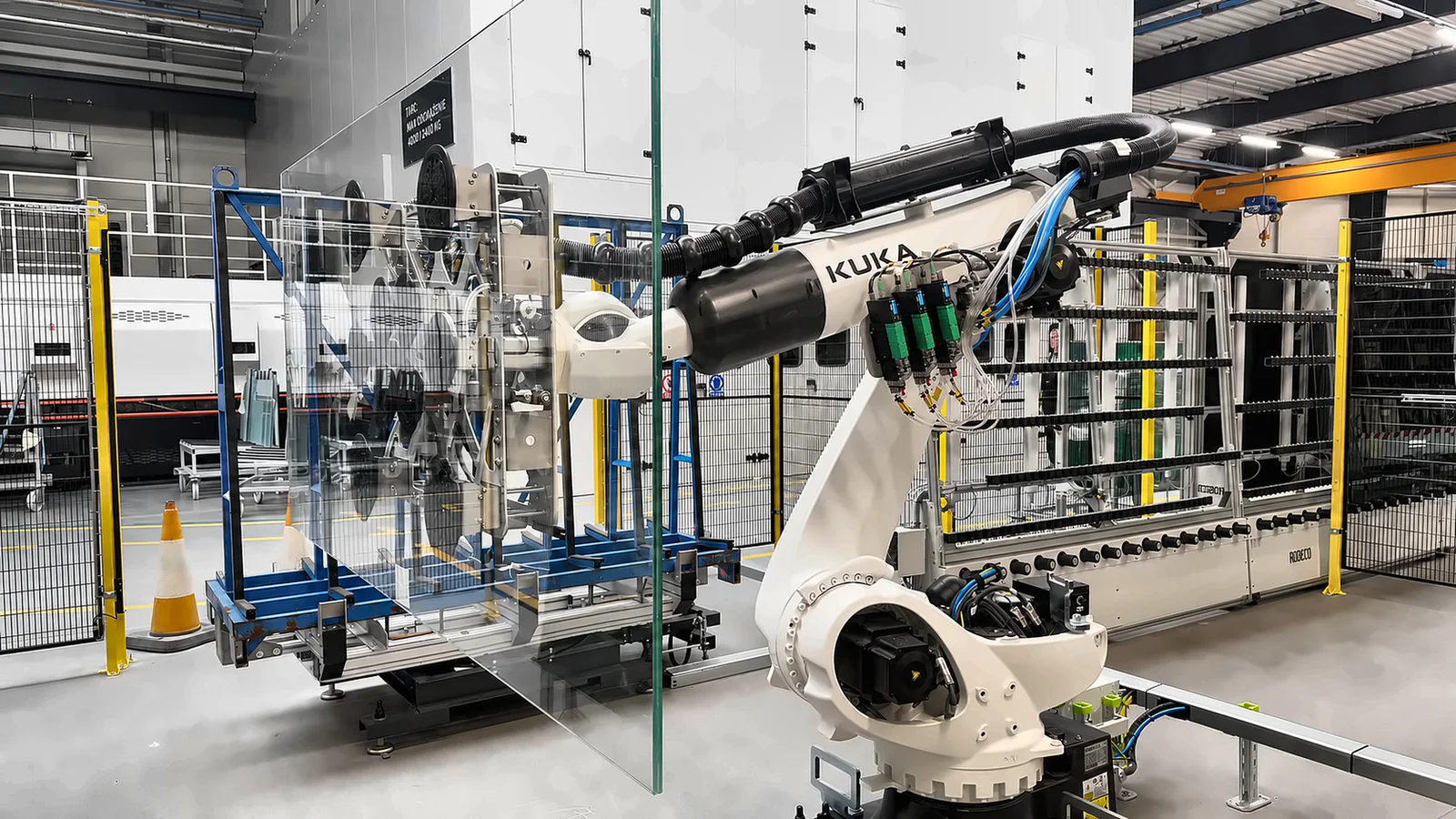
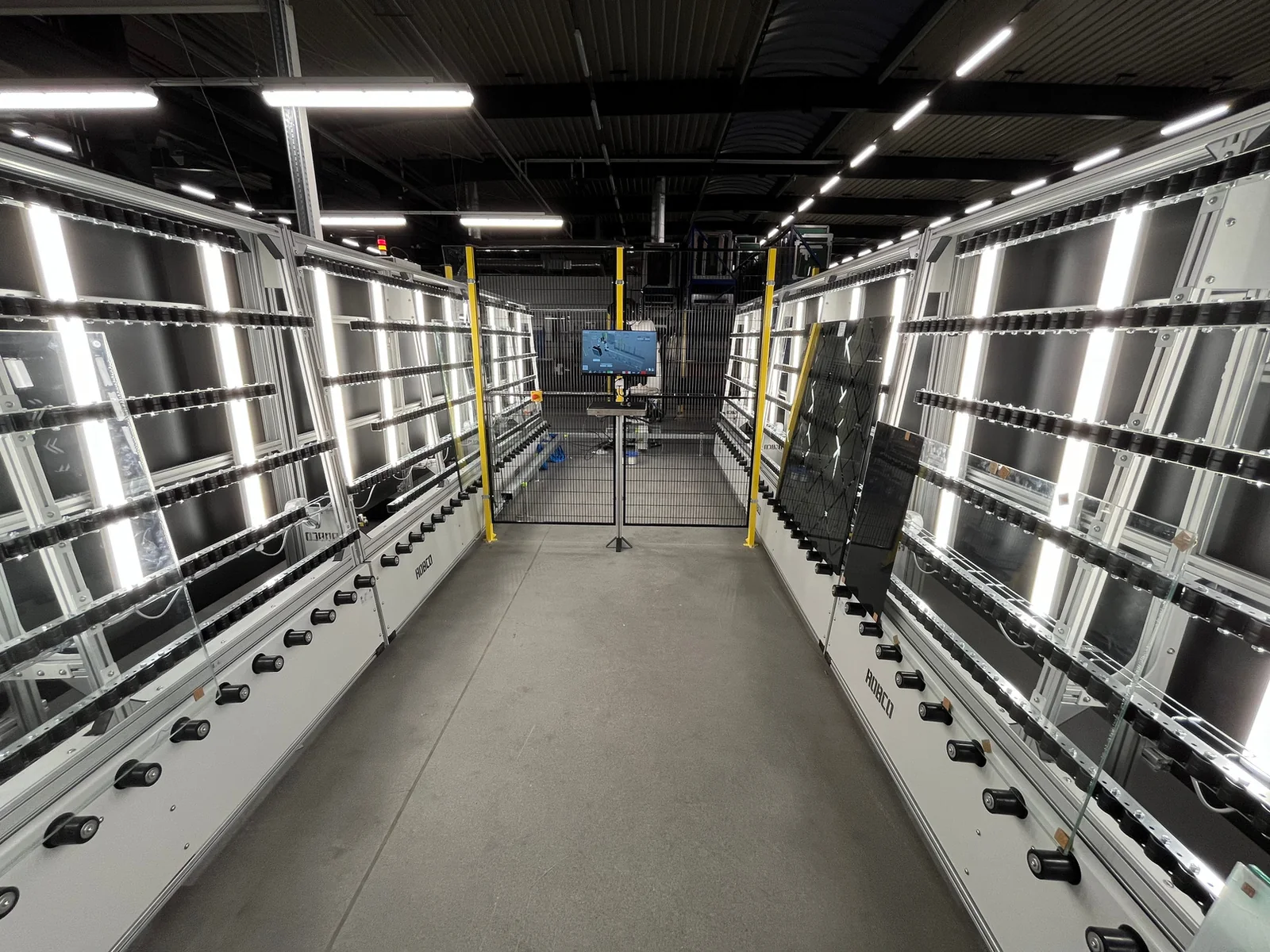
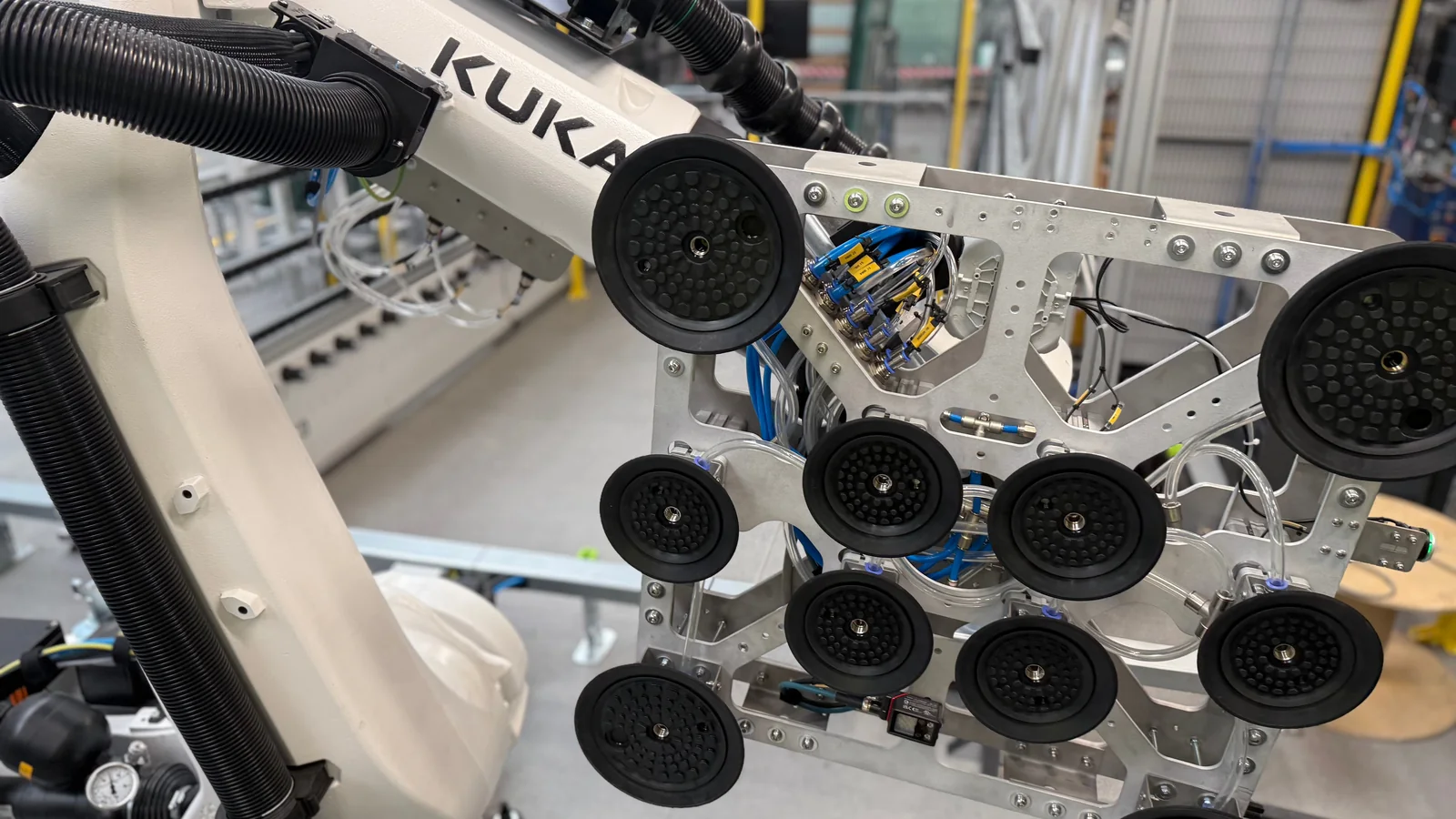
Robotic cell for trimming seams in glass panes
We built our own robotic cell integrated with material handling. The robot precisely cuts a groove between two bonded glass panes – a process that demands very accurate tool guidance and carefully chosen machining parameters to avoid damaging the product.
Features:
- handles panes from 500 × 500 × 8 mm to 1600 × 2500 × 20 mm, weighing up to 150 kg,
- automatic measurement of glass size and orientation, and detection of the pane's centre,
- reads customer data from a QR code and sorts panes onto a dedicated conveyor,
- 4 independent drop-off points – handles orders for 4 customers at once,
- our own cutting system: flat cutting and grooving,
- vacuum system with vacuum monitoring – prevents glass from falling and saves compressed air.
Results: 30 panes per hour, two-shift operation, the robot does the work of 4 additional people. ROI approx. 21% per year.
Glass industry
 1 / 2
Robotics – Process applications
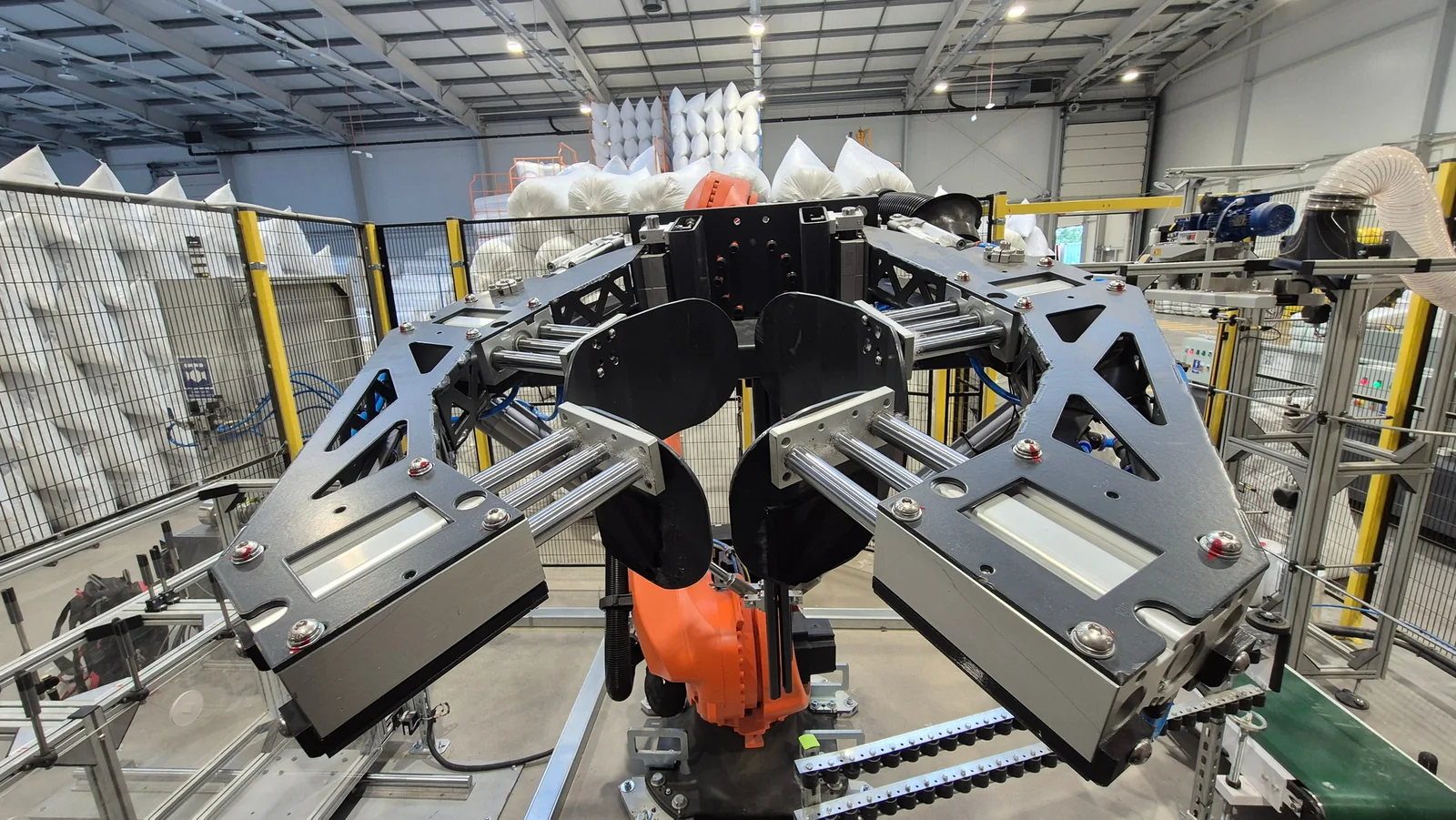
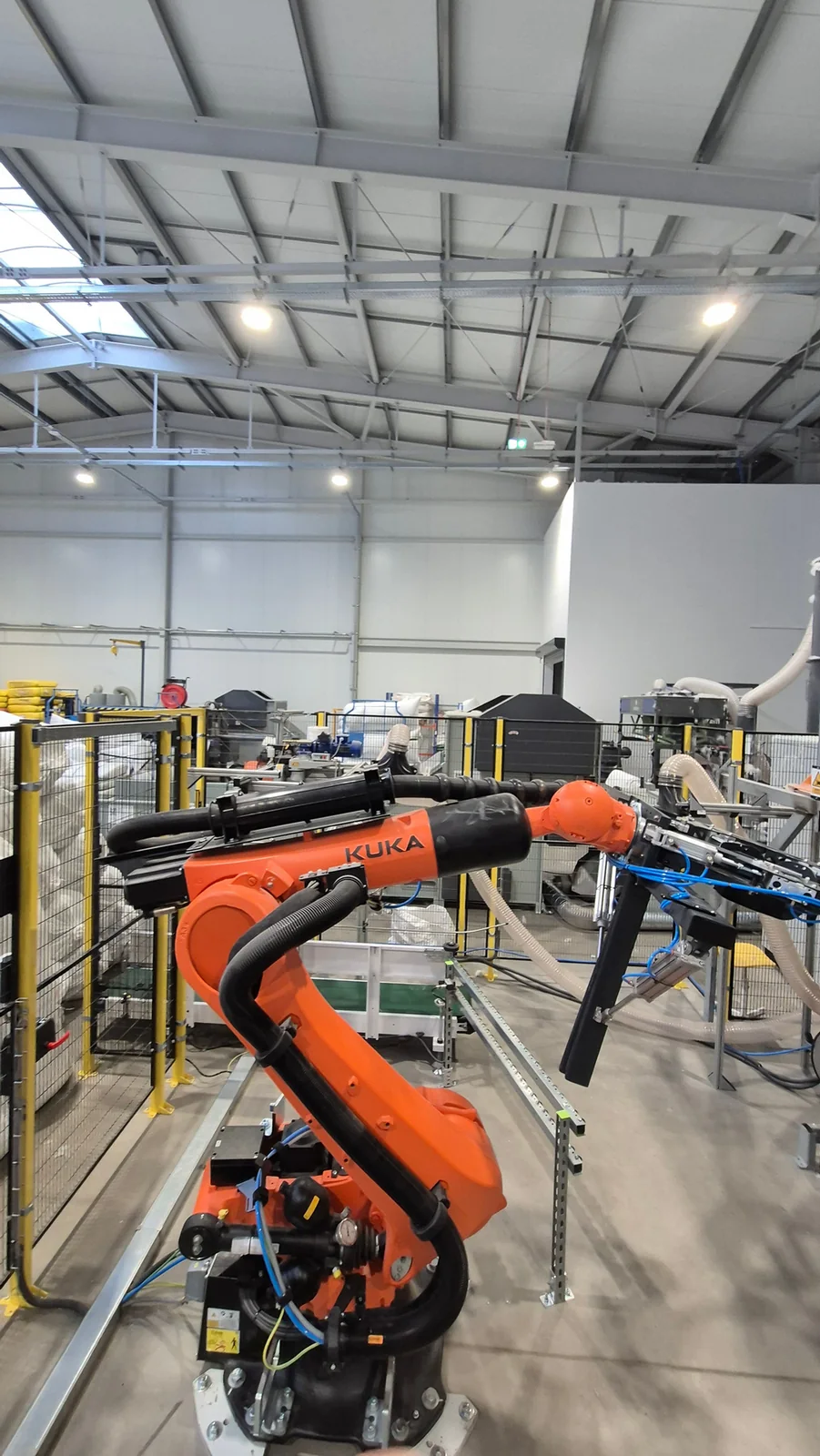
Bagging machine robotics
We robotised the packing of pillow filling. The robot picks a polypropylene bag from a dedicated magazine, places it on the packing machine, removes the full bag and sews it closed automatically. The system fills two bags at once and eliminates the risks of operators working at filling machines.
Features:
- works with clear and white polypropylene bags,
- fills 2 bags at once,
- automatic sewing of full bags,
- material recirculation during removal and sewing – minimal waste.
Results: 600 kg per hour; 1 person per shift instead of 2 on each of 3 shifts. ROI approx. 32% per year.
Plastics
 1 / 2
Robotics – Process applications
Milling of ballistic plates and helmets
We built a robotic cell for milling personal protective equipment for the armed forces. Once a semi-finished part is loaded, it is measured automatically, and the robot selects the tool and mills the perimeter to give the product its final shape.
Features:
- handles ballistic plates in 3 sizes and helmets in 4 sizes,
- automatic part measurement,
- automatic tool change.
Results: new production capacity – 30 parts per hour with 1 person per shift. ROI approx. 27% per year.
Defence
Robotics – Process applications
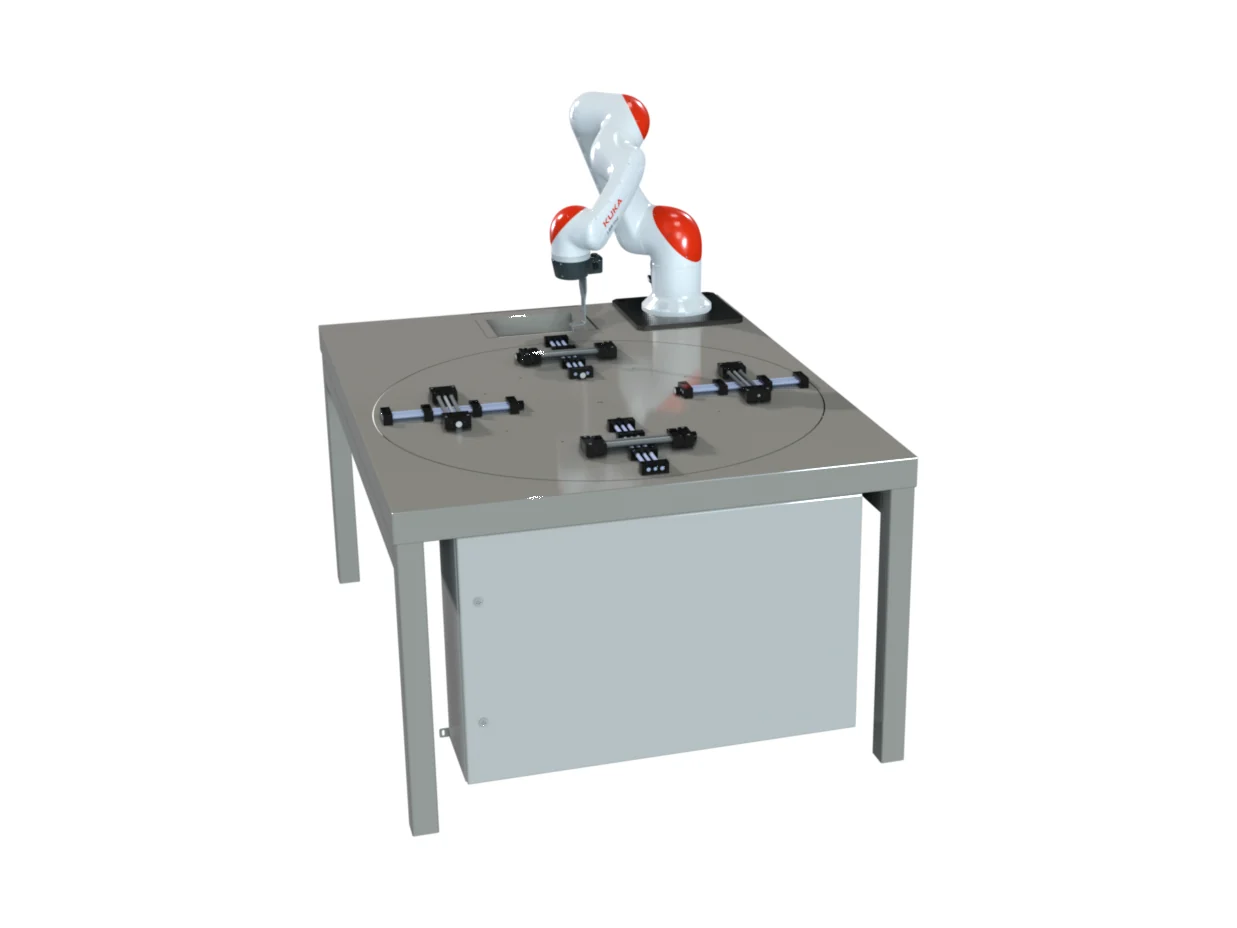
Tactical helmet bonding with a cobot
The operator places tactical helmet components on a rotary table. The system checks that they are positioned correctly, and a collaborative robot performs corona treatment and precisely applies a bead of adhesive.
Features:
- automatic bonding and corona treatment,
- verification of correct part positioning,
- cobot station – working side by side with people.
Results: new production capacity – 60 parts per hour with 1 person per shift. ROI approx. 48% per year.
Defence
 1 / 13
Robotics – Palletising
Flour shrink pack palletising line
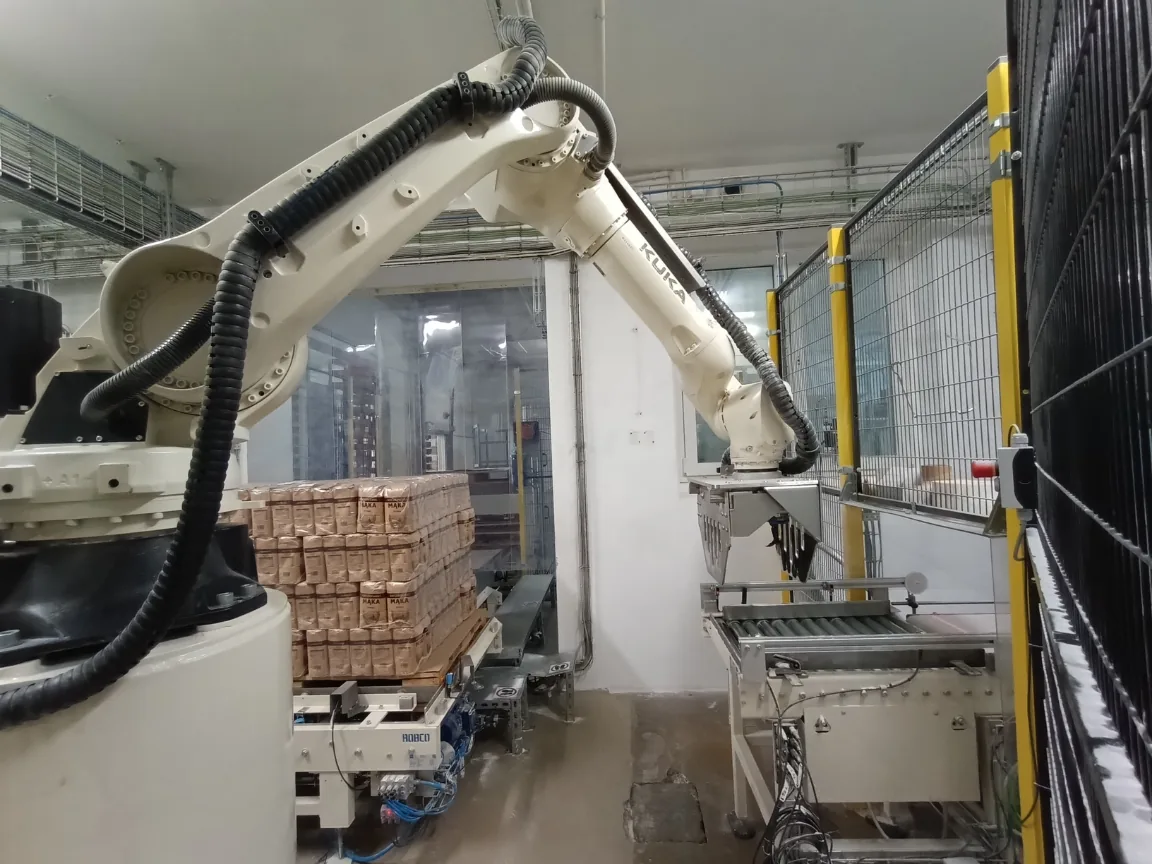
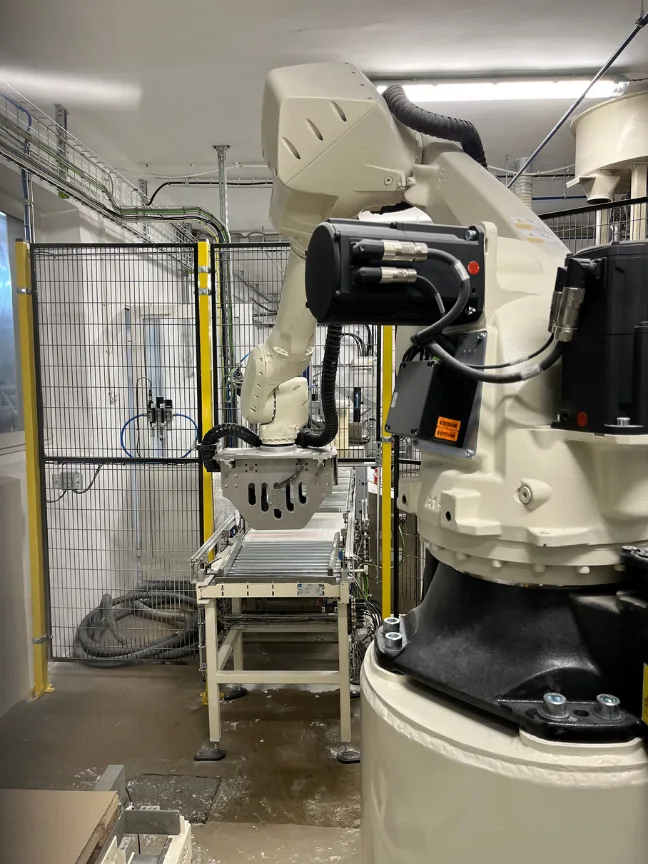
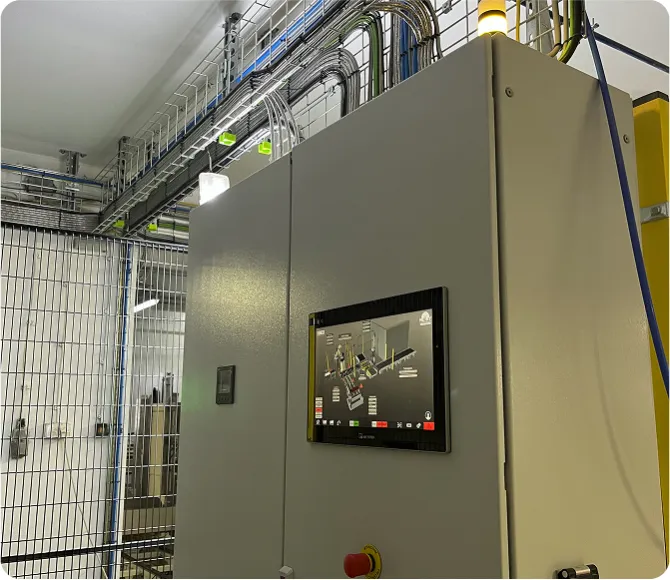
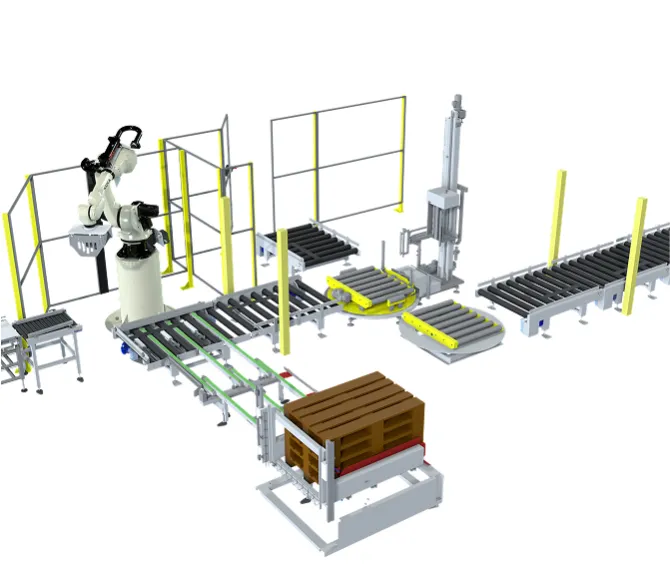
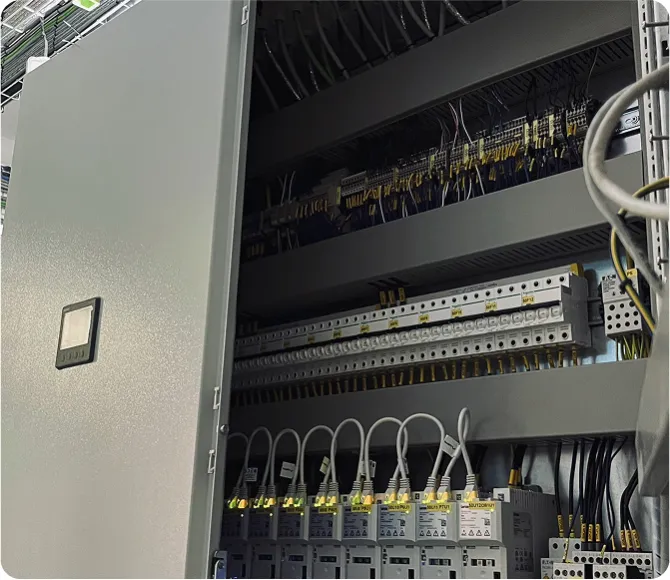
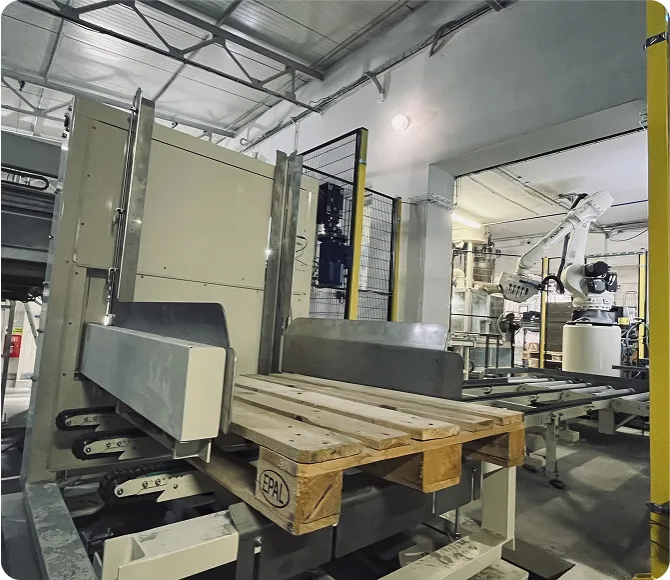
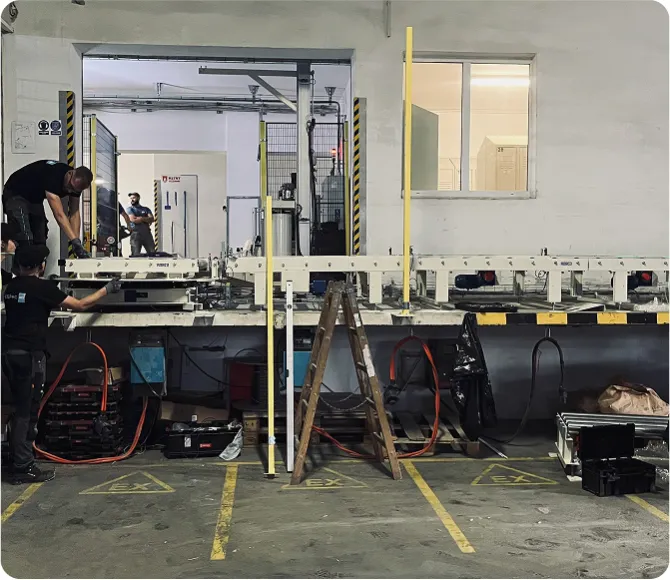
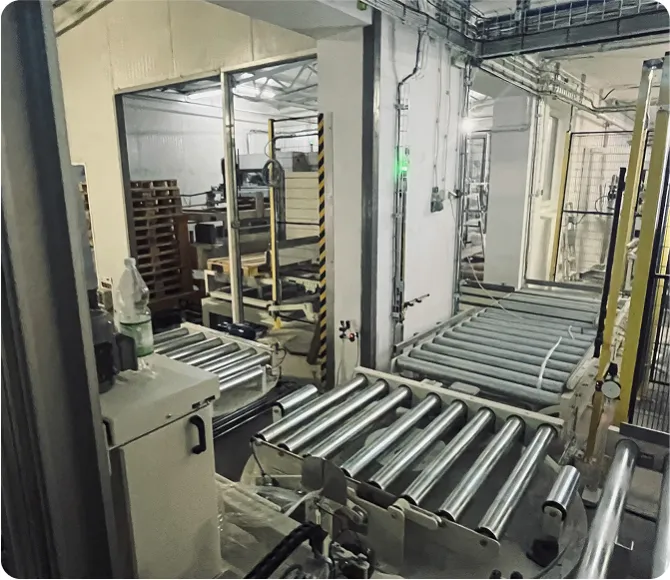
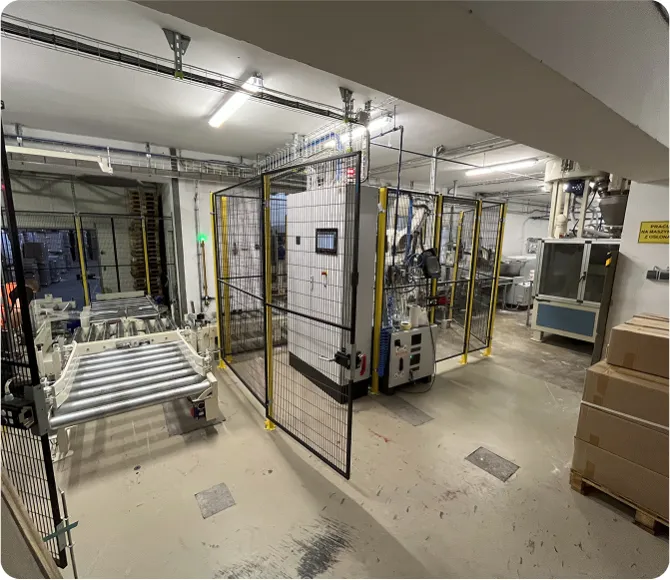
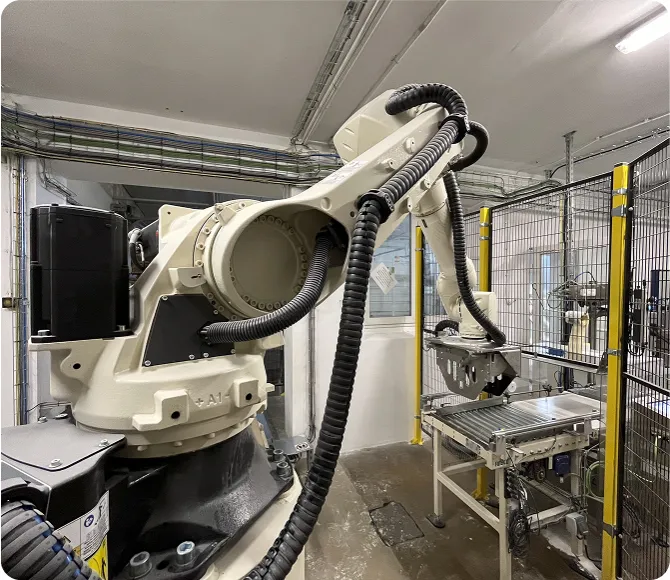
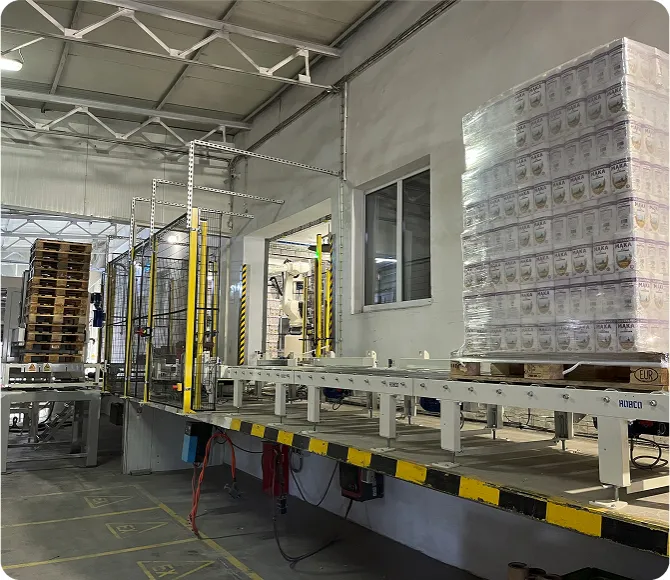
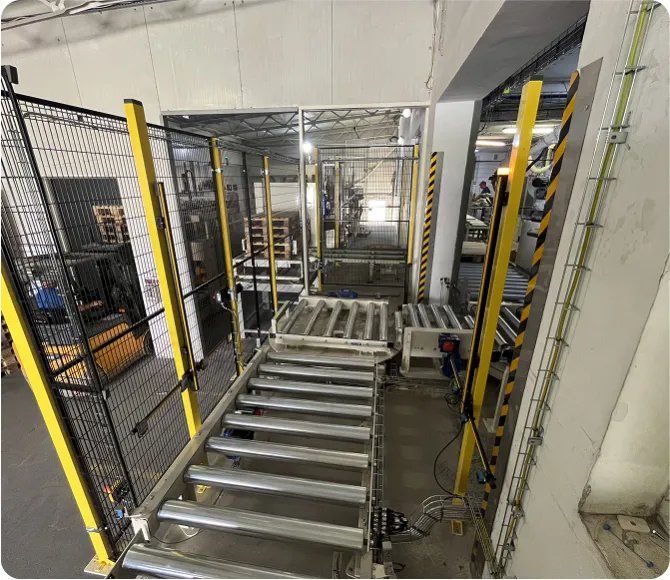
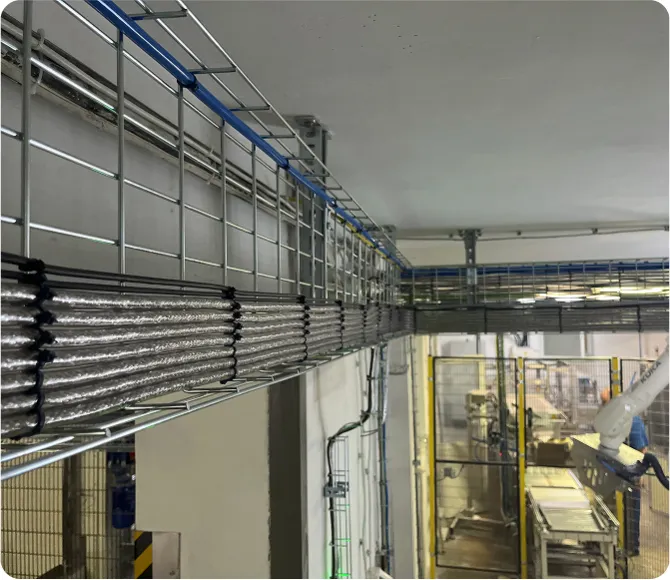
We delivered a multi-discipline palletising line project (electrical and mechanical): we prefabricated the control and power panel and built the roller conveyors, parts, pallet magazine, chain conveyors, turntables, safety guarding and gripper, and equipped the robot. We delivered the equipment to the customer, developed the control software for the palletising line, stretch wrapper and roller conveyors, carried out the site installation, and performed testing, operator training and start-up.
The complete palletising station handles weight checking, labelling, feeding pallets to the robot, pallet building and wrapping of the flour packs.
Features:
- handles packs of 10 × 1 kg, 6 × 2.5 kg and 2 × 5 kg,
- handles bags of different heights,
- automatic weight checking,
- automatic labelling,
- palletising up to 9 layers in any pattern,
- palletising on EURO and DHP pallets,
- automatic stretch wrapping,
- automatic pallet feeding to the robot,
- integration with the MES.
Milling
 1 / 14
Robotics – Process applications
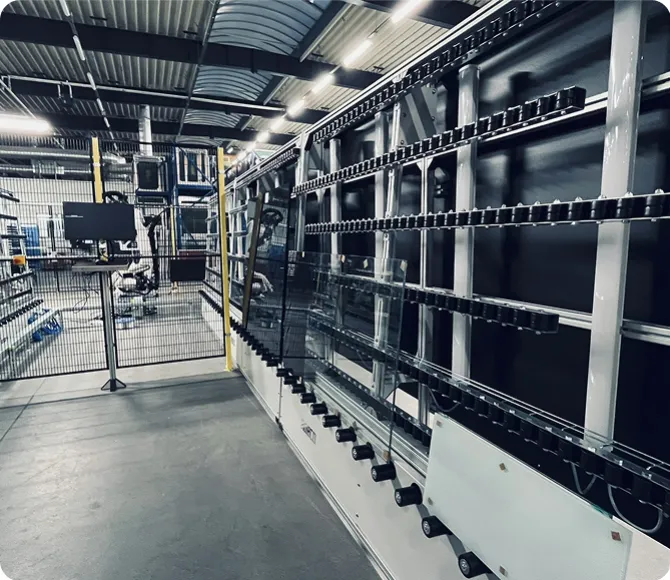
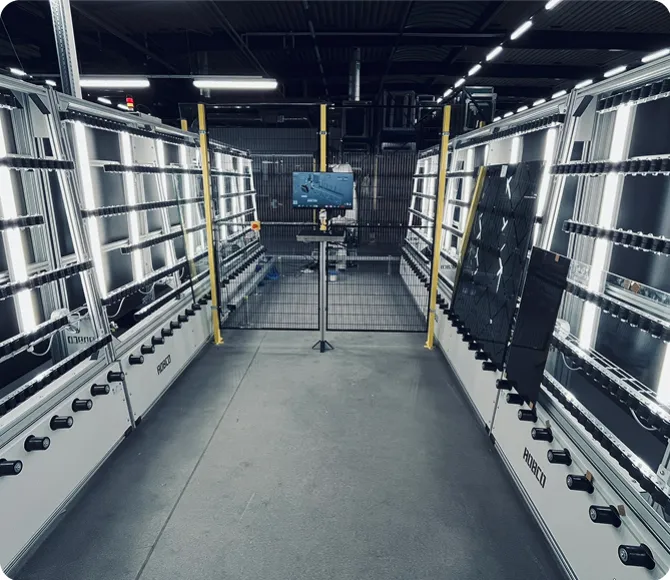
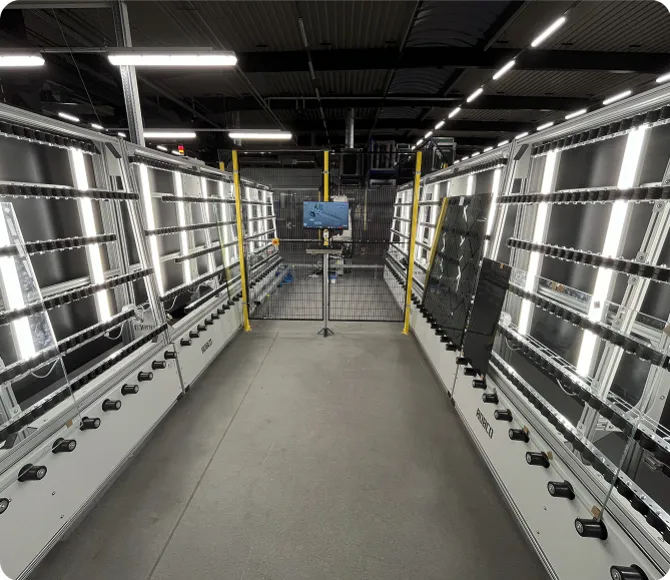
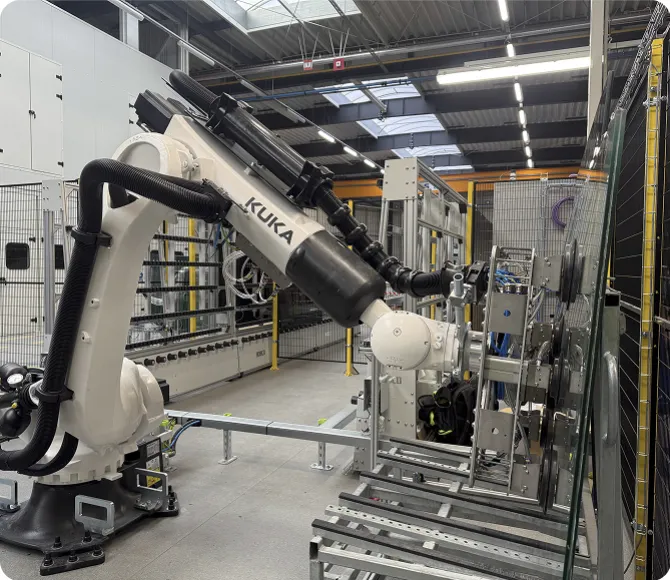
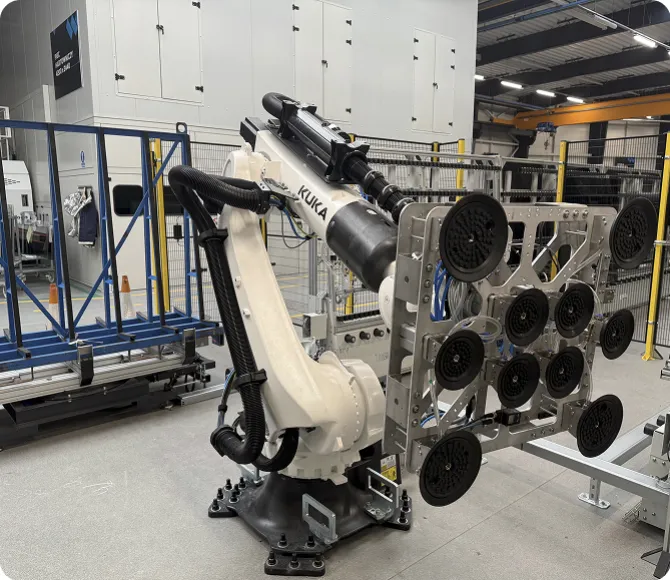
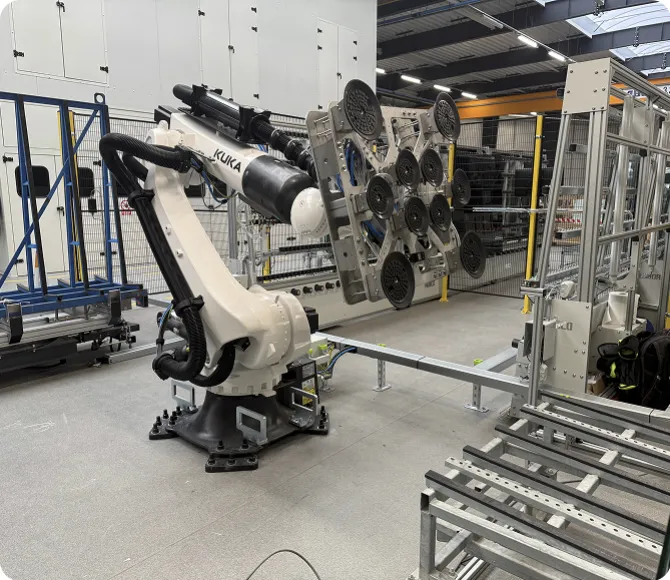
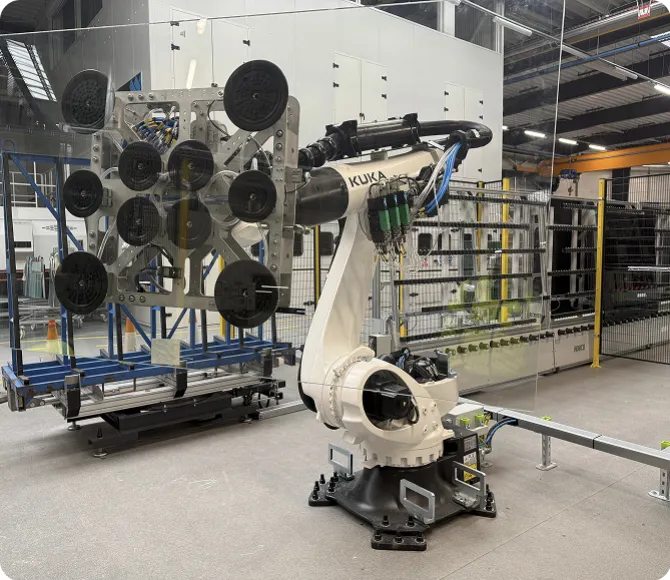
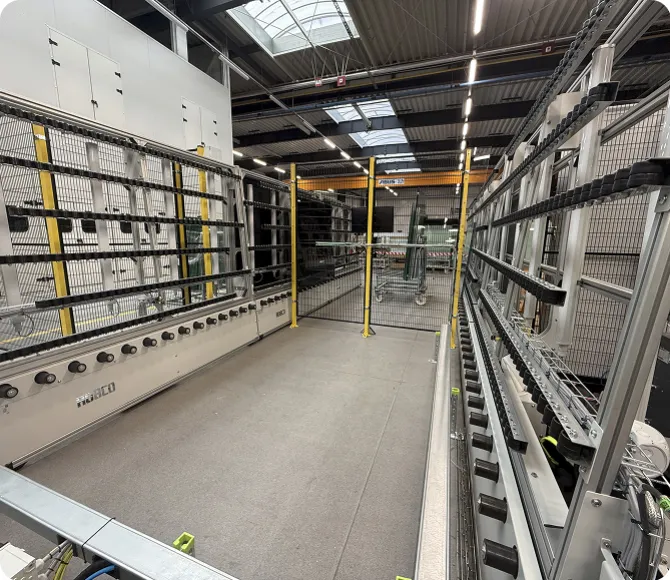
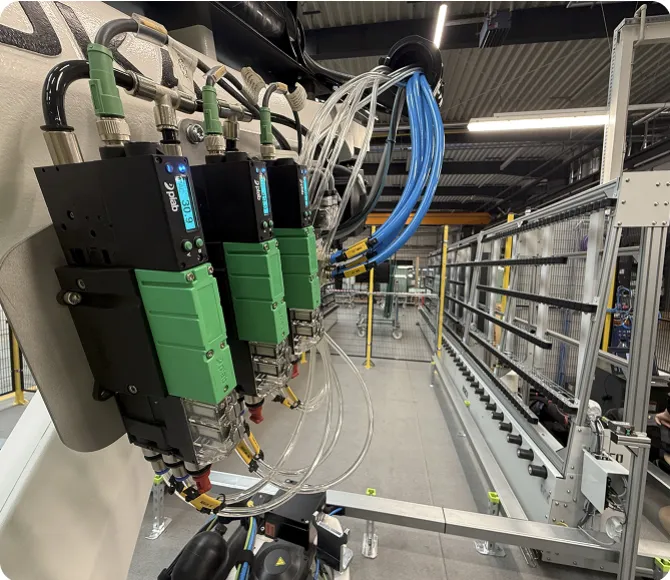
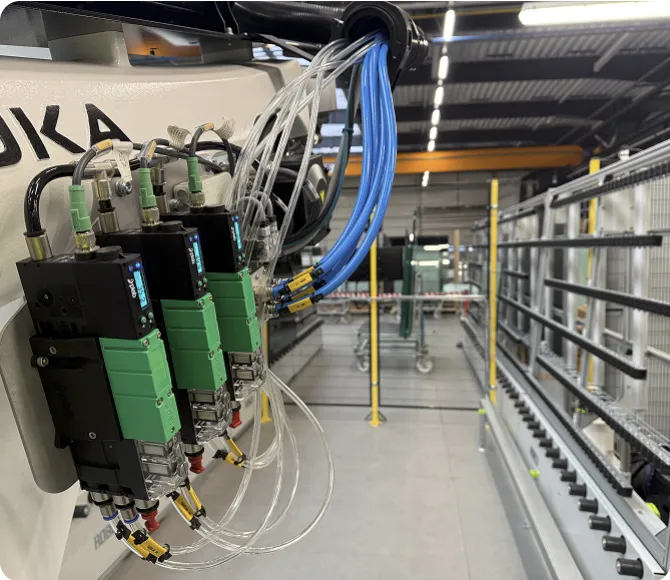
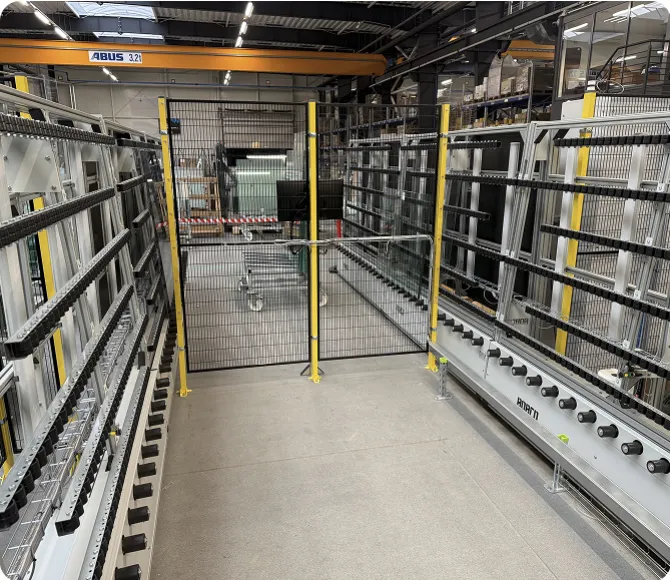
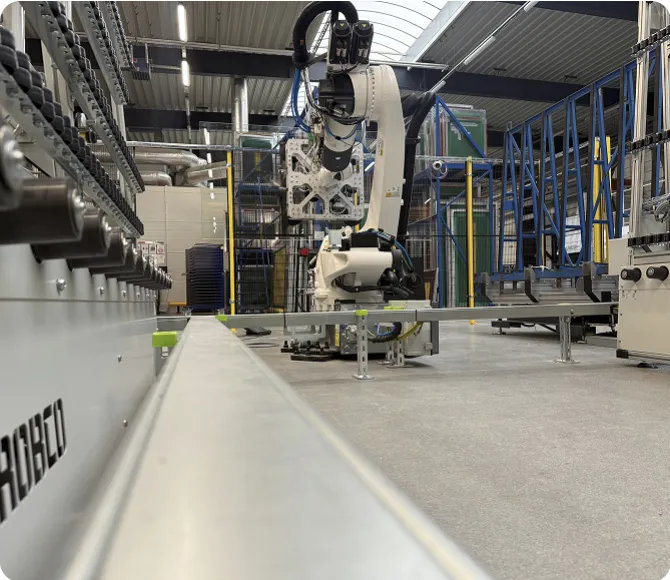
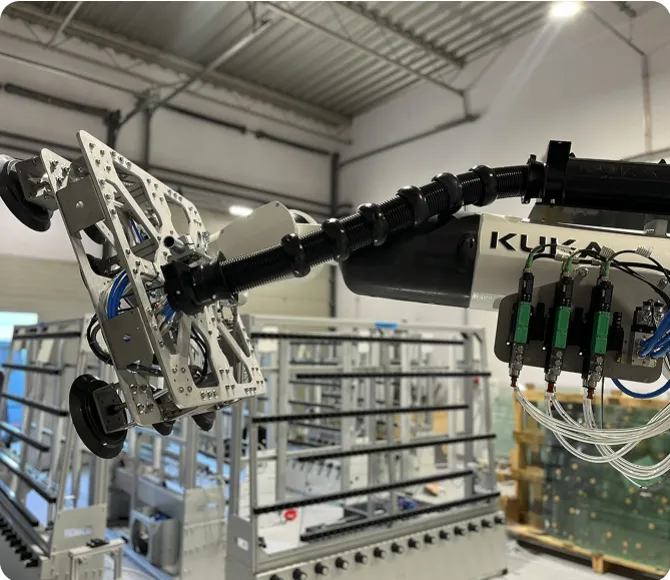
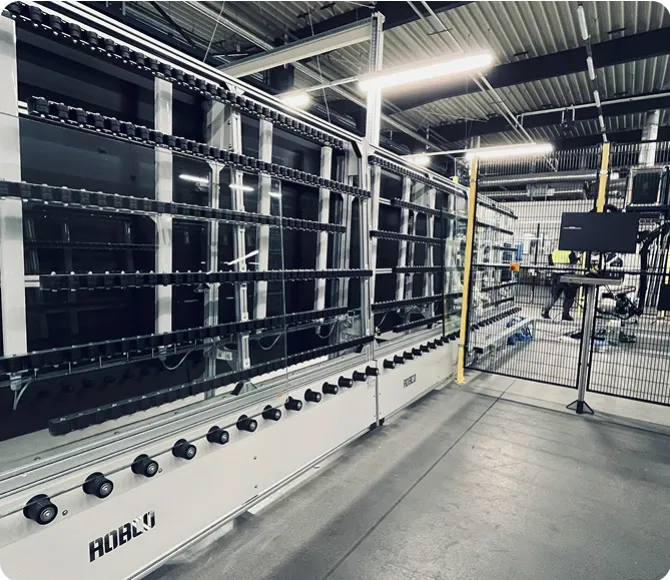
Bonded glass pane cleaning line
We delivered a multi-discipline glass cleaning line project (control & instrumentation and mechanical): risk analysis, prefabrication of the control panel with operator desk, and construction of machines and equipment (vertical glass conveyors, turntable, robot with gripper). We used a 6-axis robot for depalletising and cleaning the glass, our own automatic cleaning system, robotic loading of trolleys and conveyors, and a safety system (guarding, interlocks and light curtains).
Glass industry
Robotics – Palletising
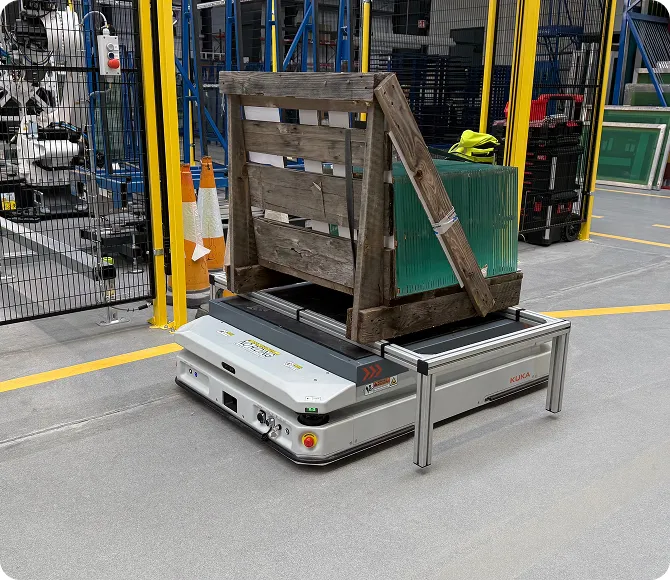
Palletising 25 kg sacks of fertiliser
We delivered a multi-discipline project (control & instrumentation and mechanical) for a line palletising 25 kg sacks of fertiliser: risk analysis, prefabrication of the control panel with operator desk, and construction of machines and equipment (conveyors, 5-axis palletising robot with gripper). We supplied pallet and slip-sheet magazines, then tested and commissioned the system.
The robot palletises 25 kg sacks of fertiliser. Its fork gripper also picks up pallets and slip sheets. The system works with 1200 × 1000 mm and 1100 × 1100 mm pallets.
Features:
- palletising 25 kg sacks,
- automatic pallet and slip-sheet pick-up,
- ready to be extended with a second palletising conveyor.
Chemical
 1 / 5
Robotics – Intralogistics
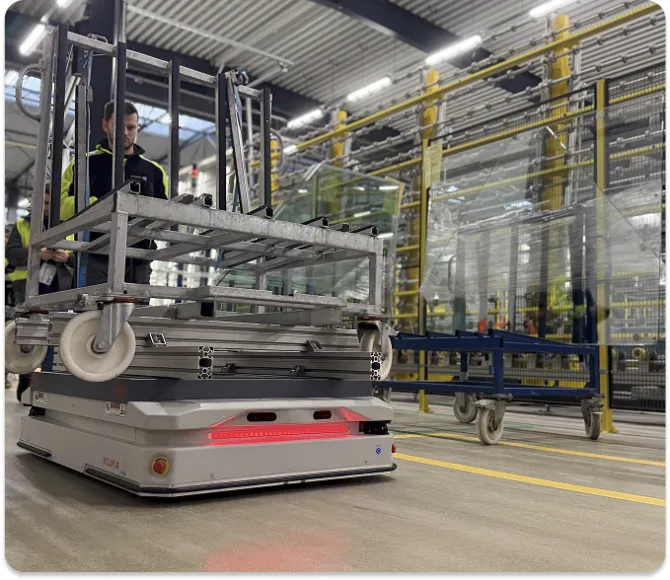
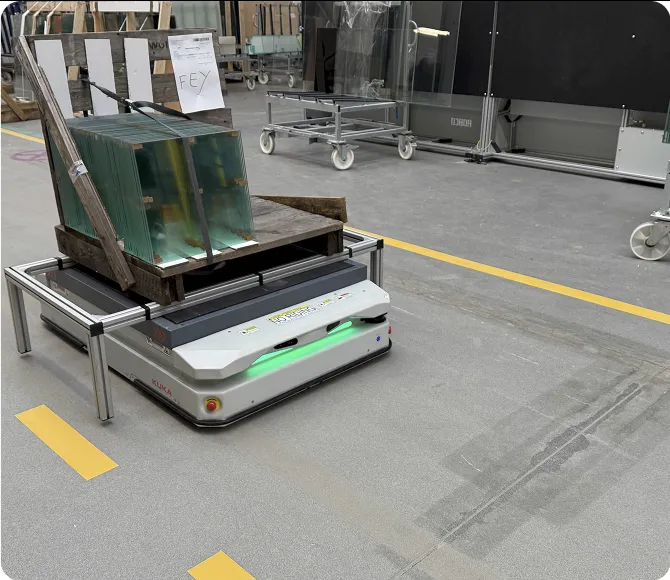
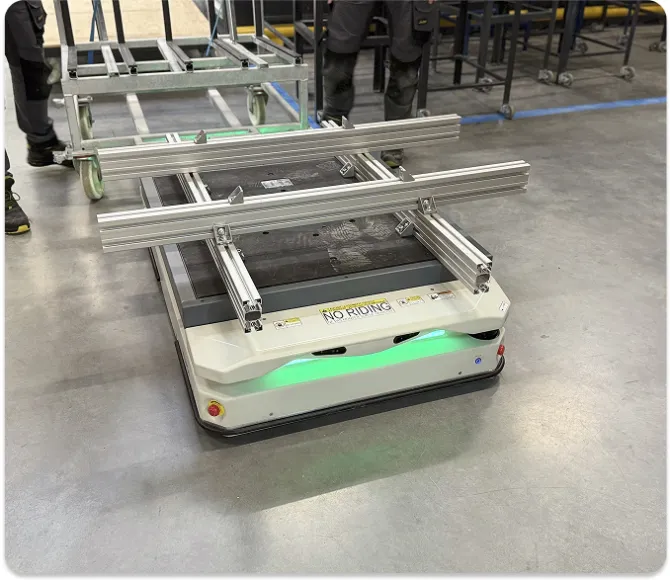
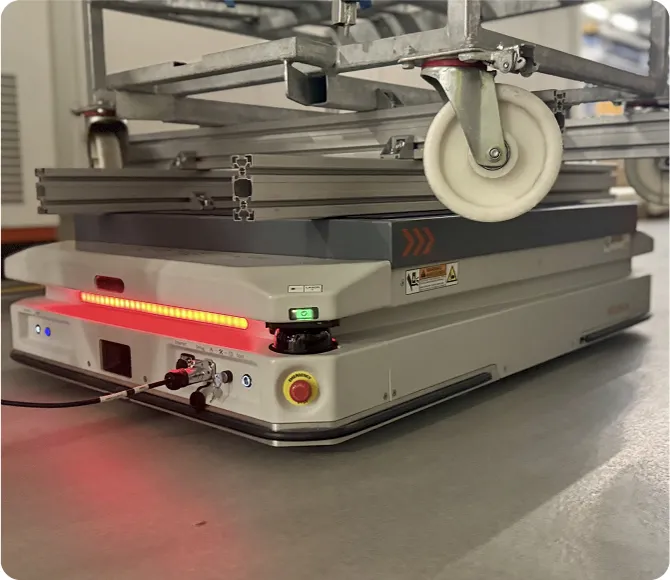
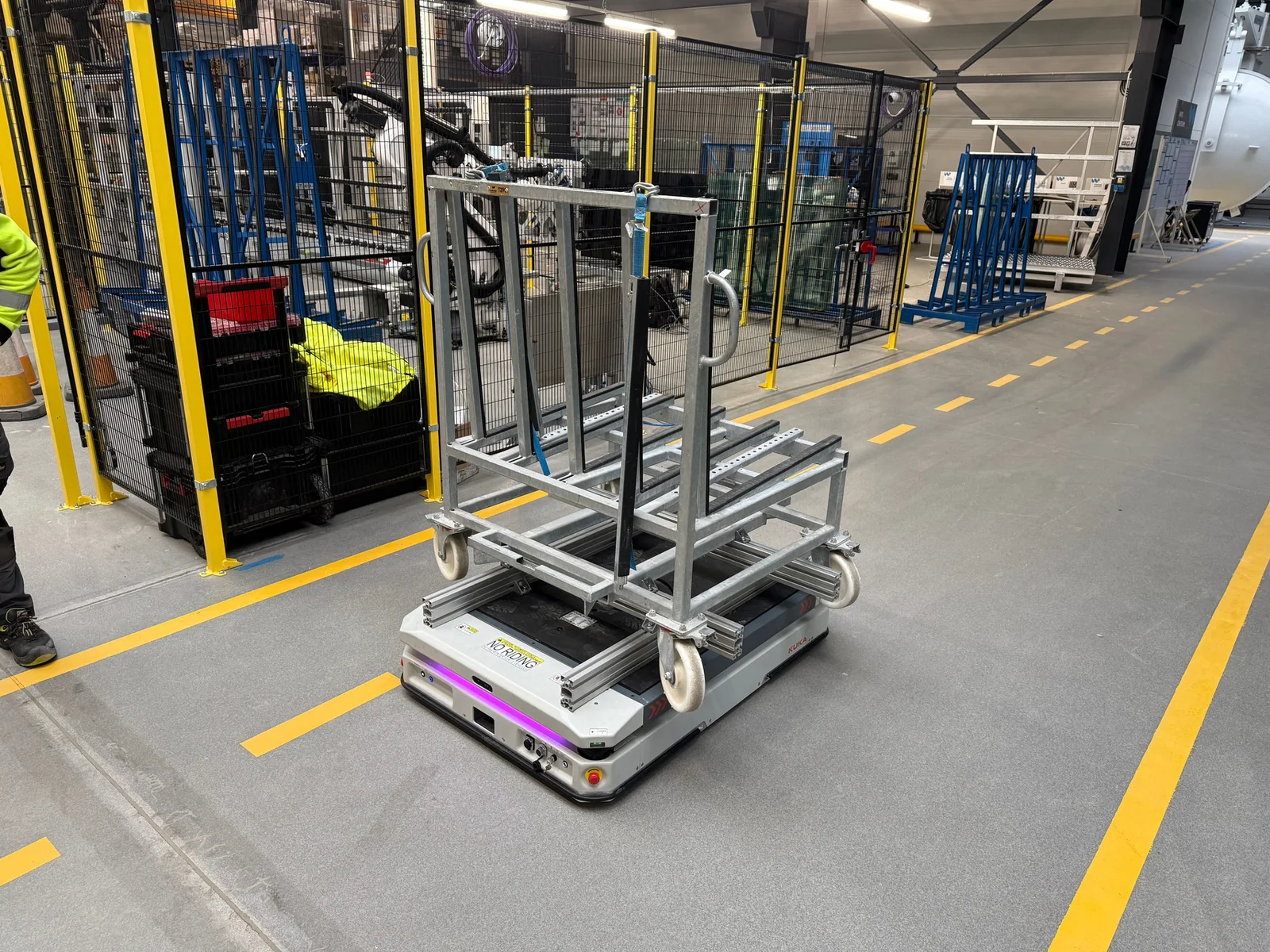
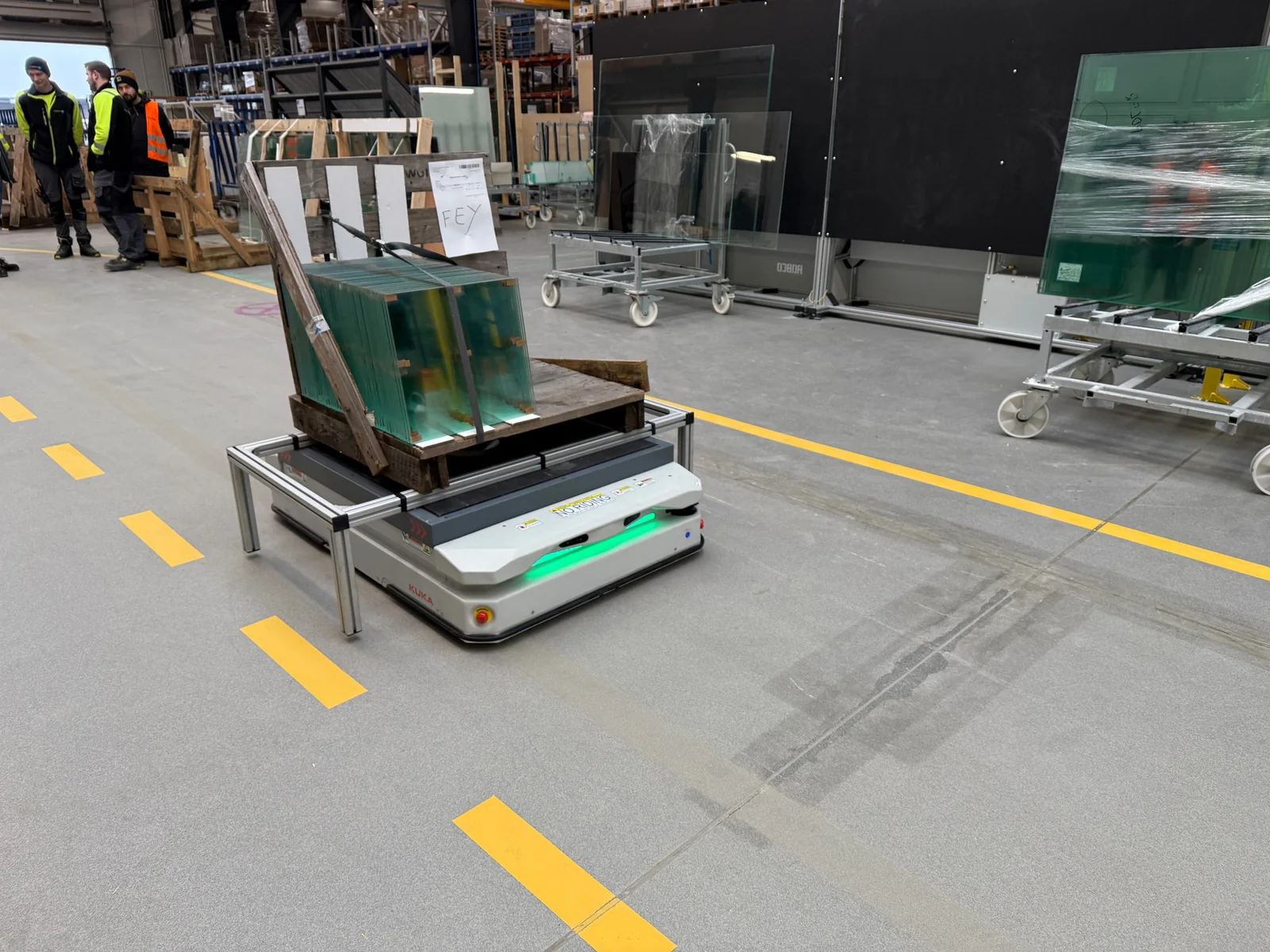
Autonomous mobile robot (AMR) trials
We carried out AMR platform trials at the customer's site: configuring the system, running test drives across the factory floor and with the target parts, and performing functional and performance tests.
Glass industry
 1 / 2
Robotics – Intralogistics
Robotic in-plant transport with AMRs
We supplemented existing forklift and pallet truck transport with 2 autonomous mobile robots. The robots pick up finished pallets directly from the end of the production line using ROBCO's own conveyor for AMRs – with no rebuilding of production lines and full compatibility with conventional trucks. The control system lets the robots move freely within designated zones, including through automatically opening doors.
Features:
- precise positioning based on 3D scans of the surroundings,
- picks up material directly from existing roller conveyors,
- no changes needed to the building,
- no vulnerable navigation aids such as magnetic tape.
Results: ROI approx. 18% per year.
Intralogistics
 1 / 2
Robotics – Intralogistics
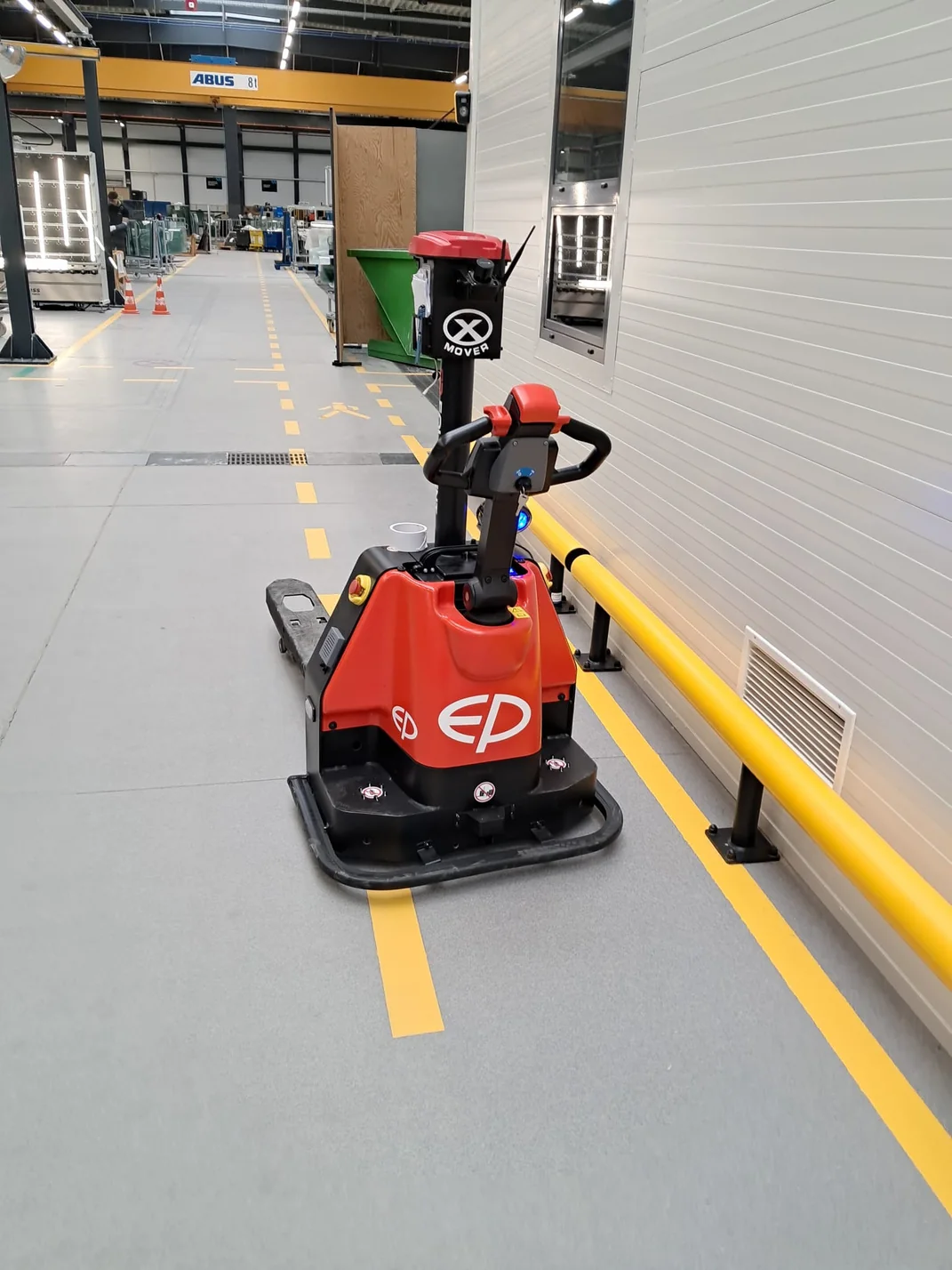
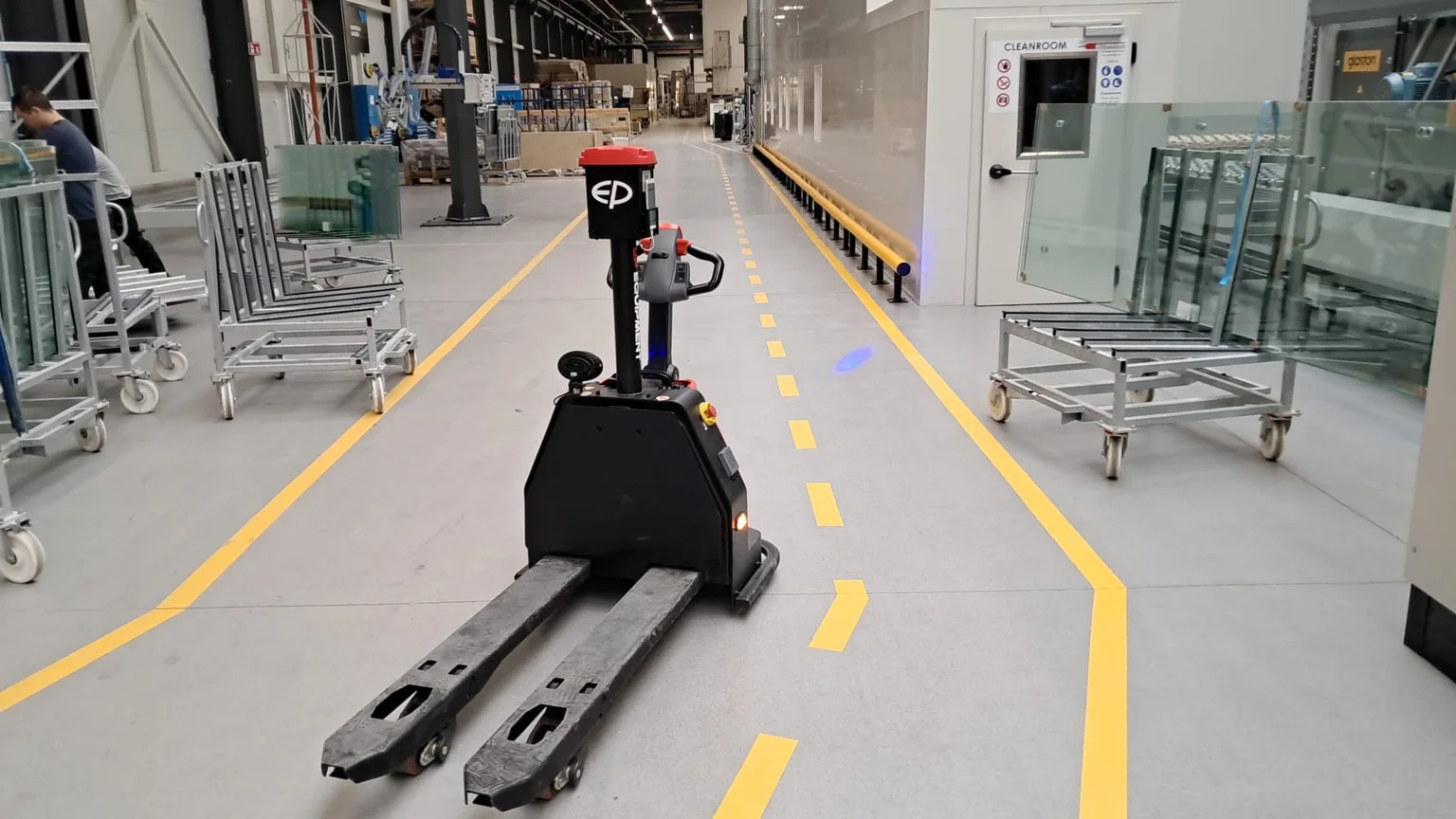
Autonomous pallet trucks for in-plant transport
We supplemented forklift transport with 2 autonomous pallet trucks. The trucks run in both manual and autonomous mode, and each is tailored to the customer's needs – not just for carrying Euro pallets. The line operator calls up tasks from a keypad mounted on the robot.
Features:
- trucks tailored to the customer's needs,
- precise positioning in any lighting conditions,
- quick battery swap during operation – no downtime for charging.
Intralogistics
 1 / 2
Safety
Safety audits and bringing machinery into compliance
We carry out safety audits at manufacturing plants, identify hazards and non-compliance with current regulations, prepare recommendations and carry out the modifications. The result: a safer working environment for people and machines.
Scope of work:
- safety audits,
- design and prefabrication of control & instrumentation panels for safety functions,
- design of safety zones for processes and machinery,
- supply and installation of control panels, cabling, safety guarding and guards,
- integration of safety systems with existing machine controls,
- CE marking of the completed installations.
Various industries
Machine building
Oil dosing machine
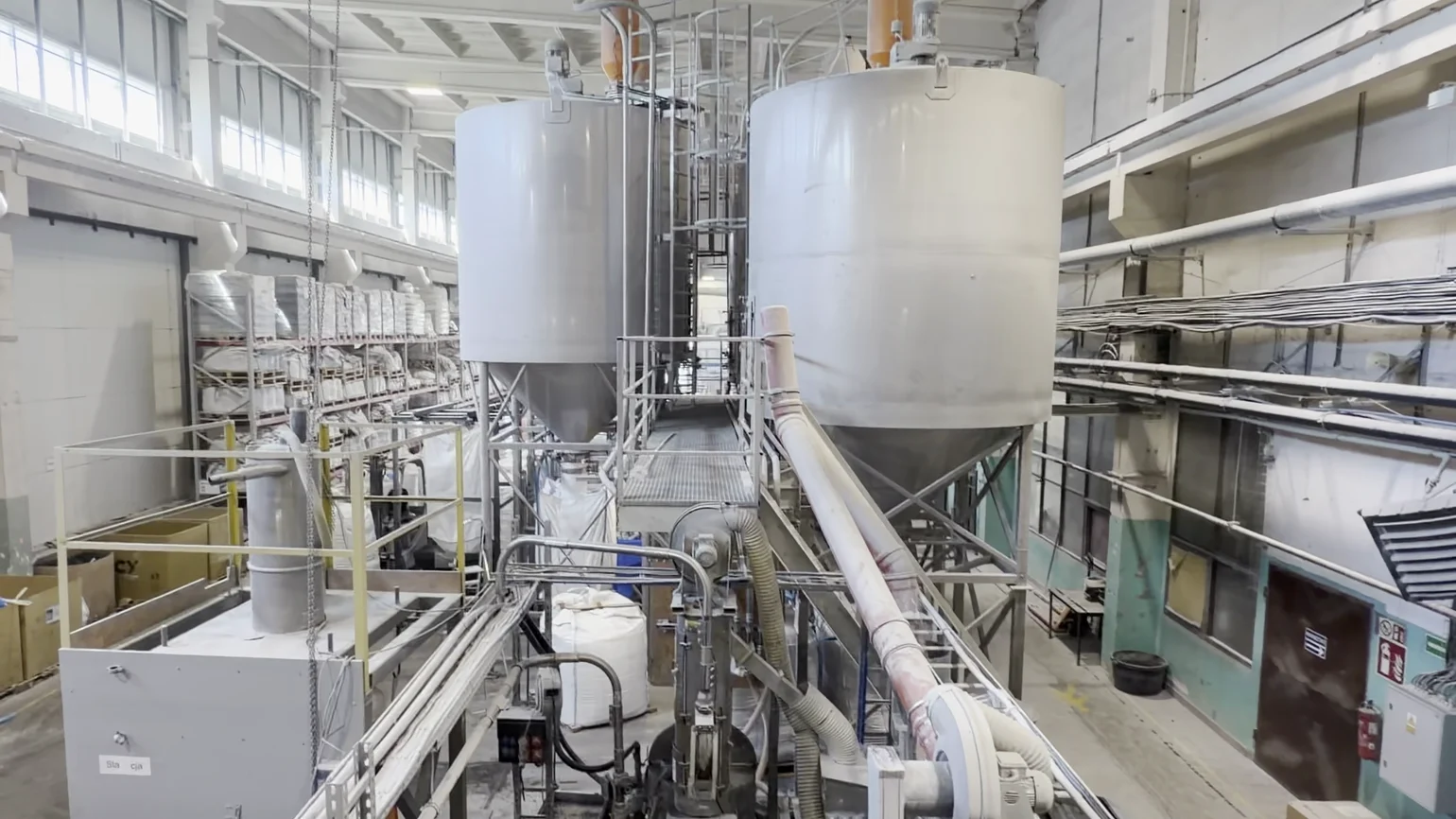
We designed and built a system that automatically pumps and weighs oil from the main tank, then doses it into the mixer at the right moment – according to the specified recipe.
Throughput: 8,000 l per hour.
Result: automatic oil dosing with weight control has eliminated recipe errors.Features:
- oil weighing up to 300 kg,
- serves two mixers at once,
- recipes: the amount of oil weighed is matched to the material currently in production.
Plastics
 1 / 3
Machine building
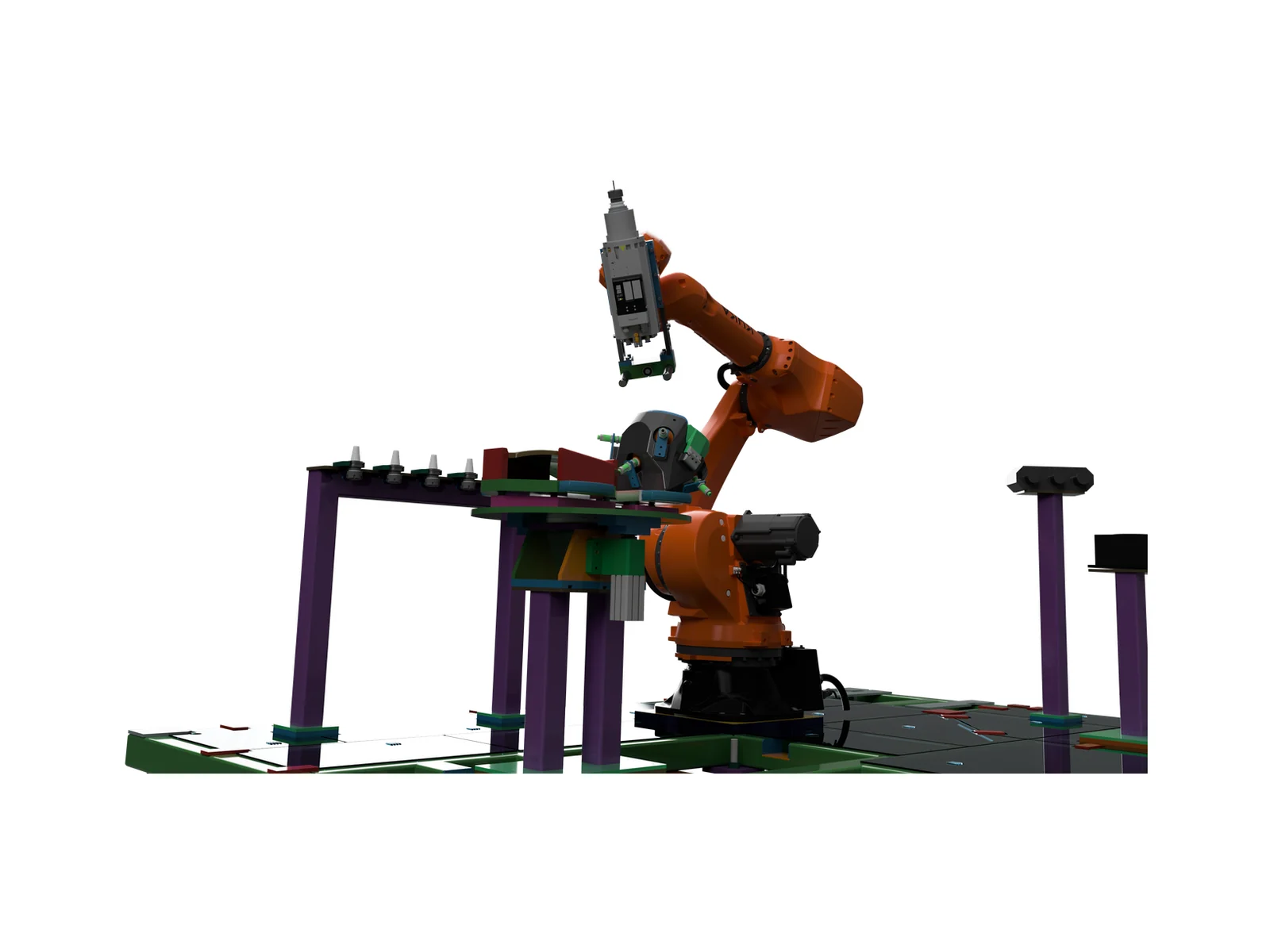
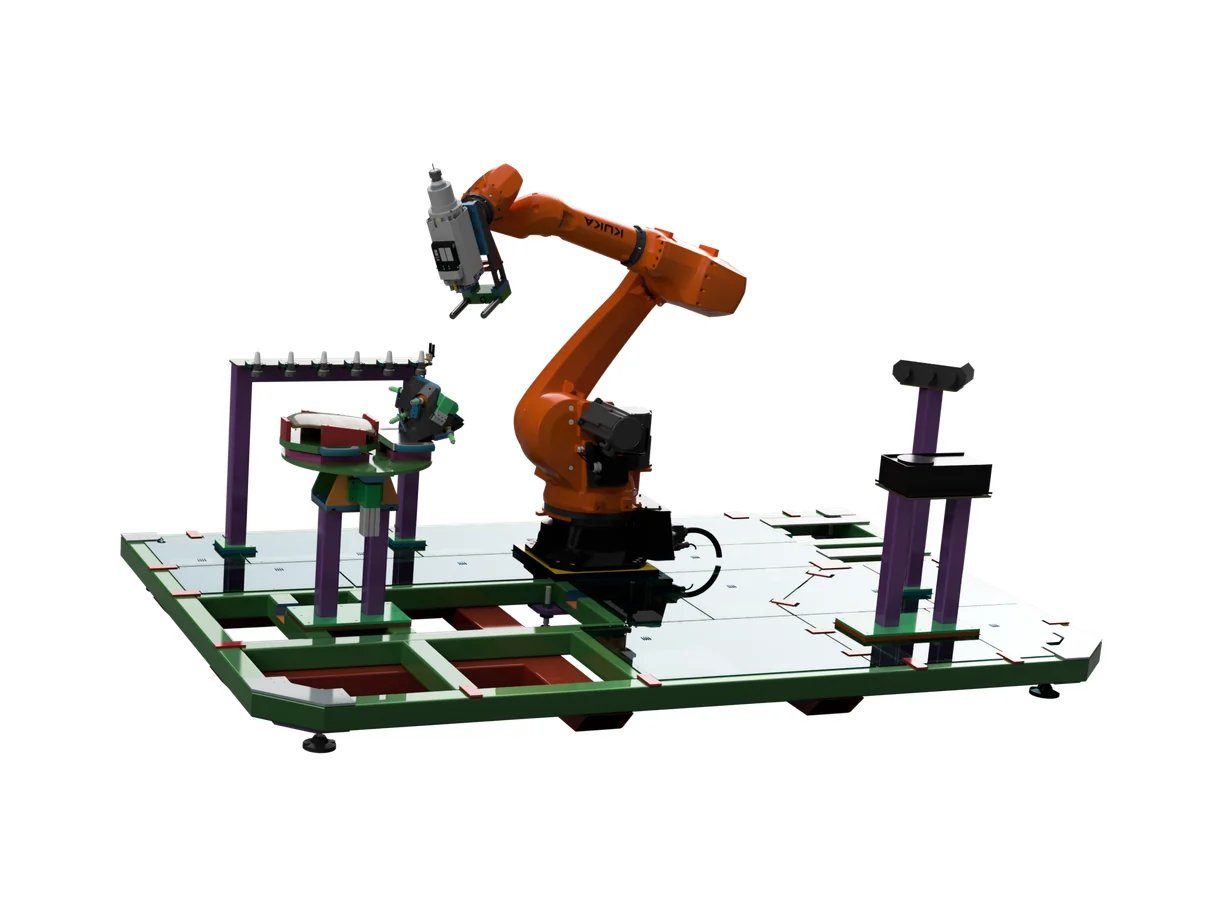
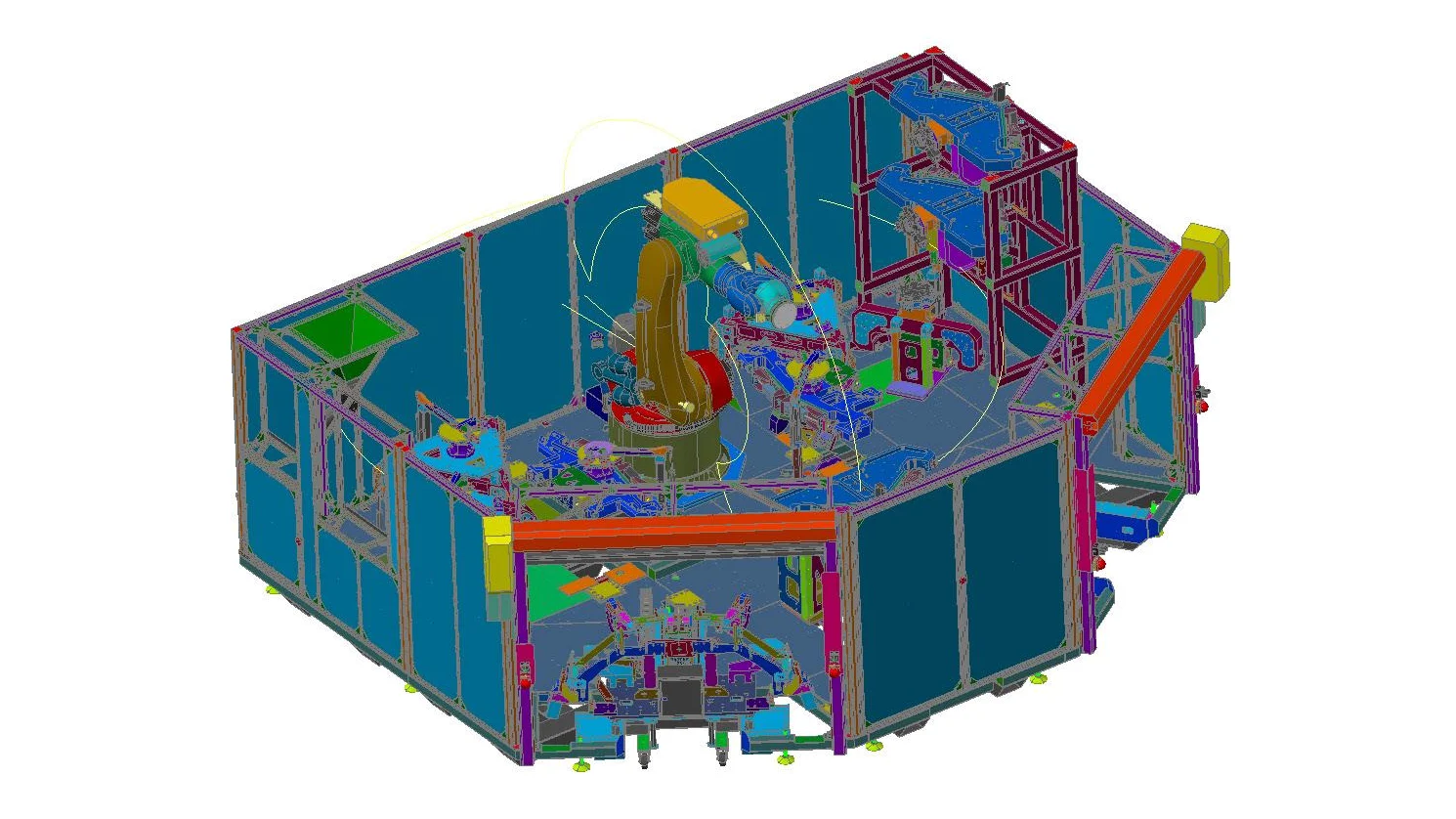
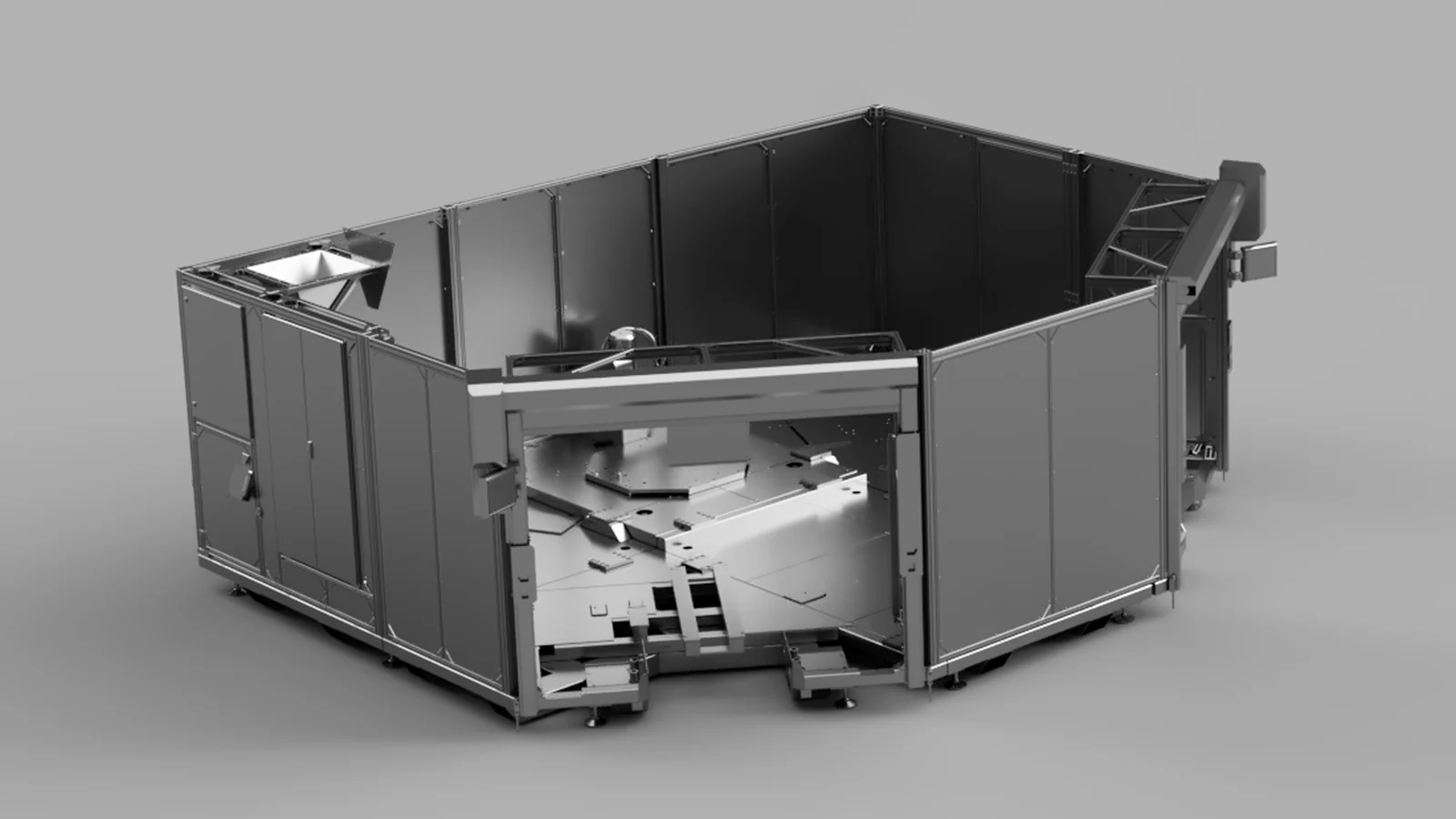
Robotic cell for cutting holes in 12 bumper types
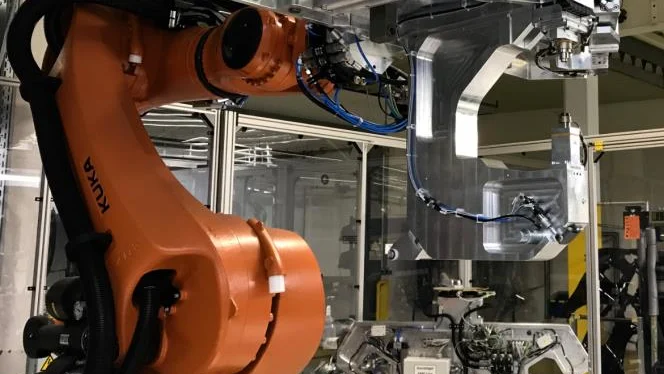
A robotic cell of around 50 m² that handles 12 types of car bumpers. The robot changes its own tools – each of the eight tools cuts six different holes. We developed the concept and work sequence, all robot movements, the frame design with the layout of machine components, and the cutting tools.
The cell includes:
- two workstations with interchangeable tables,
- a robot with eight interchangeable cutting tools,
- eight tool docking stations.
Automotive
 1 / 3
Machine building
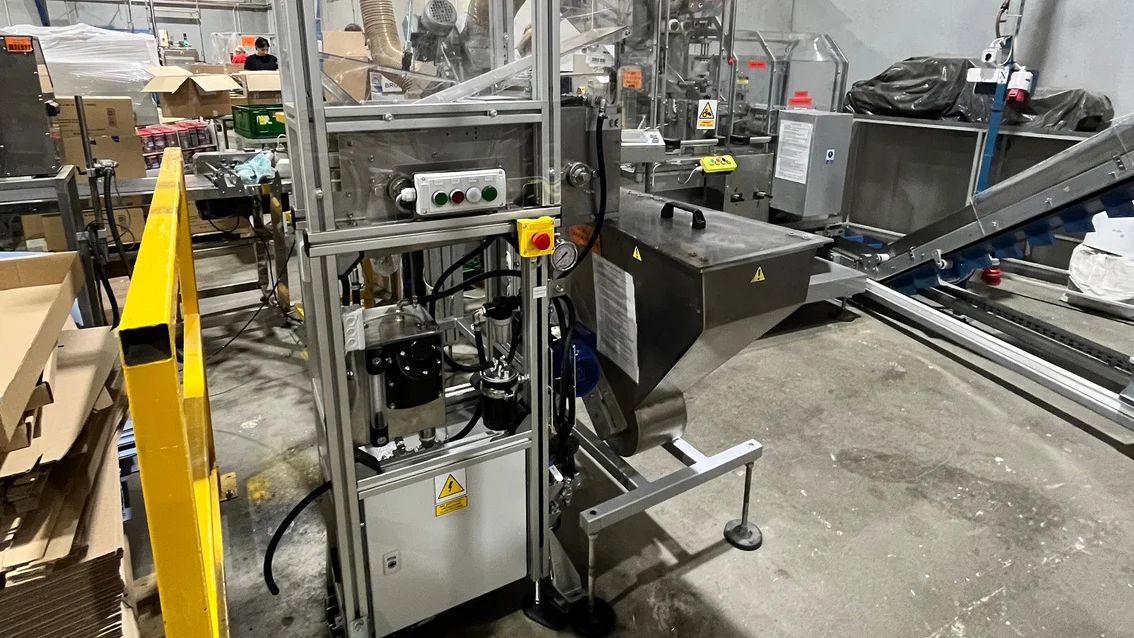
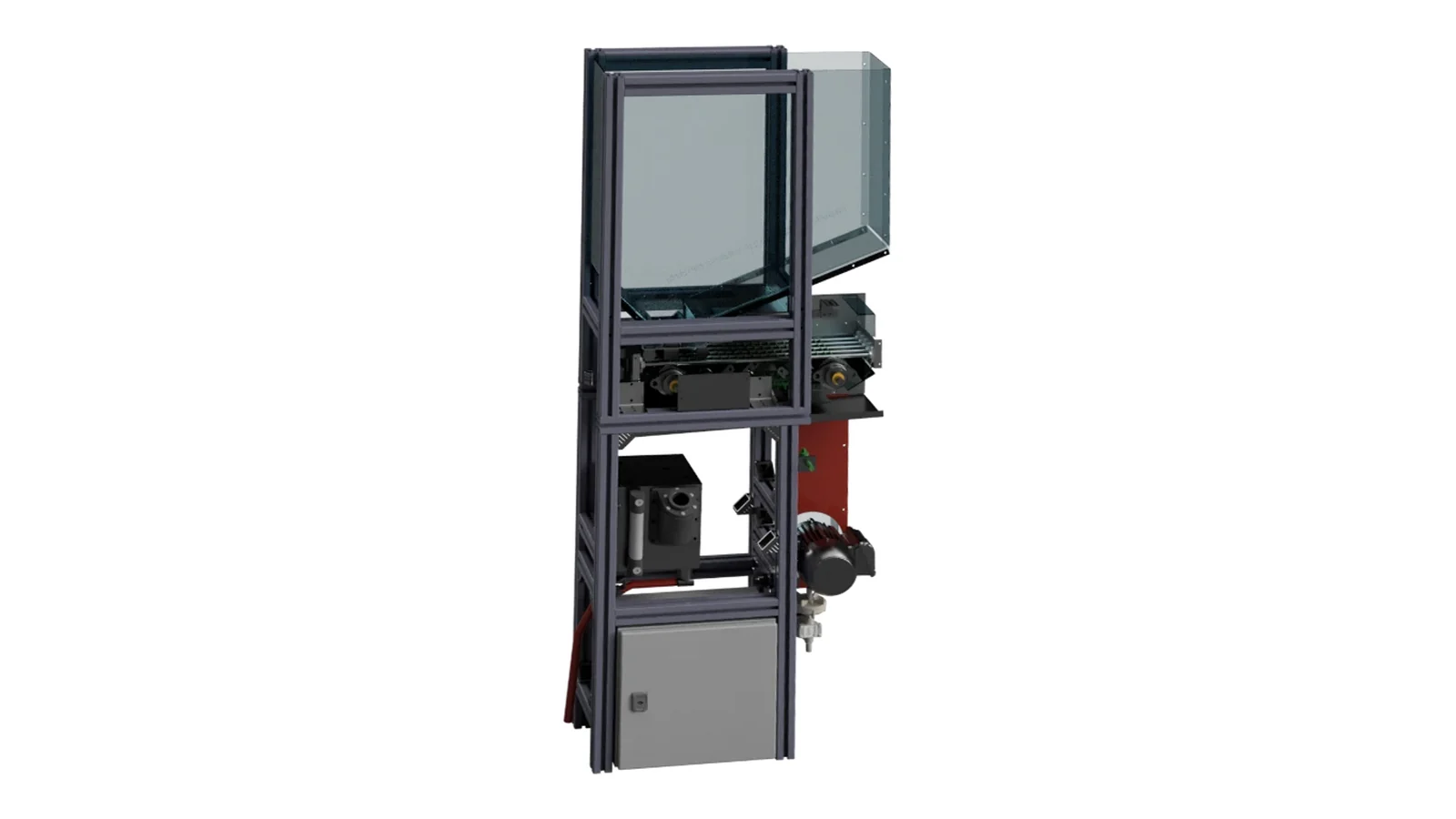
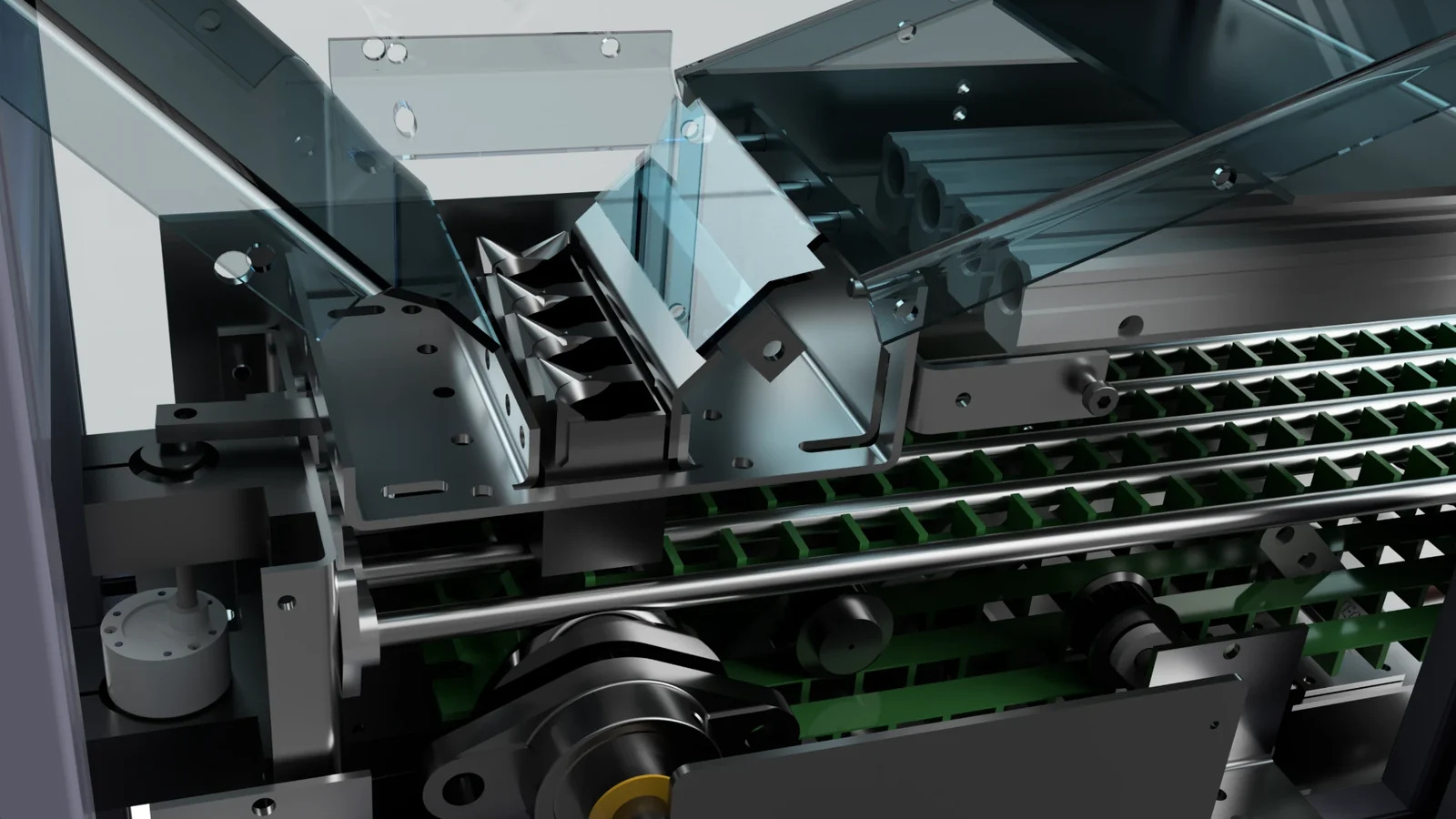
Bead impregnation machine
Dry beads are loaded into the machine, which then automatically doses the right amount of agent to impregnate the product.
Throughput: 90,000 beads per hour.
Result: operators no longer need to handle chemicals, and human error in dosing the agent has been reduced.Features:
- continuously adjustable agent dosing,
- hopper for 50,000 dry beads,
- safety guards preventing operator contact with chemical agents.
Chemical
Robotics – Handling
Glass grinding machine tending on a linear track
The robot unloads glass from trolleys, loads it onto the grinding machine, rotates the sheet until all four edges are ground and then picks up the finished glass. Thanks to a 13-metre linear track, the robot serves 3 pick-up points and 3 put-down points, so it can work autonomously for long periods without operator intervention.
Features:
- handles glass from 800 × 600 × 4 mm to 2000 × 2500 × 12 mm,
- maximum sheet weight: 160 kg,
- vacuum system with vacuum monitoring – protects against dropping the glass and saves compressed air,
- three ways to manage production: importing data from Excel files, control from the HMI panel and automatic order identification from QR codes.
Glass industry
 1 / 2
Robotics – Palletising
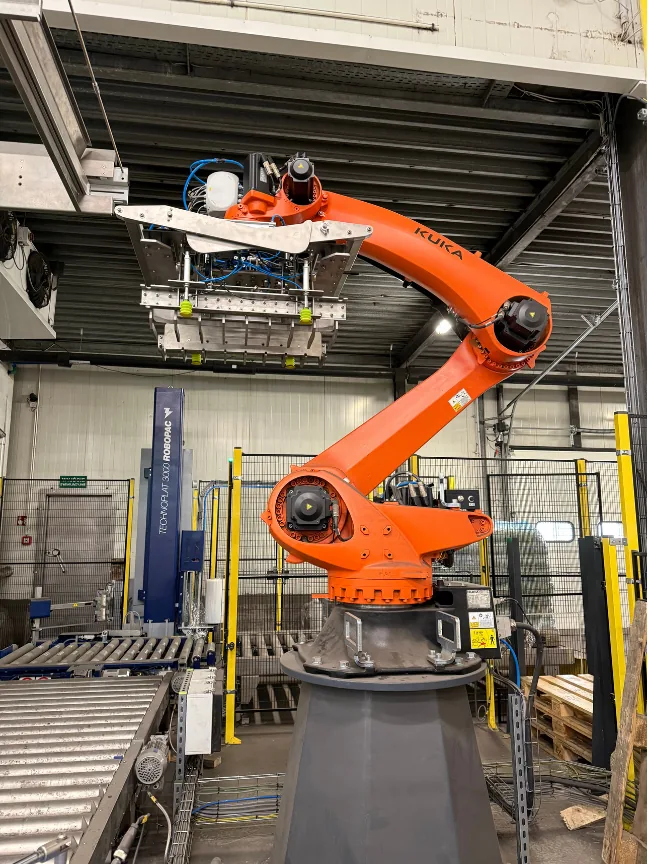
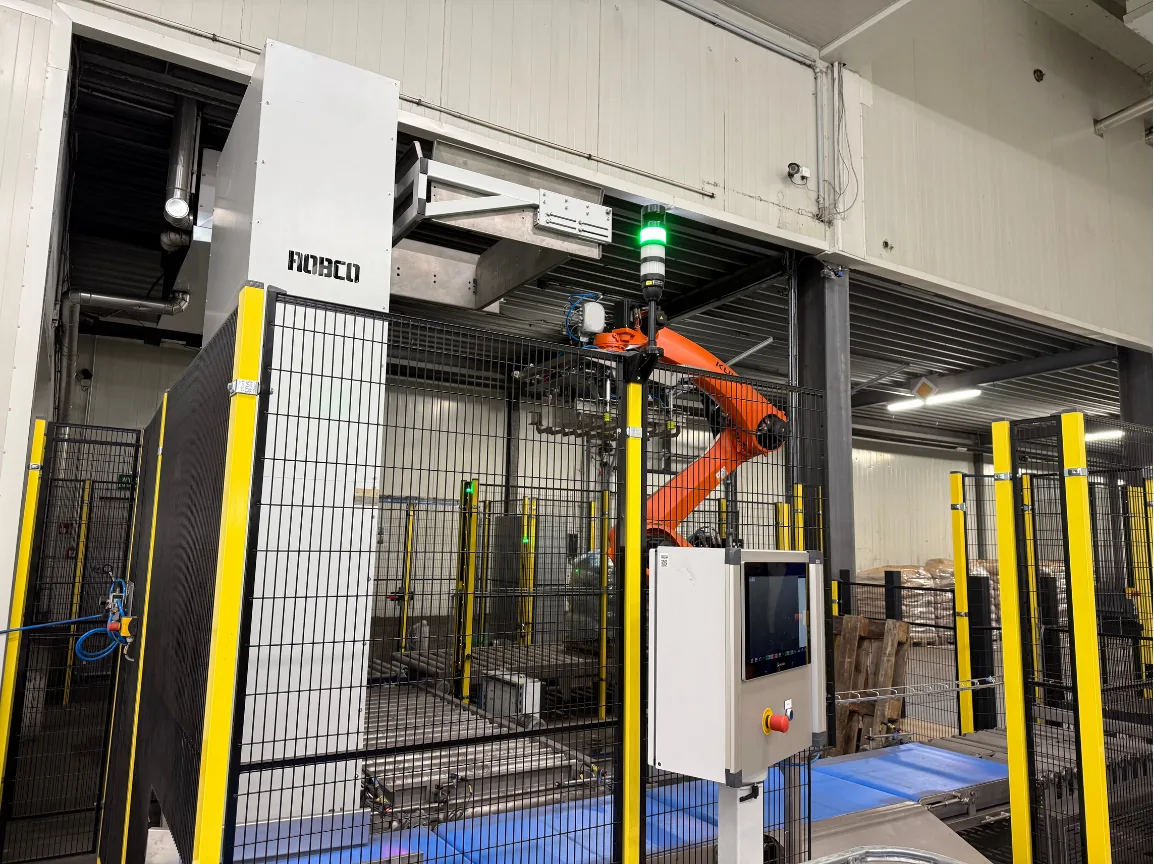
Palletising frozen food
The robot palletises 25 kg sacks of frozen food. The station is equipped with automatic sack rejection, automatic side guides that make palletising easier, and a stretch wrapper. The whole system works in a cold store.
Features:
- palletising 25 kg sacks,
- automatic pallet and slip-sheet pick-up,
- operation at sub-zero temperatures,
- automatic stretch wrapping,
- buffer for sacks and full pallets.
Food
Machine building
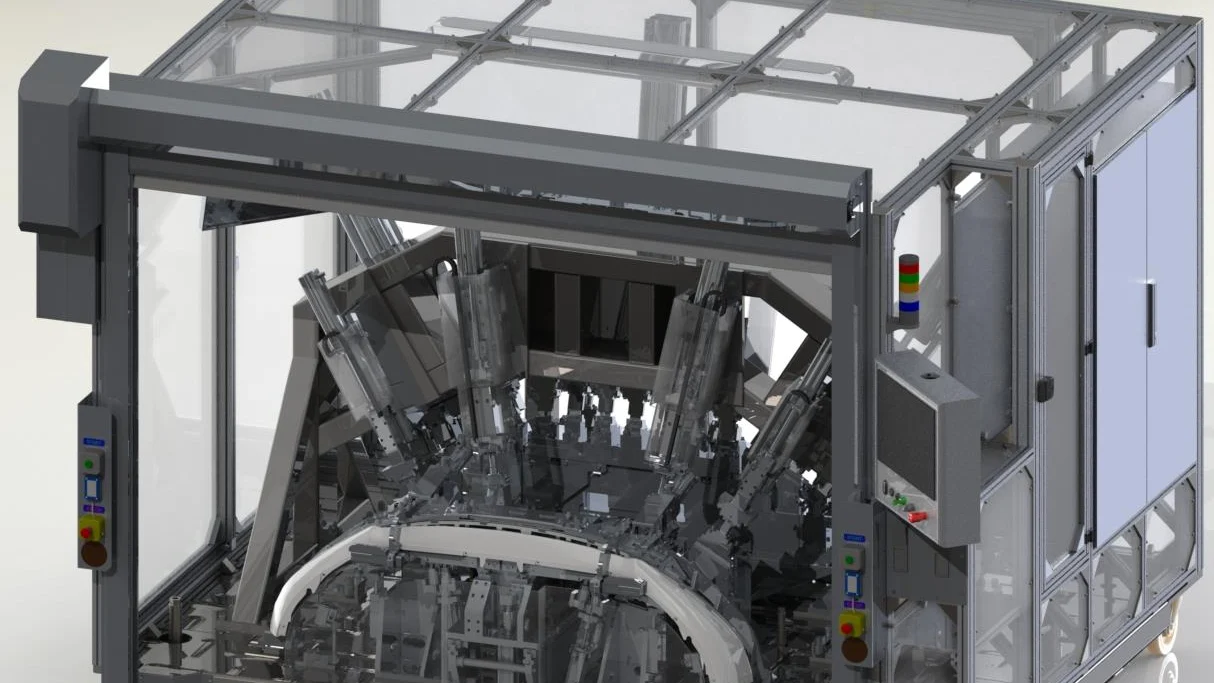
Bumper hole-cutting and bracket-welding machine
A special-purpose machine that cuts parking sensor (PDC) holes in a car bumper, cuts 20 holes for mounting a decorative trim strip and ultrasonically welds the sensor brackets. Before detailed design, we worked out the operating sequences and calculated cycle times for four machine variants, and verified the cutting units and dies with linear static analysis.
Key components include:
- a powered shuttle table on which the bumper is centred and held by pneumatic clamps,
- two ultrasonic welding units,
- two force-multiplying units cutting the parking sensor holes,
- three units cutting the trim strip holes in sequence,
- moving punches and dies.
Automotive
Machine building
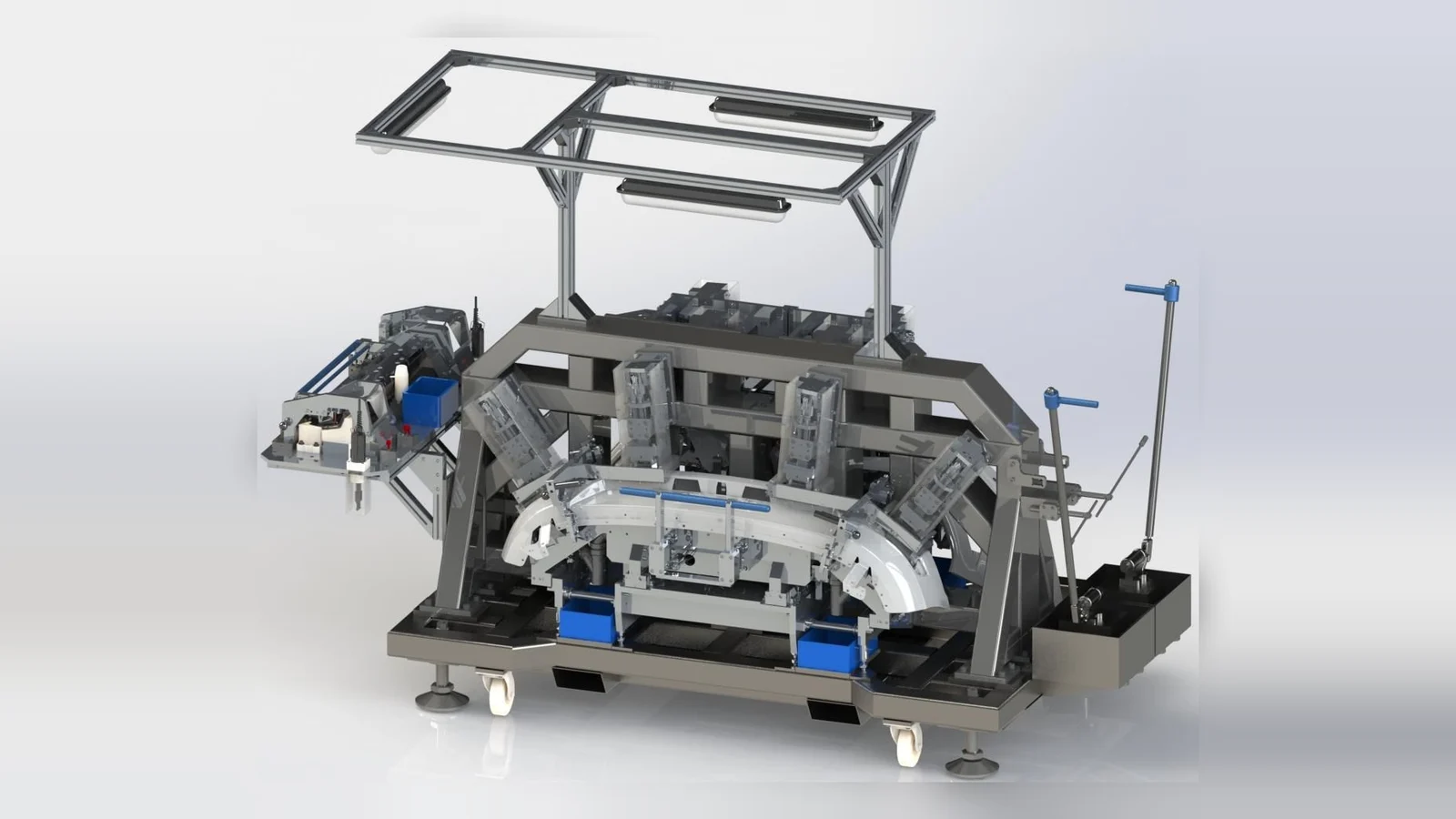
Backup fixture for cutting holes and welding body parts
A manual backup fixture that stands in for the special-purpose machine: it cuts parking sensor holes in the front and rear bumpers and in the left and right trim panels, and ultrasonically welds three body parts in two variants. We designed a welding table with clamps for both part variants, handheld ultrasonic welders, clamping tables, cutting units and a welded centre frame.
Key components include:
- two sliding tables with manual bumper clamps,
- a welding table with manual clamps,
- eight cutting units,
- two handheld ultrasonic welders and two manual hydraulic pumps.
Automotive
Machine building
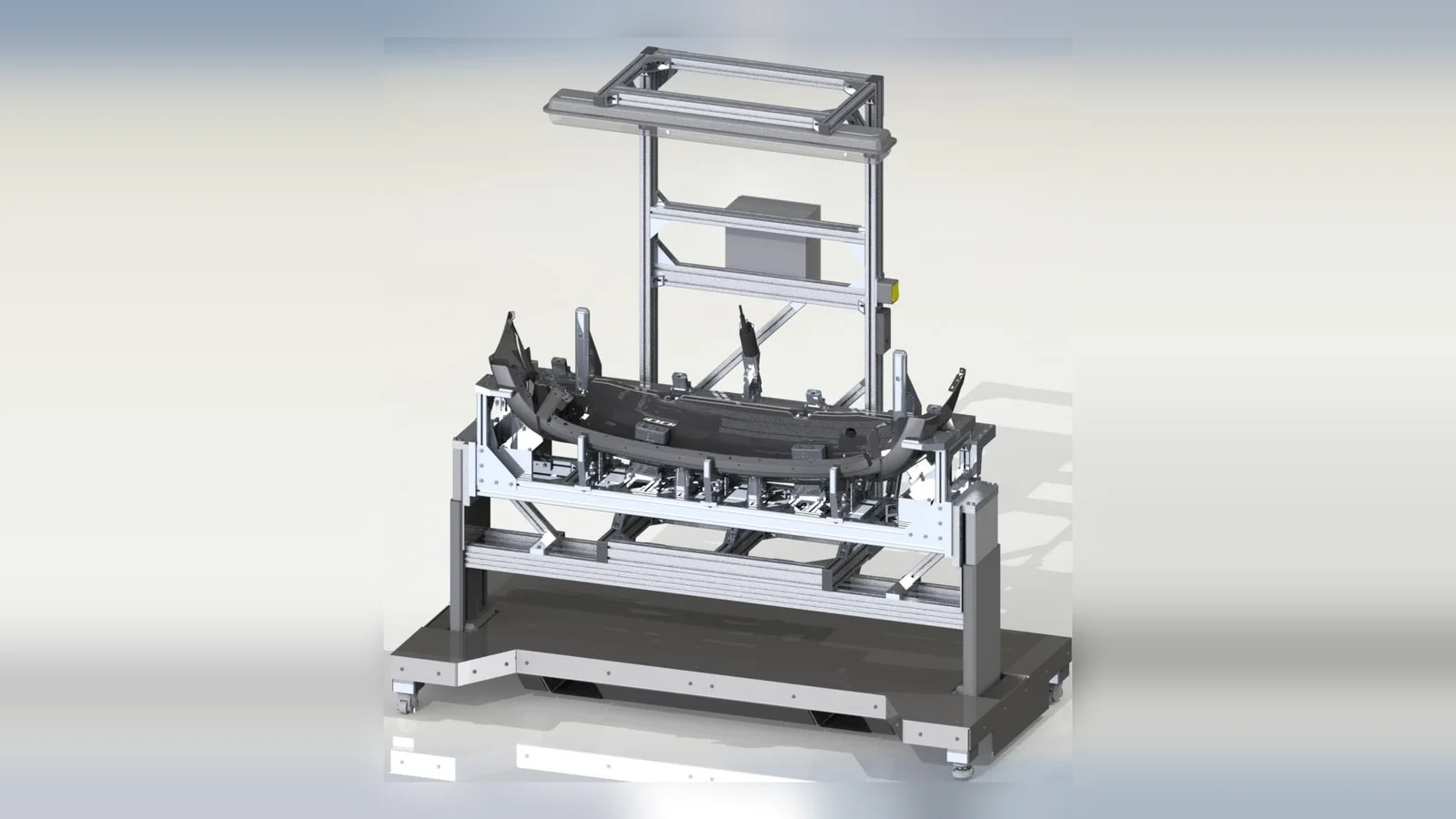
Manual ultrasonic welding station for sensor brackets
A station for manually welding four parking sensor brackets to a bumper. The customer required the bumper to be fitted and removed without risk of damage, plus height and tilt adjustment of the table and height-adjustable lighting. We designed a single universal sonotrode for eight weld points, centring guides for the handheld welder and rubber-lined supports that protect the painted surface.
Key components include:
- a table with height and tilt-angle adjustment,
- four centring elements positioning the brackets relative to the bumper,
- a handheld ultrasonic welder with a universal sonotrode.
Automotive
Machine building
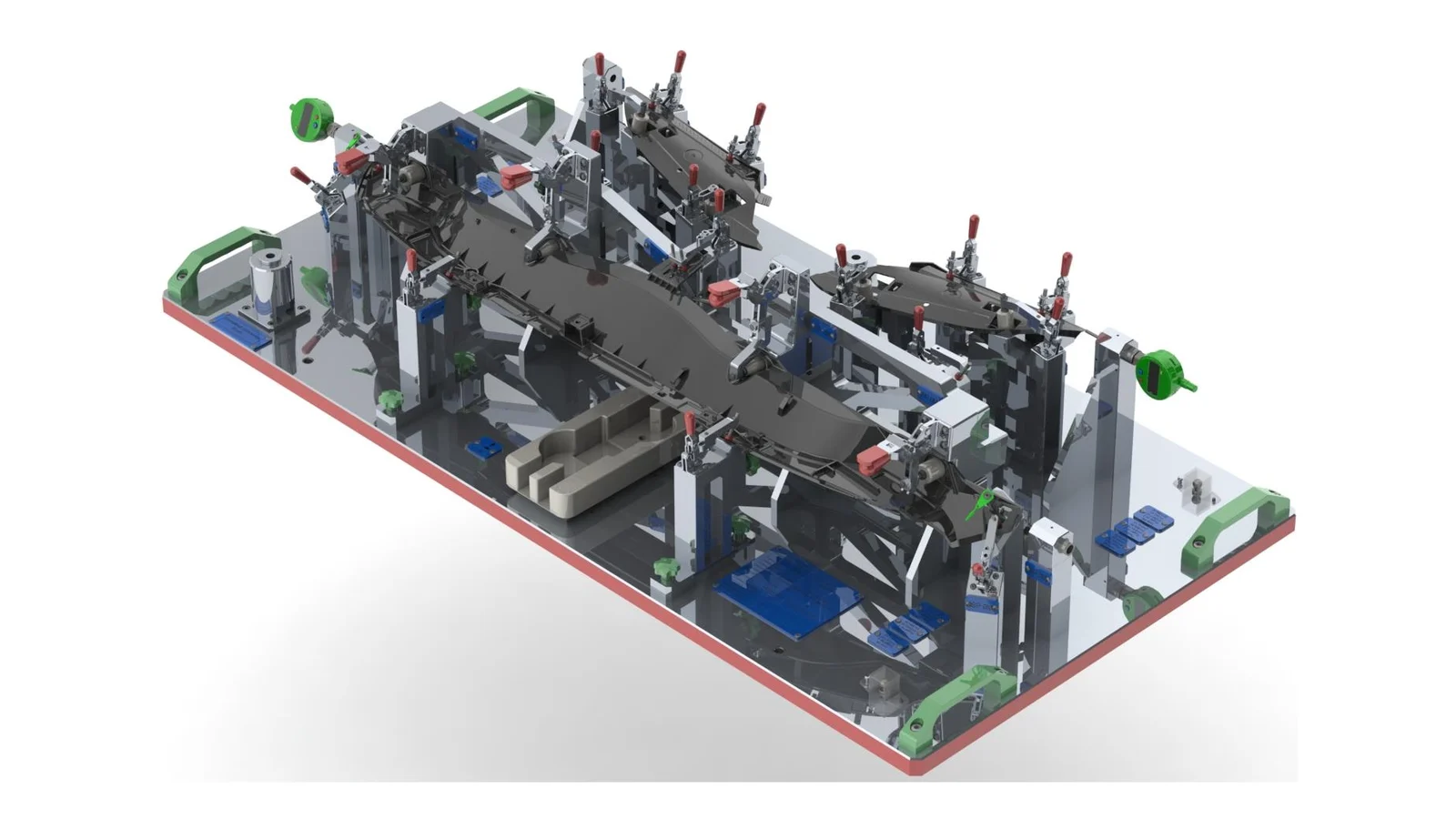
Part inspection gauge
A checking fixture for verifying that parts are made correctly. Parts are located at points similar to those where they are mounted in the car, and they can be fitted and removed quickly without risk to the part. We developed the fixture concept, fixed and removable supports, centring of parts in all directions and proposed measuring points for dial gauges.
Key components include:
- six spring-loaded conical centring pins and a retractable centring element for easy part removal,
- two dial gauges with tips matched to the measured surface and their zeroing point,
- supports with quick-release clamps,
- reference balls for zeroing the CMM, with coordinates for each part.
Automotive